I didn’t become an atheist overnight. I didn’t wake up one day and decide, “I’m done with God.”
It happened slower than that—more like a long, stubborn unraveling.
For years, I kept trying to make the pieces fit. I kept telling myself, This is just one bad church. Or, That’s just a few hypocrites. Or, If I keep searching, I’ll eventually find a community that actually looks like Jesus.
But the longer I stayed in it, the more I realized I wasn’t dealing with a few isolated problems—I was watching a pattern repeat itself. Different buildings. Different pastors. Same mechanics. Same contradictions. Same damage.
And the truth is, it wasn’t just experience that pushed me out. It was research. Historical study. Evidence. The deeper I went, the harder it became to pretend the story was as clean as I’d been taught. The unraveling wasn’t emotional impulsiveness—it was the slow collapse of explanations that stopped holding weight.
So no—this wasn’t one moment, one sermon, one church hurt. This was years of searching, years of wrestling, and then the realization that I’d stacked up more than a hundred reasons I couldn’t ignore anymore.
But eventually I had to face the pattern: I couldn’t find a church that genuinely followed the Jesus of the Gospels in a consistent, recognizable way. I found churches that used his name constantly. Churches that quoted him when it sounded inspiring. Churches that built entire brands around him. But when it came to living like him—loving enemies, caring for the poor, refusing power games, telling the truth even when it cost you, rejecting greed, protecting the vulnerable—those were treated like optional “nice ideas,” not the core of the faith.
What shook me the most was realizing that a lot of modern Christianity doesn’t even seem to like the Jesus in the Gospels. The Jesus who confronts religious leaders, exposes hypocrisy, warns about wealth, breaks social rules to include outsiders, and refuses to play the domination game—he’s inconvenient. He’s not the tough, tribal, victory-obsessed figure people want. So they rework him. They rewrite him. They turn him into a symbol for strength, hierarchy, and certainty. They build a “Jesus” who blesses their politics, their culture, and their comfort—then call anyone who questions it “deceived” or “rebellious.”
And that’s when I started noticing something I couldn’t unsee: Christianity wasn’t functioning like one faith anchored to one clear teacher. It was functioning like thousands of smaller religions—each one shaped by the preferences of the pastor, the subculture, and the region. One church would preach one message with absolute confidence, and the church half a mile away would preach the opposite with the same certainty, using the same Bible, claiming the same Holy Spirit. The “truth” seemed to change depending on which building you walked into.
Then there was the constant contradiction around “the law.” Churches would reach into the Old Testament like a weapon when they wanted to control people—especially when it came to sexuality, gender, and social boundaries. They’d quote ancient rules to shame and condemn, to draw lines between “us” and “them,” to keep people afraid and compliant. But when those same rules threatened their comfort—rules about money, debt, exploitation, honesty, care for immigrants, generosity, justice—they’d suddenly remember a different sermon: “We’re not under the law.”
So which is it?
Either the law is binding, or it isn’t. But in practice, it’s binding when it helps the institution control people, and it’s “fulfilled” when it challenges the institution’s greed, politics, or lifestyle.
That hypocrisy wasn’t just annoying. It was theological. It exposed the game. “Sin” became a selective word. Entire groups of people were treated like moral emergencies while greed and cruelty were either ignored or quietly blessed. Churches would rail against certain identities as “abominations” while normalizing the love of money, the obsession with status, the celebration of violence, and the casual dishonesty required to keep a religious machine running. I watched people talk endlessly about “holiness,” but treat basic decency—kindness, humility, empathy—as if it were weak.
And the money. I can’t pretend that didn’t play a massive role. The Jesus of the Gospels looks suspiciously hostile toward religious profiteering. He doesn’t flirt with wealth; he warns people about it. He doesn’t build fundraising empires; he flips tables. Yet Christianity in America has produced an entire economy built on branding, platform-building, constant giving campaigns, manipulation, fear, and the idea that “God will bless you if you sow a seed.” I watched people confuse generosity with spiritual superiority and confuse tithing with obedience—because the system needs money to survive, and guilt is an effective tool.
By the end, it felt like Jesus wasn’t shaping the church. The church was shaping Jesus.
Scripture became a toolkit, not a compass. Verses were cherry-picked like proof texts. Context was optional. Translation debates were ignored unless they helped someone win an argument. And the parts of Jesus’ teaching that should have been unavoidable—love your neighbor, love your enemy, forgive, don’t hoard wealth, stop performing religion for applause—were either softened, spiritualized, or pushed aside.
That’s when my “faith” started to feel less like truth and more like loyalty to a narrative.
I also had to reckon with history—the stuff churches often avoid because it ruins the clean story. Christianity’s track record isn’t just a few embarrassing moments. It’s centuries of violence, coercion, and control—often justified with scripture. And even closer to home, American Christianity has repeatedly baptized injustice: it found ways to bless slavery, bless segregation, bless conquest, bless cruelty—then later act like it was always on the side of righteousness. The pattern wasn’t that Christians occasionally fail to live up to their values. The pattern was that the institution repeatedly reshaped “God’s will” to match the cultural power structures of the moment.
That’s what finally pushed me over the edge: if “God’s truth” can be used to justify almost anything depending on the era—if the “Spirit” leads people to opposite conclusions on basic morality—if churches can condemn vulnerable people while excusing greed, deceit, and abuse—then what am I actually looking at?
Divine consistency?
Or human invention?
And once that question landed, I couldn’t force myself to un-ask it.
So I left. Not because I wanted to be rebellious. Not because I “just wanted to sin.” I left because I couldn’t keep pretending the system was what it claimed to be. I couldn’t keep worshiping a God whose character seemed to change depending on who was preaching. I couldn’t keep giving my conscience to gatekeepers who kept moving the goalposts while calling it “unchanging truth.”
Becoming an atheist, for me, wasn’t about trading faith for bitterness. It was about trading certainty for honesty.
I’m not saying every Christian is fake. I’ve met some genuinely good people inside the faith. But the deeper I looked, the more I realized many of them were good in spite of the system, not because of it. They were good because they were human—because empathy is human. Compassion is human. Integrity is human. And the most unsettling thought I had on my way out was this:
If you can remove the supernatural claims and still keep the best parts—love, generosity, community, meaning—then maybe the supernatural claims were never the foundation at all.
I used to think Christianity was the one place on earth where power didn’t corrupt. I really believed that. I believed the pastors. I believed the slogans. I believed the “Bible alone” talk like it was a spiritual immune system—like it protected the faith from the same motives that poison everything else: money, control, ego, image, politics. I didn’t just believe it in my head either. I built parts of my life around it. And the longer I stayed in it, the more I realized the whole thing survives by teaching you one essential habit: always read the story like you’re the hero.
That’s why that “Disney Princess theology” line hits so hard. Because it describes exactly what I watched—and what I did. Every story, you’re Esther. You’re the brave underdog. You’re Peter, the imperfect disciple who still loves Jesus deep down. You’re the woman anointing Jesus, the humble one who “gets it.” You’re Israel escaping slavery. You’re never Xerxes. Never Pharaoh. Never the empire. Never the Pharisee. Never the crowd. Never the people who benefit from the system while pretending they’re the victims of it. Christianity trains you to locate yourself as the righteous remnant, even when you live in the most powerful country in the world with a history soaked in conquest, slavery, and segregation. We were taught to see ourselves as Israel, not Egypt. And that’s not just a cute metaphor. That’s a moral blindness that has consequences.
Because when you’re always Israel, you never have to ask what it means to be Egypt. You never have to ask what it means to be the people with the laws, the weapons, the propaganda, the courts, the money, the land, the “God is on our side” speeches. You never have to ask if you’re the one building an economy on someone else’s suffering. You never have to ask if you’re the one deciding who counts as clean, who gets punished, who gets excluded, who gets forgiven, who gets rights, who gets to be called “abomination.” And as long as you keep the hero costume on, you can do almost anything and still feel holy.
The thing evangelicals don’t want to deal with is that Christianity’s public track record isn’t some innocent love story that got “corrupted” by a few bad apples. It’s a long, consistent pattern of institutions aligning with power and then calling that alignment “God.” American Christians love to act like history started in 1950 with a KJV Bible and a revival tent, but the faith has a timeline, and it’s ugly. Crusades. Forced conversions. Executions and punishments for “heresy.” Church-state systems where the gatekeepers controlled what people could read, what they could say, what they could question, and what would happen to them if they did. You can’t pretend Christianity is pure while ignoring how often it has functioned like government with a halo.
And then America happened, and the same instincts just got baptized in red, white, and blue. Christianity gave moral cover to slaughter Native people—thousands upon thousands—because expansion was framed as “destiny” and violence was framed as “civilizing.” Christianity gave cover for slavery, and when slavery became too indefensible, it gave cover for segregation. It wasn’t random. It was systemic. Pastors preached it. Politicians codified it. Courts enforced it. Churches normalized it. And when people needed a scapegoat, Christian society did what power always does: it found a target and called it righteousness. Salem wasn’t some random spooky pagan moment. It was a Christian moral panic that killed women under a society convinced it was doing God’s work. It’s not an accident that the victims are always the vulnerable and the “outsiders” and the ones with less power. That’s what systems do.
But here’s what really broke it for me: the selective morality. The way evangelicals turn certain issues into life-or-death “biblical truth,” while ignoring other things that the Bible screams about. The way they tell LGBTQIA people they can’t marry because it’s “sin,” while excusing war like it’s normal. The way they obsess over who’s having sex with who, while shrugging at greed, exploitation, racism, cruelty, and corruption—stuff that, if we’re being honest, is condemned constantly in their own Scriptures. I watched churches preach “abomination” at queer people while platforming leaders who lie, cheat, brag, demean, and stir violence—and the only reason it’s tolerated is because those leaders promise power. It’s never been about holiness. It’s about which “sins” threaten the system and which ones serve it.
And the “pastor” thing—man, once you see it, you can’t unsee it. Pastors building empires off fear-based sermons, guilt-based giving, and constant manipulation. “God told me” becomes the ultimate cheat code. They can say anything, demand anything, shame you into anything, and if you push back you’re “rebellious,” “bitter,” or “deceived.” Meanwhile, the money flows up. The brand grows. The building expands. The staff multiplies. And if you question the machine, you’re the problem. They’ll call greed a blessing and call dissent a spiritual attack. And then they’ll turn around and point at the LGBTQIA community like that’s the great moral emergency of our time. It’s disgusting.
They also sell this myth that Christians “just follow the Bible,” but that’s not what’s happening. What’s happening is curation. They ignore thousands of commands and laws across the Bible and act like nobody’s ever noticed. They’ll scream about a handful of verses while ignoring huge portions of the text that would actually challenge American capitalism, nationalism, and the church’s obsession with wealth. They’ll ignore the constant warnings about rich people. They’ll ignore the themes of debt forgiveness and caring for the poor and refusing exploitation. They’ll ignore the parts that would force them to confront how their politics treats immigrants, the poor, and marginalized people. They cherry-pick what fits their culture-war agenda and then call it “biblical.” It’s not “Bible-believing.” It’s agenda-believing with Bible wallpaper.
And when you zoom out further, the trust issue gets even bigger. The printing press wasn’t invented until the 1400s, which means for most of Christian history the texts were hand-copied, scarce, controlled, filtered, translated, and interpreted under the same kinds of institutions that always crave control: churches tied to governments, kings, elites, clerical authorities. I’m not even saying every scribe was evil. I’m saying humans are humans, and institutions are institutions. If you don’t trust politicians today—and you shouldn’t—why are you so quick to assume ancient power structures were magically pure? Today we have lobbying, campaign money, propaganda, false promises, public moral theater, private corruption. That’s how power works. So when people tell me to just “trust” that centuries of gatekeepers didn’t shape the narrative in ways that benefited them, I can’t take that seriously anymore. It asks me to suspend skepticism in the one area where skepticism is most necessary.
That’s the irony: evangelicals love to say “don’t trust the world,” but they trust the systems that handed them their religion more than they trust their own conscience. They treat the institution like it’s exempt from history. They treat the Bible like it fell out of the sky into English, already formatted, already footnoted, already agreeing with their politics. They treat Christian America like it was a golden age, even though the so-called “Christian nation” version of America was built on genocide, slavery, segregation, and moral panic. They want the benefits of innocence without the responsibility of truth.
And politics? Politics has always loved religion because religion is the easiest way to turn people into soldiers without calling them soldiers. You hand them a holy story. You give them an enemy. You tell them their side is God’s side. You tell them dissent is rebellion. You tell them suffering is “persecution.” You promise them victory if they stay loyal. You collect money. You collect votes. You collect obedience. And the people who benefit from it will call it revival while the vulnerable get crushed under it.
That’s why “Disney Princess theology” isn’t just a meme. It’s a warning. If you always see yourself as the hero, you will never confess complicity. If you always see yourself as Israel, you will never confront the ways you function like Egypt. If you always see yourself as the faithful disciple, you will never admit you’re part of the crowd that chants for someone else’s suffering. And when your religion trains you to see yourself as innocent by default, it becomes the perfect tool for a system that needs you obedient, angry, and sure.
I didn’t leave Christianity because I wanted to sin. That’s the lazy story they tell to protect themselves. I left because the longer I looked, the more I saw a machine that survives by fear, selective morality, and historical amnesia. I left because I watched people call cruelty “truth” and call love “compromise.” I left because I watched pastors preach humility while building kingdoms. I left because I watched politicians use God like a campaign slogan. I left because I couldn’t keep pretending that a system with this much blood on its hands was the moral compass it claimed to be.
And once you stop reading the Bible like you’re the princess in every story, you start seeing what’s really there: power, propaganda, scapegoats, gatekeepers, empires, and a religious industry that’s very good at making itself the hero while it does harm. That’s not spiritual maturity. That’s branding. That’s control. That’s a system protecting itself. And it’s a very human book, written by men to control , conquer, gain power and make money.
I grew up in a version of Christianity where “Salem” was basically a spooky cautionary tale we used to prove a point: “See what happens when people mess with the occult.” It was a sermon illustration. A haunted-house moral. A way to keep kids afraid and adults confident. What it wasn’t, in the way I was taught, was a mirror. It wasn’t presented as a warning about what religious certainty can do when it gets welded to fear, rumor, authority, and law. It wasn’t taught as a lesson about how easily a community can baptize cruelty as righteousness. It certainly wasn’t taught as an example of how Scripture can be cherry-picked into a weapon while the Gospels get ignored.
I’m not writing this as a believer anymore. I’m an atheist now, and that changes how I read everything. I don’t read the Salem records as “spiritual warfare.” I read them as human beings trapped inside a worldview that made scapegoating feel like holiness. I read them as a community under stress—war fears, disease fears, social tensions—finding relief in a story where evil has a face and you can hang it. I read them as the kind of tragedy that happens when people are convinced God is on their side, and when the people in charge have both the confidence to act and the tools to enforce it.
The Salem witch trials (1692–1693) weren’t a single courtroom drama; they were an accelerating panic that spread through colonial Massachusetts. The basic outline is familiar, but it matters in the details: a cluster of girls in Salem Village began having strange episodes—fits, contortions, screaming—and local leaders interpreted the behavior through the supernatural framework they already believed in. A doctor concluded the afflictions were the effect of witchcraft, and the community responded the way communities respond when fear becomes certainty: they demanded names.
Three women were taken into custody early on: Sarah Good, Sarah Osborne, and Tituba. Even that trio is telling. They were vulnerable in different ways—class, social standing, race, power. The National Endowment for the Humanities describes Osborne as “a woman who hadn’t attended church in some time,” and Tituba as Reverend Samuel Parris’s enslaved “Indian slave.” The story didn’t begin with the most powerful people in town; it began where accusation could most easily stick.
What happened next is one of the most important dynamics of Salem: confession became gasoline. Tituba confessed, and she didn’t just confess in a quiet, private way; she offered a narrative that fit what the authorities already believed and what the community was primed to fear—Satan’s conspiracy against a Puritan outpost. History.com notes that Tituba’s confession included claims of other witches acting alongside her in service of the devil, and as more people confessed and named others, the accusations multiplied. When panic finds a story that explains itself, it spreads.
Here’s the part that never sat right with me even when I still believed: the trials didn’t stay confined to “outsiders.” Respected, covenanted church members like Rebecca Nurse and Martha Corey were accused too. NEH describes accusations against them relying on “spectral evidence”—testimony that the accused sent disembodied spirits, appearing in dreams or visions, to stab, choke, bite, and torment victims. That’s one of the turning points, historically and psychologically. When a system claims it can identify invisible evil, it doesn’t stop at the margins. It eventually eats into the center because invisible accusations have no natural brakes.
The machinery of Salem was formalized with a special court. Governor William Phips established the Court of Oyer and Terminer, and the legal system began to grind—indictments, examinations, testimony, convictions, executions. History.com lays out the grim pattern: Bridget Bishop was the first convicted and hanged in June; five more were hanged in July; five in August; eight in September. In total, nineteen people were executed by hanging, and one man—Giles Corey—was pressed to death for refusing to plead.
And that’s where one popular myth needs to die. People sometimes imagine Salem as burnings at the stake, because Europe had plenty of that history and pop culture loves dramatic fire. But Salem’s executions were hangings, plus the one pressing death. TIME explicitly calls out that myth: no one in Salem was burned at the stake; those convicted were hanged or died in jail, and one person was pressed to death.
The numbers matter because they become real bodies if you let them. Fourteen of those hanged were women. Five were men. If you go by documented ages, the youngest executed person was not a teenager. The list of those executed includes John Willard at about 35 and Sarah Good at about 39. That answers a question people ask a lot: were teenagers killed? No, not by execution. But the cruelty still reached children. History.com notes that even a four-year-old (Sarah Good’s daughter) was among the accused. And the Salem Witch Museum recounts the story of Dorothy “Dorcas” Good as the youngest accused, jailed at age four and confined for months.
Let that land. A four-year-old in a dungeon-like jail because adults decided her gaze could torment people. Not because it was true, but because it was credible to them inside that worldview. NEH even describes Dorothy being coerced during interrogation and becoming part of the record. If you want to understand Salem, you have to understand that credibility in a panic isn’t built on evidence; it’s built on shared fear and shared language.
So what did they treat as evidence? This is where Salem gets especially disturbing, because the “proof” was often circular, theatrical, and designed to confirm the conclusion. The University of Chicago Library’s Salem legal resources describe several categories of evidence courts allowed: “causal relationship” stories (we fought, then misfortune happened), prior conflicts and “bad acts,” possession of materials used in spells, “witch’s marks,” and the “touching test,” where afflicted girls became calm after touching the accused. These aren’t just odd historical trivia. They show the shape of a system where accusations become self-validating performances.
The “touch test” alone should make your stomach turn if you think about it with modern eyes. Imagine a courtroom where someone is writhing and screaming, you touch them, and they stop. That pause becomes “proof” that you caused the fit. But what is that, really? It’s theater. It’s suggestion. It’s crowd psychology. It’s the human nervous system responding to attention, authority, expectation, and fear. It’s a ritual disguised as a test.
Then there’s the “witch’s marks” obsession. UChicago notes that if the accused was female, a jury of women examined her body for marks supposedly showing a “familiar” had bitten or fed on her. In a world without modern medicine and with a moral imagination trained to see the Devil everywhere, normal human bodies became incriminating. A mole, a scar, a skin tag—suddenly it’s evidence. Women’s bodies weren’t just policed morally; they were treated like crime scenes.
Spectral evidence was the ultimate permission slip, because it detached accusation from reality. The Salem Witch Museum defines spectral evidence as testimony that the accused person’s “spirit or spectral shape” appeared to a witness in a dream or vision while the accused was physically elsewhere, and it notes this was accepted in court during the trials. This is where the system becomes almost unstoppable: how do you prove you didn’t send your “specter” into someone’s bedroom at night? How do you cross-examine a dream? How do you disprove a vision? You can’t. And if you can’t disprove it, then innocence isn’t a defense—only compliance is.
Which brings us back to confession. Confession was treated as decisive evidence, but the incentives around confession were grotesque. Confess and you might live, especially if you name others. Deny and you might hang. That’s not justice; that’s coercion. NEH describes magistrates coercing a false confession out of Tituba and notes how the debate among ministers wasn’t whether “specters existed” but whether the Devil could impersonate someone with or without their permission. That’s chilling because it shows the intellectual trap: if the Devil can impersonate you without your permission, then spectral evidence proves nothing; if he can only do it with your permission, then spectral evidence is basically a spiritual fingerprint. Either way, the courtroom is prosecuting theology.
And this is where my former-Christian brain and my current atheist brain both stop and stare—because the biggest question isn’t “How did they believe in witches?” The bigger question is “How did they believe they were being faithful to God while destroying their neighbors?”
A lot of people answer that by pointing to Scripture used to justify it. And yes, there were specific verses that got treated like legal warrants. The phrase people quote most is Exodus 22:18 in the King James tradition: “Thou shalt not suffer a witch to live.” That line has echoed through centuries of Christian imagination and has been explicitly used to justify witch-hunting cultures. The tragedy is that it can sit in the same Bible that contains “love your enemies” and “judge not” and “blessed are the merciful,” and yet in moments like Salem, the punishment-texts win.
Massachusetts’s own historical summary of colonial witchcraft law notes that the witchcraft law was short and cited biblical sources as authority, including language like: “If any man or woman be a witch, that is, hath or consulteth with a familiar spirit, they shall be put to death,” followed by references to Exodus and Deuteronomy. UChicago’s legal resources echo that same pattern, pointing to Exodus (“Thou shalt not suffer a witch to live”) and Leviticus prescribing the punishment for those with “familiar spirits.”
That’s how it becomes “justified.” Not because Jesus told them to hang their neighbors, but because they had a Bible, and they had law, and they had leaders, and they had fear, and they had proof-texts that could be lifted out of ancient contexts and stapled onto their own panic.
But if I’m honest, Scripture alone doesn’t explain Salem. Scripture is a tool. It’s the language used to legitimize what a community already wants to do. If they wanted mercy, they could have found mercy-texts. If they wanted restraint, they could have found restraint-texts. If they wanted humility, they could have found humility-texts. They didn’t. They wanted certainty and control. They wanted a reason. They wanted relief. And when people are desperate for relief, they will often choose the story that gives them a target.
Salem wasn’t just theology. It was also social tension and vulnerability dressed up as spiritual warfare. The accusations started where accusation is easiest: the marginalized, the disliked, the complicated, the inconvenient. NEH describes those first women as “marked for class and Tituba for race.” That’s not incidental. That’s the shape of scapegoating. Even the details we talked about earlier—women who didn’t attend church, women seen as “rebellious”—fit that social pattern. Sarah Osborne is repeatedly described as someone who hadn’t attended church for a long time; Wikipedia states “almost three years” due to illness, and NEH more cautiously says she “hadn’t attended church in some time.” In a Puritan setting where church attendance signaled conformity and trustworthiness, absence didn’t read as “personal choice.” It could be framed as spiritual danger, moral disorder, or defiance. Once someone is seen as defiant, it becomes easier to believe anything about them.
I used to read stories like that and think, “Well, they were ignorant, but we’re modern now.” That’s comforting, because it lets you put Salem in a museum. But Salem isn’t just about ignorance; it’s about incentives and fear. People today are still fully capable of choosing scapegoats, still fully capable of building moral panics, still fully capable of believing a story because it feels like it explains the chaos. We have different demons now—different labels, different villains—but the mechanism is the same. And religious language still gets used to bless it.
One of the most brutal examples of how the machine works is Giles Corey. He refused to plead, and the system answered with a legal torture called peine forte et dure—pressing under stones. The Library of Congress describes Corey being pressed to death between September 17 and 19, 1692, and it frames the practice within English legal history. The details aren’t just macabre; they reveal something about law and power. Corey’s refusal threatened the machine’s need for participation. So the machine crushed him until he complied—or died. That’s what systems do when they cannot tolerate a “no.”
And then there’s the simple fact that people died in jail even without execution. History.com says seven accused died in jail, and it also notes “seven other accused witches died in jail” alongside Giles Corey’s pressing death. Even if that number varies by source in how it’s tallied, the reality stands: disease-ridden jails, harsh conditions, and prolonged imprisonment killed people too. A community can kill without hanging if it’s willing to treat human beings as disposable.
So why weren’t they following Christ—the Jesus of the Gospels who says love your neighbor and love your enemy? Because in practice, they were following a different center. Not the Sermon on the Mount, but the survival instinct. Not mercy, but certainty. Not humility, but control. When a community believes it is under attack by invisible evil, love becomes “dangerous.” Mercy becomes “compromise.” Doubt becomes “disloyalty.” And then the Gospels become decorative. People quote them at funerals and ignore them in court.
This is the part that hits me hardest now as an ex-Christian: Jesus, as portrayed in the Gospels, is constantly disrupting exactly the kind of moral certainty Salem ran on. He moves toward the outcast. He questions the religious gatekeepers. He warns about hypocrisy more than he warns about occult threats. He refuses to reduce people to labels. He treats compassion as a command, not a mood. And he is relentlessly suspicious of religious power that protects itself by crushing others.
So how did a “Christian” town do this? The honest answer is that Christianity, when it becomes institutional, has always had the capacity to do this. It can become a tool of order rather than a force of mercy. It can be recruited by law, by fear, by patriarchy, by social control. It can be twisted into “God wants us to purify the community,” which is just a holy-sounding way of saying “We want to eliminate threats.” Salem is what happens when religion stops being a path to compassion and becomes a permission structure for punishment.
And I think that’s why Salem still matters. Not because it’s spooky, but because it’s instructive. It teaches you how fragile justice becomes when the standards of evidence collapse. NEH notes that later serious doubts arose among leading clergy about spectral evidence and its validity, and that these doubts contributed to the end of the trials. In other words, the machine didn’t stop because everyone suddenly became moral. It stopped because enough influential people started questioning the “proof.” When the legitimacy of the evidence cracked, the legitimacy of the executions cracked with it.
That’s a terrifying lesson: when a society’s definition of evidence depends on shared belief rather than reality, the innocent are always in danger. And it’s an especially relevant lesson in an age when rumor travels faster than truth, when identity determines credibility, when communities reward outrage more than restraint. Salem is a case study in what happens when we stop insisting on rigorous standards and start rewarding stories that confirm what we’re already afraid of.
Another thing Salem teaches is how gender functions inside moral panic. Women were more vulnerable not because they were uniquely “witchy,” but because they were uniquely punishable. A culture that expects women to be submissive, pious, and invisible will always be suspicious of women who are outspoken, independent, inconvenient, or simply different. And then the accusations become a moral correction mechanism. The trials weren’t only misogyny, but misogyny was baked into the environment: women’s bodies were searched for marks, women’s behavior was scrutinized for rebellion, women’s social position determined their vulnerability, and women’s reputations could be destroyed by a community’s whisper network.
If you want a snapshot of how cruel this was, look again at ages. The executed women ranged from about 39 to 77. These weren’t “wild young rebels.” Many were older, vulnerable, embedded in complicated community relationships, and swept up by a moral storm. And again, the fact that children weren’t hanged doesn’t mean children were safe. A four-year-old in jail is not a footnote; it is the kind of fact that should permanently ruin any romantic picture of “godly society.”
Salem also exposes the lie that violence is always done by obvious villains. A lot of the people involved were ordinary. They were neighbors. They were parents. They were church members. They were people who thought they were doing the right thing. That’s what makes it horrifying. The trials were not simply “evil people doing evil.” They were a community doing evil while believing it was righteous.
That’s also why the Bible-verses question matters, but not in the simplistic way I once thought. When I was a believer, I would have said, “They used the wrong verses,” or “They misinterpreted Scripture,” or “They were legalistic.” Now, outside the faith, I see the deeper issue: Scripture is flexible enough to be weaponized when power wants it weaponized. If your community’s moral center is fear and control, you will find verses that support fear and control. If your center is compassion and humility, you will find verses that support compassion and humility. The text becomes a mirror for the institution’s priorities.
Massachusetts’s historical account of witchcraft law showing explicit biblical citations is a perfect example of how the Bible functioned as legal scaffolding. It wasn’t just that people privately believed in witches; it was that law and Scripture reinforced each other, creating a closed loop: the Bible says witches must die, the law says witches must die, therefore the court must find witches, therefore evidence standards shift until witches can be found.
Once that loop exists, the target doesn’t have to be a “real witch.” The target just has to be a plausible container for fear.
That’s why “characteristics of a witch” become so slippery. The criteria weren’t scientific; they were social and psychological. If you were quarrelsome, if you were poor, if you were an outsider, if you were disliked, if you had conflicts, if misfortune followed you, if someone dreamed about you, if someone screamed when you walked into the room, if a jury found a mark on your body, if you failed a “test” designed to confirm suspicion—any of it could be woven into the story. UChicago’s summary of court evidence shows how broad and subjective the “proof” was, from prior conflicts to supposed witch marks to the touching test. If your definition of guilt is that wide, you can always find guilt.
And if you were a woman who didn’t attend church, or didn’t attend “enough,” or was perceived as spiritually off, you had one more layer of vulnerability. NEH’s phrasing is careful—Osborne “hadn’t attended church in some time”—but even that tells you how attendance was used as social evidence. Religion wasn’t just belief; it was surveillance. Not attending wasn’t just absence; it was suspicion. And once suspicion becomes moralized, the community stops seeing you as a neighbor and starts seeing you as a threat.
The Gospels would have demanded the opposite response. If you take “love your neighbor” seriously, you don’t turn misfortune into a murder investigation. If you take “love your enemy” seriously, you don’t build a court system around dreams and fits. If you take “judge not” seriously, you don’t treat rumor as revelation. If you take mercy seriously, you don’t hang people because a teenager convulsed in a room.
But Salem Christianity didn’t center those commands. It centered purity, fear of the Devil, conformity, and communal protection. And I think that’s the point worth saying plainly: a community can be saturated with Christian language and still be fundamentally un-Christlike.
As an atheist now, I don’t say that to defend “true Christianity” the way believers sometimes do. I say it because the label “Christian” doesn’t protect anyone from cruelty. It never has. A society can claim God while punishing the vulnerable. A society can quote Scripture while ignoring compassion. A society can pray while it crushes dissent. If anything, religious certainty can amplify cruelty, because it offers people moral cover. It lets them say, “We’re not doing this because we’re angry—we’re doing this because God demands it.” That’s the most dangerous sentence a human being can say.
And that’s why Salem isn’t just an old story. It’s a warning about what happens when fear becomes a sacrament and punishment becomes a virtue. It’s a warning about what happens when communities stop demanding real evidence and start rewarding emotionally satisfying explanations. It’s a warning about what happens when the “other” becomes a scapegoat for pain you don’t know how to process. It’s a warning about what happens when leaders can convert anxiety into obedience.
When the Salem panic began to collapse, it wasn’t because suffering ended. It was because enough people in authority began to doubt the legitimacy of the evidence and the process. History.com notes that Governor Phips dissolved the Court of Oyer and Terminer and mandated its successor disregard spectral evidence, and trials dwindled until early 1693. That’s a painfully practical ending. The fever broke when the rules changed. When the system stopped accepting dreams as facts, the hangings stopped.
And then came the aftertaste: apologies, days of fasting, annulments, restitution attempts, a long community bitterness. Which is another lesson: even when a society admits it was wrong, the damage remains. The dead do not come back. The traumatized do not get their childhood back. The reputations do not fully recover. The families do not un-live the terror. Remorse is not resurrection.
I think about Dorothy Good sometimes because her story is so perfectly “Salem” in miniature. A child, coerced, jailed, surrounded by adult certainty, surviving the collapse of a panic she never understood, and then carrying the psychological consequences. The Salem Witch Museum calls her story “devastating” and emphasizes how young she was when confined. That’s the real legacy. Not broomsticks. Not Halloween. Not tour guides. The legacy is what panic does to bodies and brains and families when a community decides God is on the side of the mob.
And if you’re reading this as someone who still believes in God, you might want to protect your faith from Salem by saying, “That wasn’t real Christianity.” I get that impulse. I used to do it too. But from where I stand now, the more honest response is: Salem was a real version of what Christianity can become when it is fused with fear, certainty, and state power. That doesn’t mean every Christian is destined for Salem. It means the religion has the capacity for Salem, the way any powerful belief system has the capacity for abuse when it becomes a tool of control.
I’m not trying to turn this into a cheap “religion is evil” rant. Humans don’t need religion to scapegoat. Humans don’t need religion to torture. Humans don’t need religion to lynch. But religion can make those acts feel holy, and that’s the unique hazard. When violence is holy, it’s harder to stop, because stopping it feels like rebellion against God.
So when you ask, “Why weren’t they following Christ of the Gospels?” I think the simplest answer is: because the Christianity operating in Salem wasn’t being measured by the Gospels. It was being measured by conformity, fear-management, and the elimination of threats. The “neighbor” was redefined as “our people.” The “enemy” was redefined as “evil.” And once someone is classified as evil, love is no longer expected—only removal.
Salem is what happens when a community decides that safety is more important than truth, and that punishment is more important than mercy. It’s what happens when authority blesses suspicion. It’s what happens when the standards of proof are replaced by shared belief. It’s what happens when the Bible becomes a courtroom weapon and the Gospels become wallpaper.
And I can’t unsee that anymore. Not as a former Christian. Not as an atheist. Because whatever else you believe about God, you can see the human mechanism clearly: fear wants certainty, certainty wants scapegoats, scapegoats want bodies, and religious language can make the whole chain feel righteous.
That’s the real horror of Salem. Not witches. People.
I used to be a Christian who could say “America is a Christian nation” without blinking. It felt like common sense, like history, like destiny. In my head it wasn’t even a political statement—it was a moral one. It meant we were supposed to be guided by God, that we had a special relationship with truth, that our values were rooted in something higher than opinion. I repeated it the way people repeat things they’ve heard so often they stop interrogating them. And for a long time I didn’t notice the quiet trick hidden in that sentence: it let me assume goodness without checking the fruit. It let me treat the label as proof.
Now I’m an atheist, and I’m not saying that because I think I’m smarter than everyone who still believes. I’m saying it because the longer I lived inside that world, the more I realized how often the faith I practiced was less about becoming like Jesus and more about being loyal to a tribe. Leaving didn’t happen because I wanted to sin or because I got offended by church people. It happened because the foundation kept cracking under the weight of reality, history, and the glaring gap between what we said we worshiped and what we actually defended.
Nothing exposes that gap faster than healthcare. People can argue theology forever, but illness is brutally concrete. A child’s fever doesn’t care what party you vote for. Depression doesn’t care what you believe about Scripture. Cancer doesn’t pause for sermons. Therapy isn’t a luxury to the person who’s trying not to drown. And if you claim your worldview is built around love, compassion, and protecting life, then the way you structure healthcare becomes one of the most honest tests of what you actually value. That’s why it hits so hard. Because you can’t hide behind symbolism when somebody is choosing between medication and rent.
When I was a Christian, I was trained to talk about “family values” like it was a sacred banner. I was trained to view myself as pro-life, pro-love, pro-neighbor, pro-moral order. But the older I got, the more I watched the machine run, and the machine didn’t look like family. It looked like a system that treats human beings as expenses and productivity as virtue. It looked like a country where millions of people live one medical event away from chaos, where mental health is treated like weakness until it becomes a headline, where addiction is moralized until somebody’s own kid needs help, where people delay care because the bill scares them more than the symptoms, and where “personal responsibility” becomes a way to keep suffering private so the public never has to admit it has obligations.
That’s the moment “Christian nation” talk starts sounding like marketing. Because if a nation is going to claim Jesus as its moral mascot, you’d expect the sick and the poor and the struggling to be central, not secondary. You’d expect mercy to be built into the structure, not outsourced to charity and guilt-based GoFundMes. You’d expect compassion to be more than a photo-op and a prayer. You’d expect the policies to reflect the supposed values. But in American politics, especially the version of conservative politics I grew up around, compassion was often treated like naïveté. Mercy was treated like weakness. Universal healthcare was treated like a threat. And the more I studied what other wealthy countries actually do—countries with plenty of problems, yes, but with a baseline agreement that medical care shouldn’t financially destroy you—the more the American moral story felt backwards.
Here’s what finally became obvious: a lot of American Christianity isn’t primarily about Jesus. It’s about identity. It’s about who belongs, who gets to define the culture, who gets to claim the nation as “ours,” who gets to feel righteous without changing. It’s about being on the “right side” of a moral map drawn by pastors, media personalities, and politicians who benefit from keeping people afraid. Fear is an incredibly profitable fuel. It fills seats. It raises money. It wins elections. It keeps people obedient. It makes them grateful for a strongman. It makes them suspicious of outsiders. It makes them willing to trade compassion for control.
The Republican Party, as I see it now, isn’t a religious movement. It’s a coalition, and coalitions don’t form around becoming like Jesus. They form around power, money, and shared enemies. That doesn’t mean every Republican is evil. It doesn’t mean every conservative is heartless. It means the machinery is designed to win, not to mirror a gospel ethic. And when that machinery discovers that religious identity is a powerful tool for winning, it will use it. It will wrap itself in Christian language because Christian language signals trust to millions of people. It will talk about “freedom” because freedom is a sacred word in America, even when it really means freedom from responsibility. It will talk about “family” even when its policies treat families like private units who should absorb all suffering alone.
Corporations do the same thing. “We’re a family” is one of the most emotionally manipulative phrases a workplace can say. It sounds warm until you test it with real needs. Real family means you don’t drop people when they become inconvenient. Real family means you don’t measure someone’s worth by output. Real family means you carry burdens together. Corporate “family” often means loyalty without obligation. It means, “Give us your time, your energy, your identity, your extra hours, your emotional buy-in,” while still reserving the right to cut you loose when you become expensive. Churches sometimes function that way too: they offer belonging until you threaten the brand, and then they choose the institution over the person. Politics does it at a national scale: it offers identity until you ask for care, and then it tells you to pull yourself up by your bootstraps.
The hardest part for me to admit as a former Christian is that I used to participate in this. I used to think defending the tribe was the same as defending God. I used to treat disagreement as rebellion. I used to see certain groups as threats by default because that’s what I was taught. I used to accept selective morality because it made me feel clean. I used to think God’s priorities looked suspiciously like my culture’s priorities. And I didn’t notice how often the Jesus being preached wasn’t the Jesus in the text, but a remodeled Jesus designed to endorse whatever the tribe already wanted.
That’s why the question “Which Jesus?” keeps coming up. Because there’s a Jesus who heals, who feeds people, who confronts hypocrisy, who warns about wealth, who moves toward the outsider, who refuses to make holiness an excuse for cruelty. And then there’s a Jesus who functions like a mascot, a stamp of approval, a spiritual endorsement for nationalism, capitalism, hierarchy, and punishment. That Jesus is incredibly useful. He can be preached without threatening donors. He can be preached without challenging the economic order. He can be preached while keeping the poor in their place and the powerful comfortable. He can be preached while calling cruelty “truth” and indifference “freedom.”
From the outside now, it’s obvious how Christianity has been shaped by politics for a long time. That doesn’t prove God doesn’t exist, but it does explain why the public face of Christianity so often looks like power wearing religious clothing. Once a religion becomes socially useful to rulers, it gets recruited. It gets institutionalized. It gets tied to legitimacy. It starts needing boundaries, uniformity, and control. That’s one of the reasons Constantine matters symbolically in these conversations, even if people argue details: it represents the turning point where Christianity goes from a marginalized movement to an institution entangled with empire. When a faith gets aligned with state power, it changes. It can still contain sincere believers, but the incentives shift. Unity becomes more important than honesty. Orthodoxy becomes a tool of order. Dissent becomes a threat to stability. The church becomes a power center. The religion becomes something that can justify violence, hierarchy, and conquest while still claiming it’s about love.
And then you roll forward into centuries where church and state wrestle over control, where religious offices come with land and influence, where kings and bishops and popes play politics, where “Christian” becomes an identity category tied to citizenship and loyalty, where you can be “Christian” and also use that label to enforce domination. Again, that doesn’t mean every Christian in history was a monster. It means the institution repeatedly served power, because power rewards religions that stabilize it. That’s not a uniquely Christian problem. That’s what happens when any sacred story becomes a tool for empire. But Christianity has an extra layer of irony because its central figure is a teacher associated with humility and care, yet the institution built around him has so often defended the opposite.
America inherited that pattern in its own way. People want to tell a clean story: either “America was founded as a Christian nation and we need to return” or “Christianity is nothing but harm.” Real history is messier. There have always been multiple Christianities in America. There were Christians who fought slavery and Christians who defended it. Christians who marched for civil rights and Christians who opposed it. Christians who built hospitals and mutual aid communities and actually cared for the vulnerable, and Christians who used Scripture to sanctify hierarchy and blame suffering on the sufferer. The “Christian nation” myth usually functions to erase this conflict and replace it with nostalgia. It lets people pretend that a Christian label guarantees a Christian ethic. It doesn’t. It never has.
The modern Republican-evangelical alliance makes more sense to me now because it’s not primarily a theological alliance. It’s a power alliance. It’s a mutually beneficial arrangement where politicians get a loyal voting bloc and religious leaders get influence, access, and protection. The fuel for that arrangement is culture war. Culture war is a perfect substitute for moral transformation because it feels like righteousness without requiring compassion. It gives people an enemy to fight instead of a self to confront. It gives them adrenaline instead of empathy. It gives them certainty instead of humility. It gives them permission to ignore the sick and poor because the “real battle” is always somewhere else, always about identity, always about control.
That’s why so many evangelical Christians can sound passionate about Jesus while supporting policies that don’t resemble him. They’ve been trained to treat politics as spiritual warfare. They’ve been trained to equate their party with God’s side. They’ve been trained to view universal healthcare not as neighbor-love expressed through structure, but as government tyranny and moral decay. They’ve been trained to see compassion as something you do privately when you feel like it, not something you guarantee publicly because you believe people matter. They’ve been trained to think charity makes them good while justice makes them suspicious. They’ve been trained to treat suffering as a personal failure until it becomes their suffering. They’ve been trained to call that training “biblical.”
If you step back, it becomes clear why universal healthcare hits a nerve. Universal healthcare says, out loud, that a society has shared responsibility for human bodies. It says your neighbor’s illness is not just your neighbor’s problem. It says health is not a reward for being the right kind of person. It says care should not depend on employment status, or wealth, or luck, or the fine print of an insurance plan. You can debate how to do it, and countries do it differently, but the moral point stands. And if you’re invested in an ideology where government responsibility is inherently suspect and market outcomes are inherently righteous, that moral point feels like an attack. It exposes the gap between the slogan and the reality.
That’s also why I stopped believing the “we’re about life” messaging that floats around so much evangelical politics. Because if you’re truly about life, you don’t stop caring at birth. You care about prenatal care, childbirth safety, postpartum support, pediatric care, therapy, addiction treatment, disability support, and the everyday realities that keep people alive in a stable way. You care about the kind of life people can actually live. You don’t moralize suffering while refusing to build systems that reduce suffering. You don’t treat health as a commodity while calling yourself pro-life. You don’t claim Jesus while fighting against the most basic protections that make neighbor-love practical at scale.
As a former Christian, I used to think the problem was hypocrisy, like it was just bad apples. Now I think it’s deeper than that. It’s formation. It’s incentives. It’s the way institutions shape people. In a system built around profit and competition, care becomes optional unless it’s forced. In a political system built around outrage and identity, compassion becomes secondary to winning. In a religious system built around certainty and control, love becomes conditional and obedience becomes the real virtue. Put those three together and you get a public Christianity that can say the name “Jesus” constantly while looking nothing like him.
I know how that sounds to believers, because I used to be one. It feels like an attack. It feels unfair. It feels like you’re being judged by the worst examples. But I’m not talking about private faith at its best. I’m talking about a public machine that uses faith as a tool. I’m talking about the Christianity that gets broadcast as a political identity, the Christianity that shows up as a brand, the Christianity that craves control more than it craves compassion. That version of Christianity is recognizable by what it produces: fear, scapegoating, punishment, hierarchy, moral obsession with certain bodies, indifference to other bodies, and a constant sense that the real enemy is always “out there,” never inside the institution.
When I left Christianity, one of the strangest emotions I felt was grief. Not grief for God, exactly, but grief for how much energy I gave to defending a story that didn’t make people safer. I gave my loyalty to a system that taught me to see some humans as threats and other humans as worthy of care. I watched people call themselves “pro-family” while protecting structures that grind families down. I watched people call themselves “Jesus followers” while treating mercy like compromise. And eventually I couldn’t keep pretending the label meant what it claimed. I couldn’t keep saying “Christian nation” with a straight face when the policies that dominate our public life treat health like a privilege and suffering like a personal moral lesson.
So when you ask why the Republican Party and evangelical Christianity often look opposite to Jesus in the Gospels, my answer as a former Christian is this: because in that ecosystem, Jesus has often become a symbol used to sanctify power, not a teacher used to challenge it. The name stays. The ethic gets replaced. The story gets weaponized. The religion becomes useful. And once it’s useful, the people who benefit from it will defend it, even if it costs real human lives, real human health, real human peace.
And that’s the line I can’t step back over now. If there’s anything sacred left in me after leaving faith, it’s the belief that human suffering is not a prop. It’s not a talking point. It’s not a punishment. It’s not an opportunity for a politician to signal virtue while refusing responsibility. It’s real. It’s embodied. It’s happening every day. And if a nation wants to call itself Christian, then it should be judged by the fruit: how it treats the sick, the poor, the anxious, the addicted, the disabled, the exhausted, the people who can’t perform strength. Not by how loudly it talks about God. Not by how many Bibles it holds up on camera. Not by how aggressively it polices culture. The fruit tells the truth. The rest is branding.
I didn’t grow up in church every Sunday. I wasn’t a “raised in the pews” kid who knew the order of service by heart or could quote the worship leader’s transitions before they happened. But I was still raised in Christianity—because in my house, the beliefs didn’t need a sanctuary to be enforced. They were hammered into us at home. They showed up in the rules, in the fear, in the way “right and wrong” got defined, and in the way punishment got justified. Church attendance wasn’t the engine; authority was. The God-talk wasn’t a weekend hobby; it was the atmosphere.
My parents didn’t have to take me to church much for Christianity to shape the air I breathed. It was in the language: God is watching. Disrespect is sin. Obedience is holiness. Questioning is rebellion. It’s hard to explain to someone who didn’t grow up with that kind of spiritual pressure how early it gets inside you. When you’re a kid, you don’t have the ability to step back and evaluate any of it. You just absorb it like weather. You learn early that love is conditional, that approval can be taken away, and that there’s an invisible scoreboard over your life. You learn that your instincts can’t be trusted, that your feelings are suspicious, and that the safest thing you can do is comply.
My dad used a belt. And it wasn’t treated like a moment of losing control—it was treated like a principle. Like it was the righteous thing to do. “Spare the rod, spoil the child” wasn’t a metaphor in our world; it was a justification. Pain was framed as training. Fear was framed as respect. And if you cried or begged, that didn’t mean you were hurt—it meant you were “not broken yet.” That’s the part people don’t understand if they didn’t grow up inside that kind of mindset. It wasn’t just punishment. It was a theology of punishment. It came with God’s endorsement.
So you grow up learning something really dangerous: that authority is allowed to hurt you “for your good,” and that love can look like humiliation. You also learn that the adult doesn’t have to regulate themselves—the child has to regulate everything. Your tone. Your face. Your honesty. Your reaction. Because the violence isn’t random; it’s tied to righteousness. It’s tied to morality. It’s tied to God. And when you tie fear to God, you don’t just train a child to obey—you train a child to doubt themselves for life. You learn to distrust your own reality. You learn to swallow your pain, to minimize it, to act grateful for it. You learn that the person hurting you is “trying to help you,” and if you feel harmed, that’s because something is wrong with you.
That kind of childhood doesn’t always produce rebellion. Sometimes it produces the opposite: it produces a hunger for certainty. It produces a desire for structure so intense that you mistake it for holiness. And that’s what happened with me. I didn’t drift away from Christianity as I got older—I ran toward it. I became the die-hard version. Fifteen years as an adult evangelical. Bible-reading. Serious. Convicted. The kind of Christian who wanted to do it right. I wasn’t someone casually claiming the label. I tried to build my life around it. I tried to submit my choices, my thoughts, my behavior, my relationships to what I believed God wanted. And I really believed the Bible was true. Not symbolically. Not “inspirational.” True-true.
That’s where the trap deepens. Because if you already grew up with a belt and fear-based authority, evangelical Christianity feels familiar. It offers certainty. It offers structure. It offers “answers.” It offers a way to make chaos feel organized. It even offers a reason for your pain: discipline, character-building, God’s plan, spiritual warfare, sin. It tells you the world is dangerous, your heart is deceitful, and obedience is safety. It doesn’t feel like oppression when it’s dressed as protection. It feels like meaning.
But over time, that certainty starts to crack. Not because you stop caring about truth—because you start caring about truth more than the system does. You start noticing contradictions you were trained to ignore. You start seeing how often the Bible is used like a weapon instead of wisdom. You start watching Christians excuse cruelty when it benefits their tribe. You start hearing pastors preach love while covering for abusers. You start seeing how “God’s standards” somehow always match the culture and power structures of the people teaching them. And you start asking the question you were told never to ask: what if this isn’t divine… what if it’s human?
I began to see how violence had been baptized in my life. First in my home—where physical harm was called “discipline” and backed by Scripture. Then in the broader Christian culture—where fear, shame, and control were called “conviction,” and where threatening people with hell was called “love.” It was always the same move: take something harmful, attach God’s name to it, and suddenly the victim is the one who needs to “submit.” The kid needs to obey. The spouse needs to forgive. The church member needs to stop “gossiping” about abuse. The person asking questions needs to stop being “rebellious.” The system stays protected. The truth gets blamed for being divisive.
Once you notice that pattern in your own life, you start seeing it in history too. America has always had a complicated relationship with violence, but what makes it uniquely unsettling is how often that violence has been dressed up in Christian language. Not just tolerated—blessed. Not just explained—preached. For centuries, the Bible didn’t merely sit on nightstands; it sat on podiums, in courtrooms, in legislatures, and in the minds of people who sincerely believed God was on their side while they took land, owned human beings, enforced racial hierarchy, and justified cruelty as “discipline.” When you trace the through-line, you start to see that the problem isn’t “a few bad Christians.” It’s a recurring habit: turning faith into a permission slip.
Start with the conquest of Indigenous peoples. Long before the United States became a nation, European Christian empires carried a theology of expansion—an idea that Christian “civilization” had a divine right to claim land and rule over those labeled pagan, savage, or spiritually inferior. Once that framework is accepted, violence becomes “mission,” displacement becomes “destiny,” and land theft becomes “providence.” You can rename a massacre as a “battle,” rename kidnapping as “education,” rename cultural erasure as “conversion,” and still kneel in prayer afterward. The moral contradiction disappears because the victims are not seen as fully human in the same way—at least not in the imagination of the people doing the taking. That’s what religious violence does: it doesn’t just hurt bodies; it rewires conscience. It teaches people how to harm without feeling like villains. It teaches them how to feel righteous while doing the unthinkable.
If you want to understand how powerful that is, pay attention to how easily language becomes a shield. “Civilizing” becomes a euphemism for control. “Evangelizing” becomes a euphemism for erasure. “Manifest destiny” becomes a sermon outline. And because God is invoked, the conscience gets outsourced. People stop asking, “Is this right?” and start asking, “Is this ours?” That’s a dangerous question to build a nation on.
Then slavery. If you want to see Scripture weaponized with precision, look at how the Bible was recruited to defend human bondage. People didn’t just ignore the Bible to support slavery—they quoted it. They built sermons around it. They pointed to laws and household codes, clung to selective passages, and used them like spiritual duct tape to hold together an economy built on kidnapping, rape, forced breeding, family separation, and lifelong theft of labor. It wasn’t simply hypocrisy; it was theology in service of profit. It was an entire moral architecture built to protect the system.
And if you were enslaved, you were often given a version of Christianity designed to produce compliance: obey your master, don’t resist, suffering is holy, freedom is for heaven. The religion wasn’t offered as liberation; it was offered as sedation. A faith that could have been a fire for justice was turned into chains with a hymnbook. That’s the sick genius of it: you can exploit someone and still convince yourself you’re doing them a favor because you “gave them Jesus.” You can beat someone and call it “correction.” You can own someone and call it “order.” You can steal generations and still sing about grace.
After slavery ended, the same machine kept running with a different label: segregation. The theology shifted from “slavery is biblical” to “separation is biblical,” but the purpose stayed the same—protect the social order, protect the hierarchy, protect the myth that whiteness is closer to God and blackness is closer to disorder. Churches didn’t just fail to stop segregation; many normalized it, defended it, and organized around it. That’s not ancient history. That’s grandparents and great-grandparents. That’s living memory. And it matters because it reveals a pattern: when society changes, the church often changes too—but in the direction of preserving its comfort and power, not in the direction of protecting the vulnerable.
I used to hear Christians talk about “God’s unchanging truth” like it was a rock in a storm. But when you look at history, you see the goalposts move constantly while the confidence stays the same. The “unchanging” moral certainty always seems to line up with the interests of the people holding the microphone. That’s one of the reasons I stopped believing. Not because I didn’t want truth—but because I watched truth get used like a costume. It can look holy and still be human, still be political, still be profitable.
War fits this same story. In American life, war has regularly been framed as holy duty, righteous struggle, or God-blessed necessity. Flags in sanctuaries. Hymns that sound like battle songs. Sermons that blur the line between Christ and country. The cross becomes a backdrop for military pride, and a faith that was supposed to produce humility and peacemaking is trained to applaud violence as long as it’s “ours.” Once you fuse national identity with religious identity, killing can be marketed as love of neighbor, and bombing can be narrated as salvation. And when Christianity is nationalized, anyone who questions the violence can be painted as unpatriotic, ungodly, or weak.
What’s wild is how normal this becomes. People will say Jesus is the Prince of Peace and then treat peace as suspicious. They’ll romanticize war as courage and call peacemakers naive. They’ll talk about loving enemies while cheering for enemies to be obliterated. And it will all feel consistent because the real god in the room isn’t Jesus—it’s the nation. When the nation becomes sacred, violence becomes sacrament. The question is no longer “What is right?” but “What protects us?” And once that shift happens, morality starts getting measured in victories, not in compassion.
This is where America’s obsession with death gets strange too—because it shows up not only in war but in everyday cultural instincts. A fixation on punishment. A hunger for revenge. A desire for someone to pay. A moral imagination that thinks justice means suffering. You see it in the way so many Christians talk about the afterlife: not just hope for heaven, but excitement about hell—about enemies burning, about outsiders being excluded, about divine violence being the final answer. It’s a theology that trains people to accept cruelty as “truth,” and it doesn’t stay in the afterlife. It bleeds into policy, prisons, policing, and parenting.
If you spend enough time in evangelical culture, you hear the word “justice” used in a way that basically means “punishment.” Accountability becomes humiliation. Consequences become suffering. Repentance becomes self-hatred. And grace becomes conditional: you can have it if you agree with us, join us, perform correctly, and never ask the wrong questions. That’s not freedom. That’s control wearing spiritual perfume.
And then there’s the home, where a lot of people learned violence before they ever learned love. For decades—especially before the 1990s, but continuing in many places after—Christian parenting culture often treated hitting kids as not just normal, but righteous. “Spare the rod, spoil the child” became a slogan, stripped of context, used as a weapon. A belt became a sacrament. Fear became “respect.” Pain became “teaching.” Adults who didn’t know how to regulate themselves called it discipline, while children learned that love can hurt you, authority can humiliate you, and obedience matters more than your body’s safety.
That’s not theory to me. That’s memory. That’s muscle. That’s the flinch you don’t realize you still have until you’re older and someone raises their voice and your whole nervous system reacts like you’re twelve again. That’s learning to read a room like a survival skill. That’s becoming a peacekeeper not because you’re naturally calm, but because conflict feels like danger. That’s learning how to disappear emotionally because it’s safer than being honest.
And when you grow up with that wiring, it makes sense that you might later accept harsher punishments in society too—because you were trained that suffering produces goodness, that power proves correctness, and that “because I said so” is a moral argument. You start to believe that violence can be “good” if the right person is doing it. That it’s not the act that matters, it’s the authority behind it. If God endorses it, it’s righteous. If a father endorses it, it’s discipline. If the state endorses it, it’s justice. If a soldier endorses it, it’s patriotism. And the human being on the receiving end becomes secondary to the story being told.
This is one of the hardest truths to face: Christianity in America has often been less about becoming like Jesus and more about maintaining control—of land, labor, bodies, sexuality, children, voting blocs, and public narratives. When control is the goal, violence becomes a tool. Not always physical violence—sometimes social violence, emotional violence, spiritual violence. Shaming people. Threatening them. Exiling them. Marking them as “other.” And when that’s been normalized, it’s not shocking that abuse can hide in churches, that predators can gain trust through religious language, and that institutions can protect reputations instead of protecting children. A system that rewards appearances will always be vulnerable to wolves who learn the costume.
I used to believe the church was uniquely safe because it claimed to have the Holy Spirit. I believed people “heard from God.” I believed discernment was real. I believed there was a supernatural protection that came with being “under authority.” But then you look at the scandals. You look at the cover-ups. You look at the “forgiveness” that gets demanded from victims while predators are quietly moved to new positions. You look at the way reputation becomes sacred and children become collateral. And you realize the Holy Spirit, if he exists the way we were told, has been strangely silent in the places that needed him most. Or—and this is the conclusion I came to—this isn’t supernatural at all. It’s human systems doing what human systems do: protecting themselves.
The irony is that the same people who claim the Bible is the source of morality have repeatedly used it to excuse the very things basic human conscience should reject. It’s not that Christianity automatically produces violence—plenty of Christians resist injustice and do real good—but American Christian history shows how easily the religion can be bent into a justification for whatever the culture already wants: conquest, profit, hierarchy, punishment, dominance. That should terrify anyone who cares about truth, because it means the “God” being defended may actually be a mirror—reflecting the desires of the powerful, not the compassion of the divine.
That realization is part of what broke my faith. Not in a dramatic, rebellious way. In a slow, exhausting, honest way. I tried to make it work. I tried to interpret the Bible “correctly.” I tried to find the loving version of God hidden under all the violent passages and contradictions. I tried to believe that the church could be reformed from the inside. I tried to keep the certainty because certainty felt like safety. But the more I looked, the more I saw the same pattern: power sanctified. Violence justified. Vulnerable people blamed. Questions punished.
And at some point, I couldn’t keep doing the mental gymnastics. I couldn’t keep calling it “good” when it produced so much harm. I couldn’t keep pretending the fruit didn’t matter. If a belief system consistently creates fear, shame, suppression, and excuses for violence—at home, in churches, in politics—then it’s not holy. It’s dangerous. A tree is known by its fruit, and the fruit I kept seeing was control.
So that’s the road that led me out. Not because I wanted to sin. Not because I was offended. Not because I didn’t understand the faith. I understood it deeply. I lived it. I tried to be faithful to it. And eventually I realized I didn’t believe anymore. I’m an atheist now. And for the first time, morality doesn’t feel like fear. It feels like responsibility. It’s not about pleasing an invisible authority or performing righteousness. It’s about what reduces harm and increases human dignity right here, in this life.
Leaving didn’t make me less compassionate—it made compassion clearer. Because I’m not trying to love people as a strategy for heaven or as proof of being “saved.” I’m loving people because they’re human and life is short and pain is real. I’m not measuring people by whether they agree with my theology. I’m measuring my own life by whether I’m making the world safer for the people around me, especially the ones with less power.
And here’s the part that feels personal in the most healing way: I don’t need a religion to tell me hitting kids is wrong. I don’t need a verse to tell me fear isn’t love. I don’t need a pastor to explain why protecting children matters more than protecting an institution. I just need honesty, empathy, and the willingness to break cycles. When you’ve lived through religious control, breaking the cycle becomes a spiritual act even if you don’t believe in spirits. It becomes sacred because it changes real lives.
Breaking the cycle means learning how to be an adult who doesn’t outsource their emotions to authority. It means learning how to regulate yourself instead of regulating everyone below you with fear. It means learning how to apologize without turning it into a performance. It means learning how to be gentle without feeling weak. It means learning how to hold power—parental power, relational power, social power—and use it to protect, not to dominate.
It also means being honest about how deeply these patterns run in America. Because the belt in the home and the whip in the field and the badge on the street and the bomb overseas are not totally separate stories. They share an emotional logic: authority is right, pain is teaching, obedience is safety, and questioning is rebellion. When that logic gets baptized in religion, it becomes harder to challenge. You’re not just questioning a parent; you’re questioning God. You’re not just questioning a policy; you’re questioning “biblical values.” You’re not just questioning violence; you’re questioning righteousness itself. And that’s why the permission slip is so effective—it makes cruelty feel like obedience.
If America wants healing, it has to tell the truth about the religious stories it has used to justify violence. Not just “mistakes were made,” not just “that was a different time,” not just “those weren’t real Christians.” It has to admit that Christianity has been one of the most effective languages for excusing cruelty in this country because it can make domination feel holy. It can make conquest feel like calling. It can make oppression feel like order. It can make fear feel like love.
And telling the truth doesn’t mean pretending every Christian is violent or that faith only produces harm. It means refusing to lie about the pattern. It means admitting that the religion has been shaped by culture as much as it has shaped culture, and too often it has chosen comfort over conscience. It means admitting that the loudest versions of American Christianity have frequently been less concerned with becoming like Jesus and more concerned with maintaining control—control of people’s bodies, control of women, control of children, control of who belongs, control of who gets punished, control of the narrative.
The only honest way forward is a faith—or a morality—that refuses the permission slip. One that protects the vulnerable over the institution. One that values empathy over punishment. One that believes the point of being “good” is not to feel superior, but to reduce suffering. One that measures goodness not by slogans or labels, but by whether people are actually safer, freer, and more human because of what we claim to believe.
That’s what I’m trying to do now. I’m trying to live like the only thing guaranteed is this life we know we have. I’m trying to make it count without fear. I’m trying to be the kind of man who doesn’t need threats to be decent, who doesn’t need hell to be compassionate, who doesn’t need a holy book to know that children deserve safety and tenderness. I’m trying to be the kind of parent and friend and neighbor who makes the world feel a little less dangerous than it did when I was a kid.
And I’m telling the truth because silence is part of how the cycle survives. Religious systems don’t just run on belief; they run on people swallowing their pain. They run on kids growing up and saying, “It wasn’t that bad.” They run on adults who learned to call trauma “discipline.” They run on communities that treat accountability as persecution. They run on institutions that protect their brand and call it “unity.” I’m not interested in that anymore. I’d rather be honest and divisive than polite and complicit.
I’m not writing this because I think I’m better than anyone. I’m writing it because I know how easy it is to confuse fear for faith. I know how easy it is to confuse control for love. I know how easy it is to call violence “good” if someone you trust says God wants it. And I know what it costs. It costs kids their softness. It costs adults their empathy. It costs communities their integrity. It costs a nation its soul—whatever you believe a soul is.
So this is me choosing something else. Choosing compassion without threats. Choosing empathy without a scoreboard. Choosing to judge less and love more because life is short. Choosing to protect the vulnerable because power should be held with care. Choosing to break cycles because cycles don’t break themselves. Choosing to make the world a little better than when I arrived in it—not because heaven is watching, but because my kid is, and because people are, and because this life is real. I’m an atheist and finally enjoying my life and found true freedom
The book is small enough to miss if you don’t know what you’re looking at, but the idea behind it is enormous—and ugly. In 1807, in London, a heavily edited collection of Bible passages was published with a title that says the quiet part out loud: Select Parts of the Holy Bible for the use of the Negro Slaves in the British West-India Islands. (That wording is the original historical title, and it reflects the racist language of the era.) It wasn’t simply “a Bible.” It was a curated tool—built to teach Christianity in a way that would not threaten the slave system that powered Britain’s Caribbean colonies.
This “Slave Bible” (the common modern nickname) was produced on behalf of the Society for the Conversion of Negro Slaves and printed by Law and Gilbert in London. It was meant for missionary use in the British West Indies—Jamaica, Barbados, Antigua and other islands—where plantation slavery was the economic engine. The pitch, on paper, could sound benevolent: teach enslaved Africans to read, introduce them to Christianity. But the edits tell the real mission: manage the message.
The editing wasn’t subtle. Modern reporting and museum documentation consistently note that about 90% of the Old Testament and about half of the New Testament were removed. One summary that circulates widely puts the numbers in a way that lands like a punch: a standard Protestant Bible contains 1,189 chapters; this volume contains 232. Another analysis notes it draws from only 14 of the 66 books in the Protestant canon—roughly 10% of the Old Testament content and about half of the New.
That raises the obvious question: what gets cut, and what gets kept?
The quickest answer is: freedom gets cut; compliance gets kept. Sources describing the volume emphasize that passages tied to liberation, equality, and divine judgment of oppressive powers were removed, while passages that could be framed as obedience and submission were retained. The most famous omission is the one slaveholders feared would light a fuse: Exodus—the story where God hears the cry of enslaved people and breaks an empire’s grip. Multiple writeups highlight that “most of Exodus” is absent.
And it wasn’t just Exodus. The editing strategy is what matters: remove anything that lets an enslaved person see themselves as someone God sides with against the master, and keep anything that can be preached as “stay in your place.” A Religion News Service report about the artifact describes how the book includes “Servants, be obedient to them that are your masters” (from Ephesians), while leaving out Galatians 3:28—“neither slave nor free… you are all one”—the kind of line that collapses the spiritual rationale for a caste system. Other coverage and commentary note that Revelation is omitted, removing an entire narrative arc where oppressive powers fall and a new world is envisioned.
If you want to understand the psychology of slavery, this is it in print: enslavers didn’t only fear bodies escaping. They feared minds escaping. They feared literacy. They feared people learning to read contracts, laws, maps, and notices. They feared any story—religious or otherwise—that could convince the enslaved that their condition was not “God’s design,” but human theft dressed in theology. The Slave Bible is what happens when the slave system decides it can tolerate religion only if religion is declawed.
It’s also important to understand how the book functioned. It wasn’t marketed as a complete Bible with a secret conspiracy. It was “Select Parts.” The producers were open about it being partial, and that’s part of why some scholars argue the popular nickname “Slave Bible” can mislead people into imagining a different kind of artifact than it really is. A critique of the Museum of the Bible’s exhibit coverage, for example, pushes back on oversimplified narratives and emphasizes the need for careful interpretation of what this book was and how it was used. That nuance matters, because the truth is already damning without exaggeration: an official, purpose-built scripture selection was produced for enslaved people that systematically minimized liberation themes.
Only a few copies are known to survive. Modern museum coverage notes that one copy was exhibited in Washington, D.C. and connected to Fisk University, and reporting often mentions that only three copies are known. That rarity adds to the artifact’s power: not because it’s a strange one-off, but because it’s a physical snapshot of a broader pattern—Christian institutions and colonial economies working together to decide which parts of “the Word of God” were safe for enslaved people to hear.
And that pattern is the real history lesson.
People often talk about “biblical authority” as if it’s purely spiritual: the Bible speaks, we obey. But the Slave Bible exposes the machinery behind that claim. Because the moment you can remove Exodus, remove equality language, and still call what remains “Bible,” you’ve proven something uncomfortable: in practice, “Bible” often means “the version of the story that the powerful allow.” The texts didn’t just get interpreted. They got filtered.
That’s why this book keeps resurfacing in conversations about Christianity and power. It’s not just an artifact of British colonial missions. It’s a case study in how scripture can be weaponized—how religious teaching can be shaped to stabilize an economic system, how literacy can be offered with one hand and controlled with the other, and how moral language can be engineered to make oppression feel inevitable.
The “Slave Bible” is one of the clearest receipts in Christian history that power has never been neutral about Scripture. It wasn’t a rumor, and it wasn’t an accident. In 1807, in London, a book was published with a title that flat-out announced its purpose: Select Parts of the Holy Bible, for the use of the Negro Slaves, in the British West-India Islands (original wording, reflecting the racist language of the era). It was produced on behalf of the Society for the Conversion of Negro Slaves as a missionary tool for Britain’s Caribbean slave colonies.
And it wasn’t “a smaller Bible” because printing was expensive. It was a controlled Bible because freedom was expensive.
Multiple reputable summaries of the artifact note that the editors removed over 90% of the Old Testament and over 50% of the New Testament, leaving enslaved people with a heavily curated Christianity—one that could be preached without risking liberation. A common comparison makes the intent obvious: a typical Protestant Bible has 1,189 chapters; this edited volume contains 232. Only a few copies are known to survive; Smithsonian coverage notes three known copies, and the most famous one in the U.S. is associated with Fisk University and has been exhibited at the Museum of the Bible.
So what do you cut if your goal is to keep enslaved people spiritually “safe” (safe for the enslavers)? You cut the parts of the Bible that make oppressed people dangerous to an empire.
You cut Exodus, because Exodus is a liberation story with a God who humiliates a superpower and walks slaves out of their chains. Smithsonian’s reporting is blunt: “Any passage that might incite rebellion was removed,” and it specifically points to the Exodus narrative as something stripped away. The Museum of the Bible’s own exhibit description says the publishers removed portions (like Exodus) that could inspire hope for liberation and emphasized portions that would justify and fortify slavery as a system.
You also remove “dangerous equality.” Coverage of the Slave Bible repeatedly highlights that editors excluded passages like Galatians 3:28 (“neither slave nor free…”) because equality is explosive in a plantation economy. And you downplay apocalyptic imagination—stories where oppressive powers fall—by leaving out books like Revelation, which many summaries note is missing.
Then you keep the verses that can be weaponized as moral sedation. “Servants, obey your masters” is the kind of line that can be preached every week without threatening the plantation. Even the Wikipedia overview of the book (which compiles sources rather than being a primary source itself) describes exactly that strategy: remove Exodus and equality passages, keep obedience passages.
That’s the point people try to dodge: enslavers didn’t just fear revolts. They feared literacy, consciousness, and theology that told enslaved people they were human beings with a claim to freedom. So they did the most revealing thing possible: they edited God.
And once you see that, you start noticing something bigger—because the Slave Bible isn’t a weird exception. It’s the most honest version of a habit that shows up across Christian history:
When the full Bible threatens the system, the system doesn’t always reject the Bible. It edits it—either with scissors or with sermons.
The Slave Bible is literal scissors. Most of the time, the scissors are metaphorical: selective quoting, selective preaching, selective “that was cultural,” selective “that was God’s will,” selective “that doesn’t apply anymore,” selective silence, selective outrage. The method changes, but the mechanism stays the same: choose the parts of Scripture that support the era’s power structure, and bury the parts that challenge it.
You can see this pattern long before plantations.
When Constantine and the Roman Empire moved Christianity from persecuted faith to favored institution, Christianity entered a new phase: unity became political. The Council of Nicaea (A.D. 325) was convened by Emperor Constantine to deal with a major Christological controversy and produce a unifying creed. It’s often misrepresented as the moment “they chose the books of the Bible,” but the core historical reality is simpler: the empire wanted religious conflict settled because religious conflict threatened social order. That doesn’t mean Constantine personally picked a canon list, but it does mean Christian truth was now being negotiated under imperial priorities—and when politics enters the room, Scripture doesn’t stop being sacred; it starts being useful.
Then the medieval and early modern eras show the same thing in different clothes. European colonial expansion was repeatedly justified with explicitly Christian language and church documents. The “Doctrine of Discovery” is a well-documented example: a series of papal declarations/bulls in the 15th century provided religious authority for Christian empires to invade and subjugate non-Christian lands and peoples and claim resources. The U.S. National Library of Medicine’s historical timeline entry is unusually direct about it: it describes Inter Caetera (1493) as asserting rights to colonize, convert, and enslave, and connecting that logic to enslavement of Africans.
That’s not plantation slavery yet—but it’s the same engine: Scripture and Christian authority framed as divine permission for domination. In one era it’s “civilizing mission.” In another it’s “manifest destiny.” In another it’s “biblical order.” The words change; the power move stays.
Then you get to the Atlantic slave trade and American chattel slavery, where biblical cherry-picking becomes a full-blown industry. Mark Noll’s work on the American Civil War highlights that Christians on all sides claimed the Bible’s authority, yet violently disagreed on what Scripture taught about slavery—creating what he calls a theological crisis. Translation: the Bible wasn’t functioning as a neutral moral compass. It was functioning as a contested weapon, and whoever could claim “the Bible says” could claim God for their side.
And Christians didn’t merely “fail to stop slavery.” Many denominations and leaders defended slavery using Scripture. The formation of the Southern Baptist Convention is a historic example of institutional religion aligning with slaveholding interests; multiple historical summaries describe the split as connected to whether slaveholders could be appointed or supported as missionaries. The SBC itself later acknowledged its roots in this history; its 1995 “Resolution On Racial Reconciliation” explicitly laments and repudiates slavery and recognizes ongoing bitterness tied to that past.
The pattern didn’t die when slavery ended. It mutated.
In the Jim Crow era, segregation was defended not only with politics and “science” but with sermons. A chilling artifact of that mindset is Bob Jones Sr.’s 1960 radio address “Is Segregation Scriptural?”—a public argument explicitly appealing to the Bible to defend racial separation. Whether you agree with the theology or not, the historical fact is clear: Scripture was invoked as justification for a social order, again—proof-texted to match the era’s racial politics.
And notice what happens in every one of these eras:
When the Bible’s liberation themes are dangerous, they get minimized or cut (Slave Bible, colonial logic, suppression of equality texts). When the Bible’s hierarchy-friendly verses are useful, they get amplified (“obey,” “submit,” “order,” “separation”). When a verse can be made to support the system, it becomes “timeless truth.” When a verse threatens the system, it becomes “context,” “metaphor,” “not like that,” or simply never preached.
Sometimes the cherry-picking is so effective it becomes invisible—until you see the Slave Bible and realize the quiet part has always been there. They didn’t “discover” selective Christianity in 1807. They just printed it.
Even the “Curse of Ham” tradition shows how interpretation itself can be weaponized. Scholars have documented how interpretations of Genesis 9 were deployed to justify race-based slavery, despite the text’s ambiguity; the story’s later interpretive afterlife became a tool for oppression. That’s what cherry-picking can do when it gets enough time and enough pulpits: it can turn a murky ancient story into a modern ideology with God’s name stamped on it.
And if you want to bring the comparison into modern Christian politics, you don’t even have to stretch. Look at how easily parts of Christianity become a culture machine: pick a few identity-defining sins to rage about, ignore the rest, and build a tribe. Or take prosperity preaching—another example of selective emphasis. Histories of prosperity theology trace how it developed and spread through American media-driven religion, promising material blessing as a sign of God’s favor, often stitched together from a handful of biblical phrases and a bigger American dream narrative. That’s not the Slave Bible with scissors, but it’s still “edited Christianity” in practice: certain texts become the whole gospel, and the rest goes quiet.
So yes—compare it. The Slave Bible is the most obvious version of what Christianity has often done across eras: shape Scripture to shape people.
In an empire, that looks like creeds and unity under political pressure. In colonization, it looks like church authority blessing conquest. In slavery, it looks like removing Exodus and equality to prevent revolt. In segregation, it looks like biblical arguments for separation. In modern culture wars, it often looks like a revolving set of “verses we scream” and “verses we never mention,” calibrated to whichever political identity the church is trying to protect.
And the most haunting part is this: the Slave Bible proves the powerful already knew the Bible had a problem for them. If enslaved people ever got the whole story—Exodus, prophets, dignity, equality, the fall of empires—then Christianity could become a liberation faith instead of a leash. So they solved the problem the way institutions always solve problems: by controlling access to the story.
That’s what cherry-picking really is. It’s not a few verses out of context. It’s a strategy—sometimes conscious, sometimes inherited—where Scripture becomes a mirror for the culture instead of a challenge to it. The Slave Bible didn’t invent that strategy. It simply exposed it in ink and paper, with missing pages where freedom used to be.
If you grew up being told “the Bible has always been the Bible,” the real history feels almost offensive at first—because early Christianity didn’t begin with one clean, agreed-upon book. It began with a messy, spread-out movement, scattered across cities and languages, with letters copied by hand, stories about Jesus told in different ways, and communities arguing over what counted as “true” teaching. For centuries there was no universally accepted “New Testament” the way we picture it now. There were respected writings, disputed writings, regional favorites, and plenty of texts that later Christians would label “apocrypha” or “heretical.”
That’s where the “hundreds of books” idea comes from. Across the early Christian world, there really were lots of writings: gospels, acts, letters, apocalypses, sermons, church orders—some written to teach, some to persuade, some to compete with rivals, some to defend a particular view of Jesus, God, salvation, or authority. Not every church had “hundreds” on a shelf, and not every text was treated as equal everywhere, but the bigger point is solid: the early Christian library was much larger than the final table-of-contents you see today. And the moment you admit that, the next question is unavoidable: who got to decide what counted as Scripture?
A lot of people point to the Council of Nicaea in 325 and say, “That’s where they voted the books in.” But historically, that’s not what Nicaea was about. Nicaea was primarily about a church-splitting fight over Jesus’ status—whether the Son was fully divine or a highest-created being—and it produced what became the Nicene Creed as an attempt to unify belief. It was called by Emperor Constantine because religious division had become a political problem in an empire he was trying to hold together.
So why do people still connect Nicaea to the Bible’s contents? Because later legend and modern pop-culture mashed separate stories into one dramatic conspiracy: “Constantine called a council, bishops fought, books got chosen, and the Bible got invented.” In reality, the canon question was a longer, slower sorting process that was already underway before 325 and still wasn’t fully settled everywhere immediately after. Even sources that explicitly address the myth emphasize that Nicaea wasn’t the moment of “choosing the books.”
What was happening instead is more subtle—and honestly more revealing. Early Christians were already using some writings widely: the four gospels, many of Paul’s letters, Acts, and a handful of other texts circulated broadly. But debates continued: some communities loved a book that others doubted; some rejected books that others read publicly. One window into this is the Muratorian fragment (usually dated to around the late second century, though scholars debate exact dating): it shows an early attempt to list which writings were acceptable, while also mentioning disagreements and rejecting some texts as forgeries or unsuitable for public reading. That’s the key: people were already building “approved lists,” but no single list ruled everyone.
By the 300s, you can see the canon becoming more recognizable, but still not “locked.” Athanasius, bishop of Alexandria, wrote an Easter letter in 367 that listed the same 27 New Testament books most Christians use today—often cited as the first time we have that exact list clearly stated in surviving records. That should immediately rearrange the timeline in your head: if Nicaea is 325 and the first surviving “exact 27” list is 367, then the popular story that “Nicaea created the Bible” can’t be literally right.
Over the following decades, regional councils reinforced similar lists (for example, councils in North Africa like Hippo and Carthage are commonly referenced in discussions of later 4th–5th century affirmation). The process looks less like one dramatic vote and more like institutions gradually standardizing what powerful churches were already using.
Now, here’s where Constantine matters—maybe not as the cartoon villain who personally “picked books,” but as the political accelerant who changed the stakes. Constantine didn’t just “become Christian” privately; he publicly favored Christianity and treated church unity like a state interest. After years of persecution before him, the church suddenly had imperial attention, imperial money, and imperial consequences. A religion that had been underground in many places now had a pathway into influence, property, and protection. And once that happens, theology stops being only theology. It becomes a power struggle, because “right belief” now determines who gets recognized, who gets supported, who gets exiled, who gets to claim legitimacy, and whose version of the story becomes the official one.
Constantine’s own rise shows how tightly religion and politics were starting to fuse. In accounts of the period, Constantine is linked to the Battle of the Milvian Bridge (312) and the adoption of Christian symbols connected to victory narratives—stories that helped portray his rule as favored by the highest divine authority. Even if you treat parts of those accounts cautiously (because later Christian historians had every incentive to frame Constantine as God’s chosen ruler), the political logic is still obvious: a unified religion can support a unified empire, and a ruler who can claim heaven’s backing is harder to challenge.
This is also why the canon question isn’t just “which books are inspirational,” but “which books support which structure.” Texts don’t float in a vacuum. A book that supports a certain leadership model, a certain doctrine, a certain definition of “orthodoxy,” or a certain way of reading Jesus will naturally fit better in a church that is building hierarchy, creeds, and enforcement. Meanwhile, texts that fuel alternative narratives—different portraits of Jesus, different views of authority, different spiritual emphases—are easier to label “dangerous,” “confusing,” or “false.” Over time, the winners don’t just win arguments; they gain the ability to define what counts as argument-worthy in the first place.
And Constantine didn’t need to say, “Pick these 27.” All he had to do was create the environment where the church’s internal debates became state-relevant—and where the most politically useful version of Christianity had the strongest wind at its back. In that context, canon formation becomes less like a neutral library decision and more like standardization under pressure: the empire wants clarity; bishops want unity (and often control); local churches want protection; rival groups get squeezed out.
There’s a detail people sometimes miss that’s telling: Constantine even commissioned copies of Christian Scriptures for the churches of his new capital. Eusebius preserves a letter in which Constantine instructs him to prepare fifty copies of the sacred writings. Whether or not those “fifty Bibles” match any specific surviving manuscripts is debated, but the point is crystal clear: the emperor was now funding and scaling the Christian text tradition like an infrastructure project. That alone doesn’t “create the canon,” but it pushes standardization. Once you’re producing “official” sets for major churches, the practical question becomes: which books go in the set?
And yes—this connects to the army question in a real-world way, even if it’s not as simple as “he did it to get recruits.” Constantine’s state needed loyalty and cohesion, and religious unity can function as social glue. When a ruler ties victory stories, imperial favor, and public symbols to one God and one church, you don’t just gain soldiers; you gain a culture where joining the “approved” faith aligns you with the center of power. That’s not a Sunday-school version of Christianity. That’s religion behaving like every other institution once it gets close enough to the throne.
So if you zoom out, the canon starts to look like the outcome of a long funnel. Early Christianity begins wide and noisy: many texts, many interpretations, many competing voices. Over time, the funnel narrows through usage (“what most churches already read”), authority (“what major bishops endorse”), theology (“what fits the creed-forming trajectory”), and politics (“what helps unify the empire and stabilize leadership”). By the time the dust settles, the books that remain aren’t necessarily the only ones that existed or mattered—they’re the ones that survived the funnel.
That doesn’t require a secret backroom meeting where Constantine personally tosses “hundreds of books” into the fire. It requires something more ordinary and, in a way, more disturbing: institutions tend to preserve the stories that preserve the institution. Once Christianity moved from persecuted movement to imperial partner, the incentive structure changed. Unity became a virtue not only because it was “spiritual,” but because division became expensive. And in that world, deciding what counts as Scripture isn’t just about truth—it’s also about control, continuity, and whose version of Jesus gets the microphone for the next 1,700 years.
One of the biggest myths people inherit about Christianity is that “the Bible” dropped out of the sky as a finished product—complete, sealed, and universally agreed upon from day one. But early Christianity didn’t start with a bound New Testament. It started as a scattered movement with stories, letters, sermons, and competing interpretations moving from community to community. Some writings were widely loved, some were hotly disputed, some were regional favorites, and many more were written than ever made it into the final table of contents. The point isn’t that every church had “hundreds of books on the table” at once, but that the early Christian world produced a large body of literature and the boundary between “Scripture,” “helpful reading,” and “unsafe teaching” took centuries to harden.
That long, messy process is exactly why the canon question is never just academic. The moment you admit there were many texts, you have to face the next question: who had the authority to decide what counted as God’s Word? And when did those decisions become enforceable?
This is where the Church and empire start to intertwine. The Council of Nicaea (A.D. 325) is often treated in pop history like the moment “they chose the books,” but Nicaea’s main purpose was to address a major doctrinal crisis about Jesus’ nature—what’s often called the Arian controversy—and to unify Christian belief through what became the Nicene Creed. Constantine convened it because religious division wasn’t just a church headache; it was an empire problem. Unity mattered politically. The Bible’s canon, meanwhile, was still in motion long after 325. One of the clearest milestones we can point to is Athanasius’ 39th Festal Letter in 367, which is widely cited as the earliest surviving source to list the same 27 New Testament books many Christians recognize today.
That doesn’t mean Constantine personally sat down and “picked the Bible,” but it does mean something important changed under him: Christianity moved from a persecuted religion to an empire-favored institution, and that shift raised the stakes of standardization. Constantine even commissioned Eusebius to prepare fifty copies of the “sacred Scriptures” for churches—state-backed production of Christian texts on a scale that nudges uniformity, because once you’re funding official sets, the practical question becomes: which writings belong in the set? When religion becomes aligned with state power, the line between “spiritual discernment” and “institutional control” gets blurry fast—not necessarily through one villain’s checklist, but through incentives. The empire wants stability. The bishops want unified teaching. The winners want their version to become the standard. And the easiest way to make a standard is to control the authorized sources.
If that sounds abstract, history gives you a brutally concrete example of how “selecting Scripture” can be used as a control mechanism: the so-called “Slave Bible” used in the British West Indies. Its full title is Select Parts of the Holy Bible for the use of the Negro Slaves in the British West-India Islands (published in London in 1807). It wasn’t an accidental abridgment. It was intentionally edited so enslaved Africans would hear a Christianity that emphasized obedience and submission while removing passages that could inspire liberation, equality, or resistance.
This is the part people don’t like to sit with: the “Bible” can be treated like a weapon when you control what parts people are allowed to see. According to multiple accounts of the Slave Bible, the editors removed the overwhelming majority of the Old Testament and a large portion of the New Testament—often summarized as over 90% of the Old and over 50% of the New omitted. The goal wasn’t to help enslaved people “understand the faith better.” The goal was to prevent them from encountering the Bible’s most dangerous idea (dangerous to slaveholders): that God hears the cry of the oppressed and breaks chains.
So what gets removed? The Exodus story—Israel’s escape from slavery—because it’s basically a liberation blueprint. Revelation—because it imagines evil powers judged and overturned. Passages that flatten social status in Christ—like Galatians 3:28—because equality is combustible in a slave system. What gets left in? The parts that can be framed as “be obedient,” “submit,” “serve faithfully.” That is selective canon-making in miniature: not choosing 27 books for a universal church, but choosing a curated scripture for a controlled population—because the wrong texts create the wrong kind of people, the kind who start believing they were made for more than chains.
And that’s why this example belongs in the same conversation as Constantine and the bishops, even if the timelines are wildly different. The mechanism is the same: power shapes what “authorized Scripture” is allowed to do. When the church is weak and scattered, diversity of texts can survive. When the church becomes institutional—and especially when it becomes politically useful—unity becomes the virtue that justifies exclusion. In the imperial era, unity helps hold an empire together. In the plantation era, unity helps hold a slave system together. Either way, controlling the story controls the people.
This is also why the canon process can’t be described honestly as purely spiritual. Yes, there were genuine theological debates, real attempts to preserve what communities believed was apostolic teaching, and sincere reverence for certain texts. But the moment you see a “Bible” edited for enslaved people—stripped of freedom, stripped of Exodus, stripped of equality—you can’t pretend selection is neutral. Someone always benefits from the version of God that gets promoted. Someone always benefits from the verses that get amplified and the verses that get buried.
So when people say, “Constantine used religion to gain power,” the fairest way to say it historically is this: Constantine helped fuse Christianity with imperial priorities, and that fusion made unity and standardization more valuable than ever. And once Christianity is entangled with power, it becomes easier—sometimes inevitable—for leaders to shape the faith in ways that stabilize the system: define orthodoxy, marginalize dissent, and elevate the texts that support the structure. You don’t need a single dramatic “vote the Bible into existence” moment for that to be true. You just need incentives—and history shows, again and again, that institutions tend to preserve the story that preserves the institution.
And the Slave Bible is the nightmare proof. Because it shows what the powerful already understood: if enslaved people heard the whole story, many wouldn’t stay enslaved in their minds. If they heard Moses, they might start walking. If they heard the prophets, they might start naming injustice out loud. If they heard “neither slave nor free,” they might start believing slavery is a lie. So the solution wasn’t to abandon Christianity. The solution was to edit it.
I’m writing this as a former Christian of 15 years as adult and 19 years being raised as a Christian, in 42 years old. but also in the posture of a historian: less interested in slogans, more interested in patterns. The question isn’t whether individual Christians can be kind or sincere. Many are. The question is whether Christianity—especially as an institution—consistently produces a distinctive moral outcome over time, or whether it usually mirrors the same incentives and power dynamics found everywhere else.
Start with a simple observation: many CEOs and founders who publicly identify as Christian run businesses no differently than those who identify as atheist or nonreligious. In some cases, they run them worse, because religious identity can function as a reputational shield. A “Christian” label can discourage critique (“don’t judge”), reframe harm as misunderstanding (“he means well”), and convert accountability into spiritual language (“pray for him”). In practice, the religious claim often affects optics more than ethics.
That pattern matters because it points to a larger issue: Christianity frequently operates as a cultural identity rather than a moral engine. If a religion is true in the way its strongest claims suggest—divine guidance, transformation, a radically different ethic—you would expect its institutions, especially in Christian-majority societies, to be meaningfully different in how they treat the vulnerable. Yet the historical record repeatedly shows something else: Christian identity coexisting with exploitation, and often sanctifying it.
Consider labor history in America. From the colonial period through industrial expansion, immigrant workers and coal miners were frequently treated as disposable. Many of those miners were themselves devout churchgoers—often Catholic, often deeply embedded in religious community. Their suffering did not occur outside Christian culture; it occurred inside it. Churches often ministered to workers spiritually, but they did not consistently restrain the economic systems that profited from harsh conditions, low pay, and unsafe labor. The moral story Christianity tells about protecting the least powerful did not reliably translate into structural restraint on power.
That same gap appears in modern poverty. The United States has a persistent homeless crisis and extreme inequality, including in regions saturated with churches and religious giving. In NEPA and elsewhere, it is possible to watch churches raise large sums for expansion, renovation, and “building funds” while need remains visible in the same communities. This is not a claim that churches alone can solve homelessness. It is a narrower claim: Christian institutions often allocate resources like corporations do—toward growth, property, branding, and long-term capital—while direct care becomes secondary. When the movement built around a teacher known for prioritizing the poor routinely behaves this way, it raises questions about what is driving institutional priorities.
From there, it’s difficult to avoid a second pattern: Scripture has repeatedly been used to justify harm for long periods of time, not merely in isolated episodes. Slavery is one of the clearest examples. Biblical arguments in defense of slavery were not rare or peripheral; they were mainstream and sustained across centuries. In the United States, churches split over the issue, and large segments of Protestant Christianity in the South defended slaveholding as compatible with faith. When a tradition can frame human bondage as righteous—and maintain that framing across generations—“a few bad actors” stops being a sufficient explanation. The system itself becomes the subject of scrutiny.
A similar dynamic shaped the treatment of Indigenous peoples. Expansion across North America involved displacement, violence, and the seizure of land, frequently accompanied by religious language that portrayed conquest as providence. When people believe God endorses their aims, violence becomes easier to justify. In those moments, religion does not restrain brutality; it converts brutality into a moral narrative.
European history offers parallel examples. The Crusades, persecutions of religious minorities, and executions for heresy occurred in societies where church and state were entangled and where religious certainty supplied political legitimacy. The pre-modern world did not treat religion as a private preference; it treated it as an organizing principle for law, identity, and social control. Within that framework, the Salem witch trials make sense as a specific instance of a broader phenomenon: fear plus certainty plus authority produces sanctioned violence. Salem was not an anomaly of irrational villagers; it was an outcome that becomes more likely when a society believes it is defending God’s order.
The American story of segregation reinforces the same point. For decades, Scripture was used to defend racial separation, and the arguments were preached from pulpits, embedded in denominational life, and absorbed into “common sense.” Here again, the Bible functioned less as a stable moral compass and more as a flexible tool. When culture demanded segregation, interpreters found a biblical rationale. When culture shifted, reinterpretation followed. The “unchanging word” remained; what changed was what people needed it to say.
This leads to a practical question about religious claims: do they produce outcomes that can be evaluated? Faith healing provides a useful case. People report profound experiences in worship settings, and I don’t doubt the sincerity of many testimonies. But on a population level, illness and death remain largely unchanged by prayer in the way modern religious marketing implies. If miraculous healing were common, predictable, and publicly accessible, we would expect consistent, verifiable patterns—especially in hospitals, cancer wards, burn units, and long-term care facilities. Instead, healing claims tend to be concentrated in environments where verification is limited and stories are controllable. That doesn’t answer every metaphysical question, but it does explain why many former believers see a gap between promise and evidence.
At the level of moral practice, another long-running pattern is selective literalism. Large portions of biblical law and ethical instruction are treated as “contextual” or obsolete, while a narrow set of verses is elevated into defining moral battles—often involving sex, gender, and LGBTQIA relationships. Meanwhile, teachings that confront wealth, exploitation, and neglect of the poor are frequently softened, postponed, or spiritualized so they do not disrupt modern comfort. The result is not simply inconsistency; it is a predictable distribution of moral emphasis: the verses that inconvenience institutions are minimized, while the verses that police outsiders are amplified.
Politics intensifies this pattern. In the contemporary United States, Christianity often functions as a partisan identity marker. For many, political loyalty behaves like devotion: it organizes belonging, determines enemies, and justifies exceptions. You can see this when Christians defend leaders whose conduct contradicts the virtues they publicly claim to uphold—humility, fidelity, compassion, honesty—because those leaders deliver power. In that environment, “God” becomes less a moral authority than a tribal symbol. Faith becomes less about transformation and more about alignment.
Once these pieces are placed together, Christianity’s constant evolution becomes easier to interpret. Religious leaders may describe change as “revival” or “renewal,” but institutions also change because they must. They adopt marketing, corporate structures, and culture-war messaging because those strategies maintain attendance, revenue, and influence. In other words, religion adapts the way other human systems adapt: in response to incentives.
My conclusion, as of January 2026, is straightforward: I do not believe the Christian God exists.
That conclusion is based on what I’ve observed in the historical record of Christianity, the Bible itself as a composite text shaped through human transmission and interpretation, the patterns I’ve seen repeated in modern preaching, and the long arc of Christianity’s development—especially after roughly 300 AD, when the religion became increasingly tied to empire, institutional authority, and state power.
What I see, consistently, is not a faith with a stable moral center guided by a living, corrective divine presence. What I see is a tradition that functions like other human systems: it protects itself, it adapts to survive, and it reshapes its “truth” around the needs of the moment. When power is available, Christianity frequently accommodates it. When cultural influence is threatened, it often turns to fear, scapegoating, and control.
That same pattern is visible today. In the era of Donald Trump, many Christians supported and defended him not because his character reflected the virtues they claim are central to their faith, but because he served as a political vehicle—power, courts, culture war wins, and tribal validation. The willingness to excuse what would otherwise be condemned suggests the deeper allegiance is not to moral consistency, but to identity and dominance.
To me, this doesn’t read like a community being led by God. It reads like humans protecting a story they need to be true.
And that’s where the “illusion” factor matters. When a belief system is built on fear—fear of hell, fear of being wrong, fear of losing community, fear of uncertainty—it becomes very difficult for people to examine it honestly. Leaders can exploit that fear. Movements can weaponize it. Entire communities can become emotionally invested in maintaining the framework, because the alternative isn’t just “changing your mind”—it’s losing your meaning, your people, your certainty, and sometimes your identity.
So when I watch Christians rally around political figures who contradict their stated values, I don’t interpret it as a minor inconsistency. I interpret it as evidence of how religion often operates: as a social and psychological structure that can be manipulated, especially when it is tied to power. The system persists because it rewards belonging and punishes doubt.
If Christianity were anchored in a real, active, morally consistent God—one who meaningfully guides and corrects the community claiming His name—then the historical pattern should look different. Instead, it looks familiar: institutional self-preservation, selective morality, political capture, and constant revision to match the era.
That is why my conclusion is not merely that I’m “unconvinced.” It is that the Christian God, as presented by the institution and justified by the tradition’s historical fruit, does not appear to exist.
I don’t find the Christian God—as presented and mediated by institutional Christianity—convincing. The core claims are clear: divine guidance, moral transformation, a Spirit-led community, and a truth capable of resisting the corrupting pull of power. Yet what appears repeatedly across centuries is not a distinct moral trajectory but a familiar one: religious certainty coexisting with exploitation, selective morality, political capture, and institutional self-preservation.
In other words, the system behaves like other human systems. It protects itself. It adapts to survive. It reallocates “truth” around cultural needs. It grants moral permission to those in power and demands sacrifice from those without it. That is not what I would expect if the central claims were grounded in an active, guiding, morally consistent divine reality. It is exactly what I would expect if Christianity is primarily a human tradition—capable of meaning and community, but not evidence of a uniquely revealed, living God directing history through the institution that claims to represent Him.
That conclusion does not require the claim that nothing spiritual exists. There may be dimensions of reality we don’t understand. But if something transcendent is real, it does not appear to be reliably expressed through the religious machinery humans build—especially not in the way that machinery describes itself.
As an atheist and a former Christian, I’m not saying this to be edgy or vindictive. I’m saying it because I lived inside the system long enough to take its central claim seriously—and then I watched the claim fail the most basic test: consistent, observable transformation.
Christianity teaches that God’s Spirit lives inside believers and changes them from the inside out. Not just in church language or worship emotion, but in character—humility, empathy, honesty, patience, compassion, self-control. If that claim were true in the way it’s preached, you would expect a noticeable pattern: Christians, on average, becoming more psychologically healthy, more accountable, more loving, and less cruel over time.
But what I’ve repeatedly seen—including in parts of my own family and my wife’s—is that some Christians can be among the most bitter, judgmental, controlling, and emotionally unsafe people in the room. Not “imperfect.” Not “still growing.” I mean consistently harmful in ways that don’t match the claims. And when you bring it up, the system has built-in escape hatches: “Don’t judge,” “We’re all sinners,” “Pray for them,” “God’s still working on them.” The excuses are endless—because the narrative has to survive.
That’s part of why I no longer believe their God exists. Because if the Holy Spirit were real and active in the way Christianity describes, it wouldn’t be so easy for the same patterns to keep repeating: the same cruelty, the same manipulation, the same hypocrisy—just dressed in religious vocabulary. A “Spirit of truth” shouldn’t produce a culture where denial, deflection, and performance are normal.
One of the clearest things I noticed as I deconstructed is what I call the “church face” phenomenon. People smile, raise hands, talk about love and grace, and present themselves as spiritually mature—then step outside and become harsh, petty, suspicious, resentful, or cruel. They can worship for an hour and still treat people like trash by lunchtime. If religion were producing deep inner change, the contrast wouldn’t be that severe or that common.
And when Christians are kind, generous, or compassionate, I don’t automatically credit a spirit or a deity. I credit the person. Because I’ve known atheists, agnostics, and nonreligious people who are genuinely loving, charitable, and emotionally mature—without needing a church to tell them to be. They’re good because of temperament, empathy, values, community, and learned character—not supernatural possession.
So at some point, the honest conclusion becomes hard to avoid: Christianity doesn’t reliably transform people. It labels them. It gathers them. It gives them identity and certainty. It can inspire some to do good—but it also gives others cover to stay exactly who they already are while feeling righteous about it.
And that is what I expect from a human institution, not from a divine one.
If the “Holy Spirit” can’t be distinguished from normal human behavior—if believers are not consistently more accountable, more compassionate, more honest, more humble than everyone else—then the simplest explanation is the one I’ve settled on as a former Christian: there isn’t a Spirit. There’s just people.
Some are kind. Some are cruel. Some are healing. Some are harmful. Religion doesn’t change that as much as it claims—it just gives it a stage, a script, and a story that people will defend because they’re afraid to lose it.
One final point, stated plainly: many people do not primarily worship a deity. They worship authority—pastors, politicians, parties, institutions, tribes. They defend those authorities reflexively, excuse contradictions, and treat questioning as betrayal. In that climate, religion becomes less a pursuit of truth and more a mechanism for belonging and control. From there, the persistence of the system is not mysterious. The incentives are strong, and the costs of doubt are high. The dominoes fall only when fear is removed from the equation—and when a person decides that honesty matters more than maintaining an inherited certainty.
The Contradiction They Never Explain — Can We Obey God or Not?
By: Jeric Yurkanin
If you’ve ever spent time in an evangelical church, you’ve probably heard two phrases back-to-back that contradict each other — but no one seems to notice.
On the one hand, you’ll hear something like:
“We’ve all fallen short of the glory of God.”
“No one is righteous. Not even one.”
“You’re a sinner. You can’t obey God without the Holy Spirit.”
“Our flesh is wicked. Even our best efforts are filthy rags.”
But then, five minutes later:
“You need to stop sinning.”
“Obey God.”
“Please God with your life.”
“If you truly had the Holy Spirit, you would feel conviction and change your ways.”
Wait a second.
Which one is it?
The truth is, for many people in church culture, the pastor becomes a kind of god.
They’re the gatekeeper. The voice of authority. The final word on what’s “true.” And instead of inviting people into freedom or honest exploration, they often use fear—fear of hell, fear of rebellion, fear of being “outside God’s will”—to keep people in line.
Their version of truth becomes the only acceptable version.
And beneath all the talk of humility and servanthood, many pastors are quietly building their own empires: growing their churches, expanding their influence, and keeping people wrapped in a web of obligation—even if that web is held together by distortion, half-truths, or outright lies.
When a system protects its image over its integrity, it stops being spiritual.
It starts becoming a business of belief.
Are we utterly incapable of obeying God because of our sinful nature…
Or are we supposed to fully obey God, feel deep conviction, and somehow reach this holy standard that’s supposedly impossible?
You can’t have it both ways.
And yet, this contradiction is the foundation of much of modern Christianity — especially in the evangelical tradition. It keeps people in a loop of guilt, striving, and confusion, always feeling like they’re never enough, but constantly being told to try harder.
It’s not clarity. It’s psychological manipulation.
The Goalposts Always Move: What Counts as “Sin” Changes With Time
This would be easier to believe if “sin” was clearly defined and unchanging.
But it’s not.
In fact, one of the biggest cracks in my faith came when I realized that what’s considered sinful today wasn’t always considered sinful. And what was “holy” back then would be called abusive or criminal today.
Take slavery, for example.
Pastors in the 1600s to the 1800s preached that slavery was God-ordained. They quoted the Bible — Old Testament and New — to justify it.
Fast forward to the 20th century. Jerry Falwell Sr., founder of Liberty University and a key figure in the rise of the Religious Right, preached in 1958 that segregation was God’s will — and that to mix races was to sin against God’s divine order.
Bob Jones, founder of the Christian university that bears his name, upheld segregation until the 1980s. Why did they stop?
Not because they repented.
Not because of a revival.
They stopped because their tax-exempt status was threatened.
How convenient.
And yet these same leaders — who once declared racial integration a sin — later stood behind pulpits preaching repentance from sin to others.
Do you see the problem?
If sin is objective and unchanging…
Why did its definition evolve with cultural pressure?
Why did the church change its stance only when money or legal status was threatened?
The truth is, Christianity doesn’t have a fixed definition of sin.
It has a flexible definition that changes with each era — while pretending it doesn’t.
The Sin Game: How Pastors Use “Holiness” to Hide Their Own Scandals
Even worse than the inconsistency is the hypocrisy.
The same preachers who thunder about holiness, who demand their followers obey God, who cry about the sins of culture…
Are often the ones hiding the darkest secrets.
Let’s be honest.
The American church is riddled with scandal.
We’re not just talking about a few bad apples.
We’re talking about dozens of megachurch pastors who:
Embezzled money from church offerings Paid for prostitutes while condemning “sexual sin” Preyed on minors or manipulated church staff into sexual abuse Covered it all up using church boards, NDAs, and PR firms
And even after they’re caught, many of them return to ministry within a year or two — sometimes rebranding, sometimes replanting, always re-spinning their image.
Where’s the accountability?
Where’s the conviction?
Where’s the same standard they preach to their congregations?
It doesn’t exist — because “sin” is often a tool for control, not a path to truth. And those in power rarely apply it to themselves.
Original Sin: The Oldest Psychological Trap
I spent over 15 years of my adult life as a committed Christian. I was raised in the faith, steeped in church teachings from a young age, and like many others, I truly believed I was living for God. I prayed, repented, studied my Bible, worshiped sincerely, went on retreats, volunteered in ministries, and did all the things expected of a “born-again believer.” And yet, over time, I started to feel a growing disconnect—a subtle but persistent feeling that something wasn’t adding up. The more I studied Scripture, the more contradictions I found. The deeper I got into church culture, the more performative and manipulative it seemed. Eventually, that disconnect grew into a rupture—and I walked away.
Looking back now, one of the most foundational teachings that kept me psychologically bound was the doctrine of original sin. It’s the belief that every human is born inherently sinful, cursed from birth because of Adam and Eve’s disobedience, and separated from God by default. From the moment you’re born, you are—according to this theology—already guilty. That idea wasn’t just theological; it was emotional conditioning. It created shame before you even had the language to describe it. Before you did anything right or wrong, you were already told you were broken. It’s not just about morality. It’s about identity. You’re not just someone who sins—you are a sinner.
This foundational belief primes people to accept spiritual authority without question, because if you’re “lost,” you need someone to “lead” you. If you’re broken, you need someone to “fix” you. If you’re sinful, you need someone to “forgive” you. And conveniently, those in spiritual power hold the key to all three. It’s a self-sustaining system—one that creates the problem, then sells you the solution. The moment you accept that you’re inherently flawed and disconnected from God, you’re in a position to be controlled.
But it wasn’t just the doctrine of original sin that started to unravel for me. It was the contradictions built on top of it. I began noticing how sermons and Christian books would swing wildly from one extreme to another. One moment, pastors would preach that we all fall short of God’s standard, that we can never obey Him perfectly, that our righteousness is like filthy rags, that we are utterly depraved without divine intervention. But then, often within the same sermon, they’d switch gears and tell us to obey God, walk in holiness, turn from sin, and live a life pleasing to the Lord. Wait—if we’re inherently incapable of obeying God, how exactly are we expected to obey? If we’re broken and sinful by nature, how can we be held responsible for failing to meet a standard we’re told we cannot reach?
The contradiction is glaring. If obedience to God is truly impossible because of our sinful nature, then holding people accountable for not obeying is abusive. But if obedience is possible, then the entire doctrine of original sin—our inability to do good without divine help—collapses. Christianity, as I experienced it, never resolves this paradox. It just oscillates between guilt and striving, keeping you suspended in a constant state of “never enough.” This tension—being told you’re incapable while also being commanded to perform—doesn’t create freedom. It creates anxiety, shame, and dependency.
I also began questioning the shifting nature of sin. We’re taught that God never changes, that truth is eternal, that the Word of God is the same yesterday, today, and forever. And yet, what is considered “sinful” clearly changes depending on the era, the culture, and the denomination. Take slavery, for instance. For hundreds of years, pastors in the American South preached that slavery was God’s will. They quoted both Old and New Testament scriptures. They claimed it was part of the divine order. They argued it was not only permitted but blessed by God. Even into the 20th century, prominent evangelical leaders like Jerry Falwell Sr. and Bob Jones Sr. used their pulpits to preach against racial integration. Falwell called civil rights leaders “tools of Satan.” Bob Jones declared that interracial marriage was a sin and insisted that God had ordained racial segregation. These were not fringe voices. These were respected evangelical leaders, admired by millions, shaping American religious and political life.
And what changed their tune? Not divine revelation. Not conviction from the Holy Spirit. It was pressure from the government. When the IRS threatened to revoke their tax-exempt status, suddenly, these institutions began softening their language, backpedaling, and rebranding. They didn’t repent. They adapted. Because the church, for all its talk of eternal truth, is deeply tied to power and profit. What was “sin” in one era becomes “acceptable” in another—depending on what benefits the church’s bottom line. That’s not divine truth. That’s cultural convenience masquerading as theology.
Meanwhile, these same churches preach against sin with iron-fisted authority. They’ll rail against sexual behavior, drinking, music, clothing, and whatever else their particular branch of Christianity finds offensive. But behind the scenes, many of the most famous pastors are living in deep hypocrisy. The scandals are endless—megachurch leaders caught in affairs, embezzling money, abusing their staff, silencing whistleblowers, and covering it all up with carefully crafted PR responses. And the most insidious part is how churches respond to these failures. Often, the guilty party gets a “restoration sabbatical” and returns to ministry. The victims are told to forgive and keep quiet “for the sake of the church.”
The truth is, many pastors love to preach about sin—as long as it doesn’t include their sin. They speak of obedience to God but ignore the over 2,000 scriptures about caring for the poor and the oppressed. They quote verses about sexual purity but overlook the ones about justice, mercy, and humility. They demand tithes and offerings but say nothing about the exploitation of workers or the corrupt systems their churches benefit from. They demonize others for not measuring up but hide their own abuse and deception behind theological smoke screens.
There are over 600 commandments in the Old Testament and well over 1,000 in the New Testament, depending on how you interpret and group them. Some commands contradict each other. Some have cultural context that no longer exists. Some are used selectively, depending on what the preacher wants to emphasize that week. And almost nobody—pastors included—can name them all. Yet they’ll stand behind pulpits and tell people they’re sinning, they’re falling short, and they need to submit more fully to God.
At a certain point, I had to be honest with myself. This wasn’t about truth. It was about control. The church creates an impossible standard—then sells itself as the only solution. It demands your loyalty, your money, your obedience, and your silence. And when you struggle under the weight of guilt and confusion, it tells you the problem is you—not the system. That’s not spirituality. That’s psychological manipulation.
The more I studied, the more it became clear that “sin” is not a fixed, eternal standard handed down directly from God. Instead, it’s been redefined over and over again to fit the needs of religious institutions and political agendas. Something as serious as slavery was once defended from pulpits using the Bible. Slaveholders quoted Ephesians 6:5, “Slaves, obey your earthly masters with respect and fear,” and Genesis 9:25, the so-called “curse of Ham,” to justify centuries of dehumanization. Pastors told their congregations that opposing slavery was opposing God’s divine order.
This wasn’t fringe ideology. This was mainstream theology in Christian America. The church didn’t just tolerate slavery—it blessed it. And when slavery was finally abolished, it wasn’t because churches rose up in righteous protest. It was because secular pressure and human progress forced their hand. The same pattern repeated with segregation. In the 1950s and 60s, powerful evangelical leaders like Jerry Falwell Sr. and Bob Jones Sr. gave fiery sermons declaring that racial integration was a sin. Falwell said that desegregation was “civil disobedience,” and Bob Jones’s university openly banned interracial dating until the year 2000. These weren’t outliers. They were gatekeepers of American Christianity, shaping generations of believers with the claim that segregation was not only moral—it was God’s will.
This history isn’t just tragic. It’s revealing. It shows that what gets labeled “sin” is often what threatens power structures—not what actually violates morality. Churches have rebranded their messaging not because God spoke, but because public opinion and financial consequences demanded it. And yet these same institutions preach with absolute certainty about other so-called sins today—whether it’s same-sex relationships, gender roles, or political allegiance. They speak as if their interpretation of Scripture has always been the same. But the truth is, it’s always been fluid—changing depending on who’s in charge and what they stand to gain.
Meanwhile, the emotional toll of this system is massive. Christians are told to trust their leaders, follow their teachings, and never question the hierarchy. But what happens when those leaders don’t live by the same standards? When pastors fall into scandal, it’s often covered up. When staff are abused, they’re told to pray harder or “submit to spiritual authority.” When victims speak out, they’re often labeled as bitter, divisive, or unforgiving. Churches preach about confession and repentance, but only when it’s convenient. Behind closed doors, image matters more than integrity.
This double standard becomes especially clear when you examine the sheer volume of biblical laws. Most Christians have no idea how many rules they’re supposed to follow. The Old Testament contains over 600 laws, including dietary restrictions, clothing codes, ritual practices, and civil regulations. The New Testament—depending on how you count imperatives—contains over 1,000 commands. And yet churches rarely teach all of them. Instead, they cherry-pick based on their culture, tradition, and agenda. Some laws get emphasized to death. Others are ignored entirely.
You’re told to obey God, but nobody can give you a clear list of what that actually entails. And when you inevitably fall short, you’re told to repent again. And again. And again. It’s a loop of guilt and dependency. You’re never allowed to feel free, because freedom would mean no longer needing the system. If people truly believed they were already loved, already forgiven, and already whole—they’d stop buying books, stop attending every conference, stop submitting to every pastor’s interpretation. They’d stop giving 10% of their income out of fear. They’d start asking questions that threaten the institution.
And that’s the real danger to church leadership—not sin, but critical thinking. Because once you start asking real questions—once you stop accepting vague spiritual clichés and start analyzing what’s being taught—the whole structure begins to crumble. You start seeing the emotional manipulation. You recognize the contradictions. You realize that the same leaders who preach about loving others often display very little love outside the pulpit. They speak of peace but sow division. They preach grace but practice control. They say God is love, but then turn around and say He’ll damn you forever if you doubt them.
Eventually, you’re forced to confront the core contradiction: Is this system really being led by a perfect, all-loving, unchanging God? Because if it were, you’d expect to see some consistency. You’d expect churches to be known for compassion, justice, humility, and generosity. You’d expect their leadership to reflect wisdom and integrity. You’d expect believers to embody the very fruit of the Spirit they claim to have—love, joy, peace, patience, kindness, goodness, faithfulness, gentleness, and self-control.
But what I saw instead—over and over again—was ego, pride, manipulation, money-hunger, secrecy, tribalism, and emotional abuse. And these weren’t just individual failures. They were systemic patterns, repeated across churches, denominations, and generations. At some point, you have to stop blaming “bad apples” and start questioning the tree itself.
The longer I stayed in the faith, the more I noticed a strange contradiction. In one breath, pastors would tell us we are sinners by nature—totally depraved, broken, incapable of truly obeying God. “We all fall short,” they’d say. “No one is righteous, not even one.” It was drilled into us that we couldn’t meet God’s standards. That’s why we needed grace, salvation, and constant repentance.
But then, in the very next breath, those same pastors would pivot: “You need to obey God.” “You need to live holy.” “If you really have the Holy Spirit, you’ll feel conviction when you sin, and you’ll turn from it.” Wait—what? So we can’t obey God, but… we also must obey God? We’re totally unable to meet the standard, but we’re held responsible if we don’t? And if we don’t feel enough guilt, that’s proof we were never “truly saved” in the first place?
It was a psychological trap.
The message wasn’t just confusing—it was damaging. You’re told to live up to something you’re also told you can never live up to. So you spend your life in a cycle of trying harder, repenting harder, beating yourself up, then repeating. And when you finally burn out or get honest about your doubts, they tell you the problem is you. That you didn’t have enough faith. That you weren’t sincere enough. That you’re “running from God.”
But what I was actually running from was manipulation disguised as faith.
Once I stepped back and started researching church history, the house of cards started to collapse. Because what I saw in real-time—pastors preaching about sin while covering up their own—wasn’t new. It was pattern. It was tradition.
Throughout history, “sin” has always been defined by those in power. In one era, interracial marriage was sin. In another, attending a movie theater was sin. In another, women wearing pants, or dancing, or working outside the home—sin. Today it’s different again. The goalposts move every generation. And yet pastors get up every week and insist that the Bible is clear, that truth never changes, that God is the same yesterday, today, and forever.
If that were true, you wouldn’t have churches divided into thousands of denominations with wildly different beliefs. You wouldn’t have entire movements built around contradictory interpretations of the same book. And you certainly wouldn’t have pastors in the 1800s claiming slavery was God’s will, then pastors in the 1950s claiming segregation was God’s will, only for pastors today to insist they finally got it right. How convenient.
What do all of these movements have in common? Power. And money.
That’s why mega-churches can function like corporations. That’s why televangelists buy jets while their congregants struggle to pay rent. That’s why celebrity pastors fall into scandal after scandal—affairs, abuse, embezzlement—and still find ways to blame the devil, “haters,” or “spiritual warfare.” And the saddest part? The church usually protects them, not the victims.
If this system were really led by the Holy Spirit, we wouldn’t see the same abuses repeated across time and geography. We’d see transformation. We’d see a trail of justice, mercy, and radical love. But what we see instead are power structures, media empires, wealth accumulation, and trauma survivors trying to rebuild their lives after being chewed up and spit out by the very places that promised healing.
And when it comes to the Bible itself, let’s talk honestly. There are over 1,000 commands in the New Testament alone. Not to mention the 600+ laws in the Old Testament, plus hundreds more depending on which books you include, and how you interpret the text. Most Christians have never read them all—let alone lived them out. And pastors pick and choose which ones to emphasize, often based on culture, comfort, and control.
They’ll thunder against LGBTQ+ rights but say almost nothing about the Bible’s radical economic commands. They’ll harp on personal sin but ignore systemic injustice. They’ll weaponize Leviticus to condemn people, while wearing mixed fabrics, eating shrimp, and ignoring the year of Jubilee. It’s hypocrisy—but dressed up in spiritual language.
And still, the emotional manipulation continues. You’re told that you must submit, must obey, must confess, must serve—and if you don’t, it means you’re “rebelling against God.” It’s the perfect setup. Any critique becomes proof of your sin. Any questioning becomes evidence that your heart is hard. It’s not just a belief system—it’s a control mechanism.
The truth is, most pastors aren’t being honest. Maybe some of them mean well, but the system they serve incentivizes performance, growth, and loyalty—not transparency, not humility, not truth. Churches that grow are the ones that sell a product people will buy. And fear sells better than love. Certainty sells better than nuance. Charisma sells better than character.
So they keep the show going. They tell the congregation they shouldn’t sin—while ignoring the sins of leadership. They talk about righteousness—while living in hidden compromise. They say God hates sin—while covering up their own.
I know because I was there. I was sincere. I tried. I served. I gave. I confessed. I believed. But I couldn’t keep pretending once I saw the contradictions for what they were. Not just mistakes. Not just human error. But a pattern of manipulation, fear-based control, and selective morality designed to protect institutions—not people.
The Aftermath: When the Guilt Doesn’t Leave with the Belief
One of the hardest parts about leaving Christianity wasn’t just the theology I had to unlearn—it was the emotional scars that remained even after I stopped believing. For over fifteen years as an adult, I believed I was broken by default. That I was a sinner not because of anything I did, but because of who I was. Because of what Adam did in some distant, metaphorical garden thousands of years ago.
It didn’t matter if I was trying to do good, to be kind, to live with compassion. The baseline message was always the same: You are unworthy. You are evil. You are the reason Jesus had to die. That kind of framework doesn’t just disappear overnight. It worms its way into your identity. You carry it into your relationships, your self-image, your inner dialogue. And even when you walk away from the church, those voices often follow you.
It took me years to realize this wasn’t just theology—it was spiritual conditioning. A long, slow indoctrination that equated obedience with love, questions with rebellion, and doubt with damnation.
They call it “original sin.” But what it really is… is original shame.
The Weapon of Hell: Fear Disguised as Faith
I don’t think most Christians realize just how cruel the doctrine of hell really is—especially when you’ve lived under its shadow your entire life. As a child, I was told that God loved me. But also, if I didn’t accept Jesus, I’d burn forever. That’s not love. That’s a hostage situation.
And it didn’t end in childhood. As an adult, I saw pastors weaponize hell constantly. They’d say they were just preaching “truth in love,” but the real message was clear: Believe what we say—or suffer unending torture. It’s one thing to disagree on ideas. It’s another to threaten eternal damnation for not conforming.
Even worse, they’d say things like “God doesn’t send people to hell—you choose it.” As if being born into a broken world with conflicting religions, manipulative leaders, and thousands of interpretations somehow equates to a fair choice. That kind of logic only makes sense inside the echo chamber of faith. Outside of it, it’s emotional blackmail.
And let’s not ignore how convenient the doctrine is for those in power. Hell doesn’t just scare you into believing—it scares you into obedience. Into silence. Into conformity. Into giving money, showing up, staying loyal. Hell is the theological stick that justifies the abuse of every carrot.
The Shifting Goalposts of “Sin”
And yet even within this rigid system of fear and shame, the rules aren’t actually stable. What’s considered “sinful” shifts over time. Things that were once preached from pulpits as abominations—like interracial marriage, women speaking in church, or even listening to secular music—have quietly disappeared from most sermons.
In the 1600s and 1700s, American pastors in the South preached that slavery was not only permitted by God, but actually ordained by Him. Entire sermons were built around Ephesians 6:5 (“Slaves, obey your masters”). Plantation owners would quote Scripture as they whipped enslaved people. These weren’t fringe believers—these were respected leaders, heads of congregations, spiritual shepherds of their communities.
Fast forward to the 1950s and 60s. Men like Jerry Falwell Sr. and Bob Jones stood behind pulpits and argued that segregation was part of God’s divine order. In one sermon from 1958 (which I still have a copy of), Falwell claimed that it would be a sin to mix the races. Bob Jones University defended segregation until the 1980s—and only changed its policy because the IRS threatened their nonprofit status.
If that’s what “sin” looked like in one generation… and it’s clearly not accepted now… what does that say about the claim that “God never changes”? The Bible is being used, not followed. And it’s being used by those who stand to gain the most.
The Double Standard of Leadership:
One of the most painful realities I had to face was that pastors don’t even live by the rules they preach. They tell the congregation to pursue holiness—but get caught cheating on their spouses. They demand sexual purity from teenagers—but cover up sexual abuse in their own ranks. They preach against greed—while building empires on tithes and donations.
We’ve seen it over and over again. Mega-church leaders exposed for affairs, hidden addictions, secret payouts, manipulation, abuse of power. And when they get caught? There’s a PR campaign. A sabbatical. A carefully worded apology. And then, too often, a comeback tour.
All while the congregation is told to “submit to authority” and “not cause division.” Meanwhile, the real damage is never addressed. Victims are gaslit. Whistleblowers are silenced. Abusers are protected. And people wonder why so many are leaving the church.
It’s not because they want to “live in sin.” It’s because they’re tired of the lies, the hypocrisy, and the emotional damage.
And that’s why I left.
God’s Standard Is Impossible… But You’ll Be Punished for Failing It Anyway
In the church, one of the most mind-bending contradictions I encountered was this double message:
“You’re a sinner. You can’t possibly obey God’s standard. That’s why you need grace.”
…followed immediately by:
“You need to obey God. You need to live holy. If you sin, you’re out of alignment. You’ll grieve the Holy Spirit. You’ll be convicted.”
So which is it?
Am I a hopeless sinner who can’t meet God’s standard? Or am I expected to meet it daily, moment by moment, thought by thought?
This contradiction wasn’t just a theological oversight. It was a psychological setup—a built-in trap that kept me endlessly striving but never arriving. I was always either too sinful to deserve God’s presence or too cold for not feeling “convicted” enough. It was spiritual whiplash.
Pastors would guilt you with one hand and offer grace with the other, but only as long as you stayed dependent on them. And when someone dared to question these contradictions, they’d be labeled “rebellious” or “backslidden.” The system couldn’t tolerate too much honesty—because it wasn’t built on consistency. It was built on control.
The Ever-Morphing Definition of Sin:
What made this even more infuriating was the fact that “sin” itself kept evolving depending on what era of history you were in—and who held the microphone.
What’s “abominable” today might have been considered holy obedience in another century. And the only reason some ideas changed was because culture changed first, and then theology scrambled to catch up.
Take slavery.
From the 1600s through the 1800s, pastors across the American South preached from the pulpit that slavery was part of God’s divine order. Verses like Ephesians 6:5 and Genesis 9:25 were weaponized to justify human bondage. Not only was slavery tolerated—it was defended as God’s will. And those who opposed it? They were accused of “rebelling against Scripture.”
Then in the 20th century, we saw the same playbook used again. Pastors like Jerry Falwell Sr. and Bob Jones declared that segregation was biblical. Falwell claimed in a 1958 sermon (which I’ve read myself) that integration was a sin—that it violated God’s plan for the races to remain separate. Bob Jones University enforced this segregation until the government threatened their tax-exempt status. Then suddenly… God had “changed His mind.”
But if God doesn’t change, and sin is sin, and truth is eternal—why does the definition of righteousness shift every time public pressure rises?
It’s because the people defining sin have always had more power than integrity. And they knew how to use a book full of contradictions to justify anything they wanted.
Pastors Preach Obedience… While Living in Scandal
I spent years listening to sermons about purity, holiness, integrity, and sin.
But behind the curtain?
Some of those very same pastors were cheating on their wives. Others were embezzling money. Some were involved in sexual abuse scandals—covered up by their boards or buried in nondisclosure agreements. Mega-church empires were built on manipulation, shame, and high-pressure giving tactics while their leaders flew private jets and lived like celebrities.
When you start to pay attention, the hypocrisy is staggering.
They’ll thunder from the stage about how God hates sin—but ignore their own addiction to power and wealth. They’ll tell struggling single moms to tithe their last dollar but won’t offer transparency about where the money actually goes. And when they’re caught in scandal, the system rallies to protect them—often blaming the victims or labeling critics as “tools of the enemy.”
This isn’t holiness. It’s religious capitalism—selling grace for profit and punishing those who ask questions.
So What Is Sin? Can You Even Name Them All?
I started asking myself: What even is sin anymore?
Pastors say we’re supposed to “turn from sin” and “walk in righteousness.” But have you ever actually tried to make a list of all the things you’re allegedly supposed to avoid?
There are over 600 laws in the Old Testament—from not mixing fabrics to stoning rebellious children. The New Testament piles on over 1,000 commands, depending on how you count them, including impossible expectations like “pray without ceasing,” “be perfect as your Father in Heaven is perfect,” and “take every thought captive.”
And those are just the written rules. Add in church tradition, denominational filters, and individual pastor interpretations, and suddenly everything becomes sin.
Doubt is sin. Masturbation is sin. Questioning authority is sin. Feeling anxious is sin (because it shows “a lack of trust in God”). Voting the wrong way? Could be sin. Loving the wrong person? Definitely sin. Speaking out against abuse? “Sowing division.”
When everything is potentially sinful, then nothing is free. You live in constant surveillance of yourself—and often, others.
It’s not a spiritual life. It’s a mental prison.
When You’re Born Broken, You Can Be Controlled
One of the most powerful tools religion ever invented was the idea that you’re born defective.
Original sin doesn’t just say you make mistakes. It says you are a mistake. Before you even take your first breath, you’re already “guilty.” And only the religion that told you this has the answer to fix you.
It’s the perfect business model:
Convince people they’re broken. Offer them the only cure. Make the cure dependent on lifelong loyalty.
No refunds. No alternative paths. No space to ask where this idea came from in the first place.
For me, this is where the psychological damage of Christianity became clearest. If I believed I was “born into sin,” then I believed that anything about me that didn’t line up with my church’s expectations was proof I was flawed. My thoughts, desires, doubts, even my curiosity—could all be labeled sin.
And that’s how you trap a mind:
By making someone feel like freedom isn’t safe, and questioning isn’t holy.
Fear Was Packaged as Conviction
As a Christian, I was told that if I sinned, I should “feel conviction.” It was framed as something the Holy Spirit would do—gently nudging me, reminding me to return to God.
But in reality? Conviction often looked a lot like fear.
Fear that I’d ruined my chance with God.
Fear that I was disappointing Him.
Fear that I was under spiritual attack, or being “given over” to deception.
Fear that I was drifting, falling, lost.
And the solution? Always more submission.
More prayer. More fasting. More church attendance. More tithing.
Never more questioning.
This fear kept me compliant.
It kept me emotionally dependent on my leaders, my pastor, my church community.
And anytime I tried to assert my independence, the fear came back stronger.
What I called conviction wasn’t spiritual insight. It was emotional manipulation wrapped in religious language.
The Shame Spiral: You Can’t Win, and That’s the Point
What happens when you internalize the idea that you are always in danger of failing God?
You become spiritually exhausted.
You try to follow every rule you’ve ever been taught, but you’re never quite sure if you’re doing enough. You constantly evaluate your thoughts, your intentions, your motivations. You live with background shame that won’t go away—even if you’re “walking with God.”
Because in Christianity, intent matters just as much as action.
Jesus said things like, “If you even look at a woman lustfully, you’ve committed adultery in your heart.”
That means your internal life becomes part of your spiritual rap sheet.
So now the battleground is invisible, and you’re the enemy.
That’s how Christianity kept me in shame. Even when I did everything “right,” I was never clean. Never worthy. Never fully loved unless I kept up the performance.
The Ever-Changing Sin List: Morality by Majority Vote
Another crack in the foundation came when I realized: sin isn’t consistent.
If you rewind Christian history 100, 500, 1,000 years, you’ll see a different list of what’s considered righteous and what’s considered sinful—depending on who was in power.
In one era, slavery was God’s design. In another, women preaching was unthinkable. In another, interracial marriage was framed as disobedience to God’s law.
Today, churches argue over LGBTQ+ rights, tattoos, alcohol, and political affiliations.
The Bible didn’t change.
Culture did.
And theology adjusted accordingly.
But instead of admitting that morality evolves, churches act like they’ve always been consistent. They hide their past justifications of evil behind spiritual language. They tell you the current version of morality is God’s unchanging truth, even though it’s clearly the latest edition of a long series of rewrites.
And in doing so, they prove that “biblical morality” is often just cultural preference, given divine authority.
When Pastors Preach Obedience but Live in Secret
I’ve met dozens of people who were crushed by the hypocrisy they saw in church leadership.
Some were abused. Others were silenced. Still others watched their pastors manipulate money, pressure people into giving, or use the pulpit to attack anyone who disagreed with them.
The justification was always the same:
“We’re all sinners. God uses broken people. Don’t judge.”
But the congregation wasn’t given the same grace.
People were shamed for having sex, for asking questions, for needing therapy.
Women were told to submit.
Victims were told to forgive.
Survivors were told to stay silent for “the good of the church.”
Meanwhile, the men in power kept preaching sermons on holiness—while secretly violating the very standards they demanded from others.
This is why the doctrine of original sin is so dangerous.
It creates a system where no one is innocent—but some are untouchable.
Rewriting the Script: Freedom After Faith
Leaving Christianity didn’t make me angry at God.
It made me angry at the people who used God to gain power, money, and control—while telling the rest of us we were the problem.
When I let go of original sin, something strange happened:
I didn’t become more selfish.
I became more human.
I stopped seeing people as enemies.
I stopped labeling myself “wicked.”
I started trusting my own conscience, listening to my own voice, and honoring my own experience.
It’s not that I threw away morality.
It’s that I stopped needing to outsource it to ancient texts and power-hungry men.
And I realized:
Maybe the fruit of the Spirit—love, joy, peace, kindness—doesn’t come from theology at all.
Maybe it’s just… humanity, when we stop being afraid.
When I was a Christian, there was one line I heard so often it became almost invisible:
“God doesn’t change.”
People said it with conviction and comfort, like it settled every argument and stabilized every fear. No matter what was happening in the world—no matter how confusing, painful, or contradictory life became—this phrase was supposed to anchor us. “God doesn’t change” meant stability. Consistency. Reliability. The world might crumble, but God was the same yesterday, today, and forever. And that was supposed to be enough.
Back then, I clung to it. I wanted to believe that behind all the noise—behind the suffering, the hypocrisy, the unanswered questions—there was something constant. Something divine and dependable. Someone who never flinched, never failed, never adjusted.
That phrase made me feel safe.
Or at least, that’s what I told myself.
But over time, cracks began to show. Not all at once. Not from anger or rebellion or some desire to be “worldly,” like I was warned about. The unraveling came slowly—from honesty. From curiosity. From experience. And eventually, from research.
I started reading the Bible more closely. I started paying attention to history. And I started asking a question that felt almost illegal to say out loud:
If God doesn’t change… why does the church change so much?
That question took me places I never expected to go. I watched Christianity evolve—not just in minor ways, but in dramatic, culture-shifting, power-serving ways. I studied how doctrines were added, removed, rebranded, reinterpreted, and weaponized. I learned how the Bible was compiled, filtered, translated, and then used—often selectively—to support whatever social norm or political interest was dominant at the time.
And I realized something devastatingly simple:
“God doesn’t change” wasn’t a truth. It was a defense mechanism.
That phrase wasn’t designed to describe God’s actions throughout history. It was designed to make believers feel safe, shut down questions, and protect authority. It became a shield for the institution—not a description of the divine. Because if you zoom out and look honestly at Christian history, what you see is not one consistent, unchanging message from heaven.
You see a religion that bends, morphs, splits, reforms, contradicts, and reinvents itself—constantly.
And that’s what this series is about.
This is not a theological debate over metaphysical definitions of God’s “essence.” I’m not here to argue Greek philosophy or technical loopholes like “God’s nature never changes, only His methods.” That’s the kind of intellectual escape hatch people use to avoid the real world.
I’m talking about the practical claim—the one preached in pulpits, repeated in Christian books, and printed on bumper stickers:
God doesn’t change. Therefore Christianity is a trustworthy source of moral and spiritual truth.
That claim doesn’t hold up.
What does hold up—again and again—is this:
People change. Cultures change. Interpretations change. Power structures change.
And Christianity has always been right there changing with them.
In this series, I’m going to unpack how that happens, and why. We’ll look at the Bible itself, then into American history—where slavery, segregation, and racism were defended in the name of an “unchanging God.” We’ll examine how powerful evangelical leaders and institutions built empires on doctrines that claimed divine authority while serving cultural dominance. And we’ll explore how slogans like “God doesn’t change” often function not to point people toward truth—but to preserve control, suppress dissent, and protect institutions from accountability.
This isn’t about bitterness.
It’s about honesty.
Because if there is a God out there, and that God truly never changes, then we have some hard questions to ask about the people claiming to represent Him. And if there isn’t a God?
Then the whole system starts looking a lot more like a human story—written, revised, and guarded by people who benefit from keeping everyone else convinced.
I’ve lived on both sides of that story. I was the believer who defended it. Now I’m the outsider who studied it.
And once you start looking closely at what “unchanging” really meant in practice, you’ll see what I saw:
It was never about God. It was always about power.
SECTION II: The Lie of Divine Consistency
When I began deconstructing my faith, one of the first things I noticed was how fragile the phrase “God doesn’t change” becomes when you compare it to the Bible itself.
Christians repeat it like it’s obvious. Like it’s comforting. Like it’s untouchable.
But it’s a claim that doesn’t even survive a basic reading of their own text.
The Bible isn’t just full of disagreements in details—it’s full of contradictions in the character of God.
In much of the Old Testament, God is portrayed like a tribal warlord: ordering genocides, endorsing slavery, punishing entire populations, drowning the world, burning cities, killing children, demanding loyalty through fear.
Then the New Testament presents God as love: forgiving, fatherly, grace-centered—sending Jesus to save the world instead of destroying it.
But even that “unchanging” image doesn’t stay consistent. Jesus isn’t always gentle. Sometimes He talks about fire and judgment. Sometimes He says He came not to bring peace, but a sword. And in Revelation, God is right back to violent judgment and apocalyptic bloodshed.
So which version is the real one?
If God doesn’t change, how do we explain a changing moral tone, a changing temperament, and a changing “divine personality” across the canon?
Christians often respond with tidy phrases:
“God’s nature doesn’t change—only His methods.” “We see more of God’s heart revealed over time.”
But in real life, when someone behaves violently in one era and lovingly in another, we don’t call that “unchanging.” We call it inconsistent.
And here’s where it gets even more complicated: the doctrines themselves changed.
The early church didn’t believe everything modern evangelicals believe. Major doctrines were debated and formalized over centuries. The canon took time. The creeds took time. The councils took time. The translations took time. The interpretation wars never stopped.
So we’re told God doesn’t change—yet the entire system claiming to represent Him is in constant motion.
There’s a reason for that: Christianity has always been shaped by culture, politics, and power. Theologians didn’t receive divine downloads. They argued. Voted. Fought. Compromised. And whoever had the most influence won.
This is where the lie of divine consistency reveals its purpose.
It’s not primarily about theology.
It’s about control.
Because once you tell people “God doesn’t change,” you can frame your version of God as absolute. You can claim your interpretation is the final word. And anyone who disagrees must be rebelling—not against you—but against God Himself.
It’s an authority machine.
And when you watch how Christianity has responded to social issues over time—slavery, segregation, women’s rights, LGBTQ+ people—you see the same pattern:
The church declares its position “unchanging truth.”
Public pressure rises.
The institution evolves.
Then theology scrambles to justify the new posture—without admitting the old one was wrong.
That’s not divine truth.
That’s human politics wearing a religious mask.
SECTION III: The Bible’s Shifting Moral Landscape
One of the strangest things to witness—once you step back from faith—is how fluid Christian morality actually is, despite how loudly Christians claim it never changes.
Growing up evangelical, I was told the Bible was “clear.” The rules were fixed. Sin was sin. God’s standard never shifted.
But the deeper I read the Bible, and the more I watched how it has been used throughout history, the more obvious it became:
Christian morality changes. And it always has.
Take the clearest example: slavery.
If God is unchanging and His moral standards are eternal, you’d expect slavery to be condemned clearly and consistently. But the Bible doesn’t do that. It does the opposite.
In the Old Testament, slavery is regulated. Not abolished. In the New Testament, slavery isn’t denounced by Jesus or the apostles. Instead, there are instructions for slaves to obey masters and for masters to behave “fairly”—as if the system is acceptable with better manners.
For centuries, Christians understood that plainly. When the transatlantic slave trade grew, many Christians didn’t need to twist Scripture—they quoted it. Slaveholders defended human bondage using sermons, pamphlets, and “biblical” arguments. Pastors reinforced it. Denominations formed around it. Institutions blessed it.
And when Christians today say, “That was just bad interpretation,” the truth is more unsettling:
It was often a consistent interpretation—based on the same authority structure the church still uses today to claim moral credibility.
And after slavery? The moral evolution didn’t end. It simply shifted into new forms: segregation, Jim Crow, “separate but equal,” “states’ rights,” and “religious liberty.” Again, defended in the name of an unchanging God.
What I learned was simple:
Whenever power is threatened, Christian morality bends around it.
And when the church is eventually forced to change, it rarely confesses the harm. It sanitizes the memory, reframes the past, and moves on—without accountability.
Meanwhile, the slogan remains:
“God doesn’t change.”
But it did happen. And it keeps happening.
Genocide. Colonialism. Misogyny. Antisemitism. Homophobia. In each era, the justification was the same: “We’re not being hateful—we’re being faithful.”
It’s a script that repeats every generation.
And if you’re outside the system, it’s painfully obvious:
These aren’t timeless moral standards. They’re time-bound justifications for whatever the institution needs to survive.
SECTION IV: When “God’s Word” Becomes a Weapon
By adulthood, I had memorized the soundbites:
“This nation was founded on Christian values.”
“We need to take America back for God.”
“The Bible is our guide.”
But what I didn’t realize until I left the church and started reading real history is that much of modern American conservative Christianity wasn’t born out of a spiritual awakening.
It was born out of fear—especially fear of losing power.
And to understand the modern Religious Right, you have to understand the timeline, the institutions, and the leaders who built it.
Evangelicals love telling a clean origin story: that the movement rose up because of abortion and Roe v. Wade.
But history shows the political organization of white evangelicalism was deeply entangled with another issue:
integration, desegregation, and the protection of segregated Christian institutions.
When the government threatened tax-exempt status for schools that maintained discriminatory practices, leaders organized. They needed an issue that could unite conservative Christians nationally without publicly admitting what was driving the panic.
And abortion became the perfect banner. Emotional. Mobilizing. Marketable. A moral cause that could hide other motives.
The result was a politicized Christianity: not just a faith, but a machine—built on fear, fueled by culture wars, and protected by slogans like “God doesn’t change.”
Because if God doesn’t change, then your side is “truth,” and everyone else is “rebellion.”
And once Christianity becomes a political identity, the Bible becomes less like a sacred text and more like a weapon rack: you grab what you need to win the moment.
That’s not the gospel.
That’s strategy.
SECTION V: Gatekeeping, Gaslighting, and the Myth of Moral Superiority
There’s a moment that comes for many ex-Christians—maybe not immediately, but eventually—when you start asking questions you were trained not to ask:
Why do people who claim to have the Holy Spirit often act nothing like Jesus?
Why is kindness optional, but agreement mandatory?
Why do leaders call questions “rebellion” and accountability “division”?
For me, that moment didn’t arrive as a single crisis. It came as a slow, cumulative realization that much of Christianity—especially evangelical Christianity—is built on gatekeeping and emotional control more than truth.
The system decides who belongs, who speaks, who leads, and who gets to question. If you challenge the narrative, you don’t just get debated—you get labeled:
Bitter Deceived Divisive Under attack “Never truly saved”
It’s spiritual gaslighting. They don’t have to prove you wrong. They just have to make people fear becoming you.
Because if your story becomes a mirror, the institution cracks.
So the machine protects itself.
That’s why “God doesn’t change” often functions like a shutdown button. It ends conversations. It crushes nuance. It silences the wounded. It protects the hierarchy.
That isn’t discipleship.
It’s psychological control.
SECTION VI: If God Doesn’t Change… Why Does Christianity Keep Evolving?
The phrase “God doesn’t change” is repeated like a sacred fact—unchallenged, unquestioned, almost weaponized. It’s meant to create stability in a chaotic world.
But when you compare it to the historical record, the opposite is obvious:
The version of Christianity I grew up in looked nothing like what existed 100 years ago—let alone 500, 1,000, or 1,700 years ago.
The vocabulary changes. The enemies change. The sins change. The political posture changes. The business model changes.
So what’s actually “unchanging”?
Not morality. Not doctrine. Not priorities.
The unchanging thing is who benefits:
The gatekeepers.
The institutions.
The brands.
The empires built on certainty.
When relevance declines, the church rebrands.
When pressure rises, theology adapts.
When the narrative is threatened, leaders call it persecution.
It’s not divine immutability.
It’s institutional self-preservation.
SECTION VII: The “Fruit of the Spirit” vs. the Reality of the Church
Galatians 5 lists the fruit of the Spirit: love, joy, peace, patience, kindness, goodness, faithfulness, gentleness, self-control.
I was taught those were the evidence. The proof that God was real and active in a person.
So I started paying attention—not to what was preached, but to what was practiced.
And what I saw in too many churches didn’t look like love. It didn’t look like peace. It didn’t look like gentleness.
It looked like pride. Control. Image management. Secrecy. Punishment.
I met kind people in church—but they were often the ones without titles. The ones who didn’t crave power. The ones who got used up and burned out while the “strong leaders” kept climbing.
That’s when I had to ask:
If the Holy Spirit produces fruit, why does the system so often reward the opposite?
If God doesn’t change, why does “Spirit-filled” Christianity so often look indistinguishable from corporate hierarchy and political strategy?
SECTION VIII: The American Gospel—Empire, Culture Wars, and the Business of Belief
By the time I walked away, it didn’t feel like I was leaving a faith.
It felt like I was leaving a brand.
A sprawling network of tax-exempt corporations, media empires, publishing houses, celebrity pastors, and political pipelines—selling certainty, selling fear, selling identity.
The gospel had become American: nationalistic, market-driven, and power-centered.
Every cultural shift became an opportunity for a new moral panic—new enemies, new threats, new fundraising, new urgency.
And the victims were often the same: women, LGBTQ+ people, people of color, survivors, doubters, and anyone who wouldn’t fall in line.
“God doesn’t change” didn’t protect people.
It protected the machine.
SECTION IX: Leaving the Circle
When I finally stepped away, it didn’t feel empowering at first.
It felt like loss—of identity, community, safety.
Because evangelical belief isn’t just what you think. It’s woven into everything: relationships, reputation, morality, purpose, and eternal destiny.
So even when the questions get loud, you don’t just walk away. You wrestle. You bargain. You hide. You perform. You keep quiet because the cost of honesty feels too high.
And the moment you leave, the script activates:
“You were never really saved.”
“You just want to sin.”
“You’re bitter.”
“You’re deceived.”
“You’re under attack.”
There’s a prewritten explanation for every exit—because the system needs your departure to be a you problem, not a mirror held up to the institution.
That’s how high-control systems survive: fear cloaked as devotion.
And once you finally breathe again—once the guilt and programming start to fade—you realize the quiet part out loud:
Staying would have required dishonesty.
Leaving required courage.
People leave not because they hate truth, but because they value it too much to keep pretending.
SECTION X: The Shape-Shifting Church and the Myth of the Unchanging God
If there’s one thing I believe with absolute clarity now, it’s this:
The idea that “God doesn’t change” has rarely been about God. It’s been about power.
Because a belief system that claims immutability makes itself immune to critique. It shuts down accountability. It silences the margins. And it gives permanent authority to the people claiming to speak for God.
It sounds humble. It sounds holy. It even sounds comforting.
But in practice, it becomes a weapon.
History doesn’t lie: Christianity has changed dramatically—again and again.
It changed when it moved from persecuted movement to imperial power.
It changed as doctrine was debated, codified, and enforced.
It changed as institutions protected themselves through violence and exclusion.
It changed through slavery, segregation, and the long rebranding of injustice.
It changed when culture shifted, when public pressure rose, when its reputation was threatened.
And every generation claims, “We finally got it right.”
So when people still say “God doesn’t change” as if it ends the conversation, I just smile now—because I know what it usually means in real life:
“We don’t want to admit we’ve been wrong.”
“We don’t want accountability.”
“We don’t want questions.”
“We want control.”
Because if God truly doesn’t change, then Christianity would look very different than it does.
It wouldn’t need constant reinvention.
It wouldn’t need PR and branding to survive.
It wouldn’t need new slogans every time society moves forward.
The only thing that hasn’t changed about Christianity is how much it insists it hasn’t changed.
When I first started waking up inside evangelical Christianity, I didn’t wake up because I read one atheist book or watched one documentary. I woke up because I kept running into the same problem again and again—one that no amount of worship music, sermons, or Christian slogans could fix:
The fruit didn’t match the claims.
And I don’t mean that in the easy, dismissive way people brush it off with, “Christians aren’t perfect.” I already know nobody is perfect. I’m not asking for perfection. Evangelical Christianity doesn’t even claim perfection—it claims something else: transformation. A supernatural inner change that’s supposed to show up outwardly, in real life, in observable patterns.
Not just on Sundays. Not just in church language. Not just during emotional moments. In character. In relationships. In how people treat other people—especially when nobody’s watching, and especially when money, power, or reputation are involved.
That’s why this matters. Because evangelical Christianity doesn’t sell itself as “a good moral community.” It sells itself as “God living inside people.”
The Bible itself sets a measurable standard. It says the fruit of the Spirit is love, joy, peace, patience, kindness, goodness, faithfulness, gentleness, and self-control. And Jesus says people will know you’re his disciples by how you love one another. That’s not a small claim. That’s not vague. That’s a bold identity marker. It’s basically saying you won’t need arguments or threats—the love will be obvious.
So eventually the question became too loud to ignore: if this is real… why is it so rare to actually see?
Because here’s something you learn once you’ve been in church long enough: church is one of the easiest places on earth to look holy. It’s the easiest place to perform kindness for an hour. It’s the easiest place to smile because you’re supposed to smile. It’s the easiest place to say “God bless you” and “I’ll pray for you” and “brother” and “sister,” while still living like a completely different person the other 166 hours of the week.
Anyone can do that. Humans are good at social performance. We do it at weddings. Funerals. Family gatherings. Work events. We can all play a role for a couple hours when there’s pressure to fit in.
But evangelical Christianity doesn’t claim it produces a good performance. It claims it produces a new person.
And the difference between those two things is everything.
Because the real test of “fruit” isn’t how people act in a sanctuary. The real test is how they act when they’re stressed, offended, corrected, inconvenienced, or challenged. How they act when they don’t get their way. How they act when they’re not being watched. How they act when someone questions their authority. How they act when someone is hurting and needs patience, not platitudes. How they act when money is involved, when power is involved, when reputation is involved.
That’s where transformation should show up if it’s real.
And that’s where I kept seeing the opposite.
After years inside evangelical culture, I started noticing that it reliably produces a different kind of “fruit”—not the one it advertises, but the one it runs on.
It produces fear and calls it “conviction.” Fear of sin. Fear of hell. Fear of being deceived. Fear of being “lukewarm.” Fear of asking the wrong question. Fear of “opening doors.” Fear of your own mind.
It produces shame and calls it “repentance.” Shame about thoughts. Shame about desires. Shame about doubt. Shame about depression. Shame about trauma responses. Shame about not fitting the mold. Shame about being honest.
It produces self-surveillance and calls it “guarding your heart.” Monitor your motives. Monitor your feelings. Monitor your media. Monitor your temptations. Monitor your friendships. If you’re not monitoring yourself, you’re told you’re drifting.
It produces tribalism and calls it “being set apart.” Us versus them. Saved versus lost. Clean versus unclean. “Biblical” people versus “compromised” people. The in-group versus everyone else.
It produces performance and calls it “passion.” Serve more. Give more. Show up more. Pray more. Cry more. Be louder. Be more certain. Be more intense. And if you’re not intense, you must not be serious.
It produces control and calls it “accountability.” Not accountability the way healthy adults mean it. Often it becomes leverage. Surveillance. Social pressure. A tool to keep people compliant.
And it produces image management and calls it “unity.” Don’t be divisive. Don’t cause trouble. Don’t bring that up publicly. Protect the witness. Protect the church’s reputation. Protect the brand.
When you strip the labels away, much of what’s happening doesn’t look like love. It looks like behavior management in a high-pressure social environment that rewards conformity and punishes honesty.
And the clearest place this became undeniable to me was where “fruit” should be most obvious: money and power.
Because if the Holy Spirit is real—if God actually lives in believers and produces kindness, gentleness, and love—then it should show most clearly when Christians have authority over other people. It should show in how Christian bosses treat employees. It should show in how ministries treat staff. It should show in how churches treat volunteers. It should show in how leadership handles criticism, conflict, and burnout.
If anything should look different, it should be the places where believers claim God is most present: churches and ministries.
But the more I watched, the more it often felt like those places were indistinguishable from any other human institution. Sometimes it felt worse, not because Christians are uniquely evil, but because spiritual language is used to justify what would otherwise be recognized as unhealthy or abusive.
I watched Christian-owned businesses loudly claim “values” while treating employees like machines—profit first, output first, people last. I watched workers pressured to sacrifice family time, health, and basic boundaries while being told it was “honoring God.” I watched burnout become normal and compassion become conditional.
And yes, this happens in secular workplaces too. That’s not the point.
The point is that Christianity claims supernatural transformation. It claims the Spirit produces kindness and gentleness. It claims love is the marker.
So when a workplace owned and led by “Spirit-filled” believers looks just as ruthless—or sometimes even more manipulative because guilt is involved—something doesn’t add up.
In a secular workplace, exploitation is at least honest in one way: it’s called business. In a Christian workplace, exploitation can be wrapped in spiritual guilt, which makes it harder to resist. Now you’re not just saying no to a boss. You’re saying no to “God.” You’re not just quitting a job. You’re “abandoning a calling.” You’re not just protecting your mental health. You’re “being selfish” and “not trusting the Lord.”
That’s a different kind of trap.
And the church world itself often exposes this even more. If the Holy Spirit is real, churches and ministries should be the safest environments on earth. Compassionate. Gentle. Honest. Humble. But many people who have worked inside big evangelical ministries describe environments that look like corporate ladders with a halo: high demands, low boundaries, pressure to perform, brand protection, leadership insulated from accountability, and staff expected to absorb the cost.
When leaders become celebrities, they often stop being shepherds. They become executives. And executives protect the institution first. The machine always comes before the person.
That’s why church scandals and workplace toxicity in Christian organizations hit different. It isn’t just hypocrisy. It’s evidence that the “fruit” isn’t reliably present even where it’s supposed to be strongest.
Teen Mania is one example that comes up for a lot of people because many former participants and staff have described intense, high-control environments—what some call cult-like—where “boot camp” pressure was spiritualized, and where manipulation and harm were justified as “God’s will.” I’m not claiming every person had the same story. But the reason it matters is because it illustrates a wider pattern: when control is spiritualized, abuse becomes easier.
Because once you can re-label harm, you can make almost anything “holy.”
Humiliation becomes “humility training.” Exhaustion becomes “sacrifice.” Pressure becomes “calling.” Obedience to leaders becomes “obedience to God.” Questions become “lack of faith.” Dissent becomes “rebellion.” Trauma becomes “refining.”
And once people believe God is behind it, they will tolerate what they would never tolerate in any normal environment.
That’s not spiritual growth. That’s how high-control systems maintain control.
Whenever you point out these patterns, evangelicalism has a set of canned responses ready. “Christians aren’t perfect.” “Don’t judge Jesus by His followers.” “The church is a hospital for sinners.” “Don’t look at man—look at Jesus.”
At first those lines sound wise. Over time I realized they function like shields. They don’t explain the problem—they deflect the problem. They make the belief system impossible to evaluate no matter what it produces.
But Christianity doesn’t claim perfection. It claims transformation. It claims the Spirit produces fruit. It claims love is the marker. It claims people will know by the result.
So when the observable pattern is harshness instead of kindness, control instead of gentleness, superiority instead of humility, greed instead of generosity, gossip instead of peace, and manipulation instead of love, it’s not enough to say “no one is perfect.” That response turns the faith into something unfalsifiable—something that can never be questioned no matter what it produces.
And “don’t look at man—look at Jesus” is even more revealing, because you can’t access Jesus in evangelicalism without man. Man wrote the Bible. Man translated it. Man selected the canon. Man interprets it. Man preaches it. Man decides what counts as “sound doctrine.” Man tells you what questions are acceptable.
Then man turns around and says don’t look at man.
It’s a clever move. It lets the institution claim authority when it wants compliance and avoid responsibility when it causes harm.
My personal reality check was painful but simple. After about fifteen years as an adult Christian—being around hundreds of church people—I can count on one hand how many felt consistently sincere. People who were genuinely kind, compassionate, humble, patient, and safe. Not performative. Not superiority-driven. Not brand-obsessed. Not controlling.
Those people existed, and I’m grateful they did.
But they felt like exceptions, not the norm.
And at some point I had to ask a question I used to avoid: if the Holy Spirit is real and active the way evangelicalism claims, why do the results so often look like ordinary human systems?
Because you can get most of what evangelical Christianity produces without a supernatural God. You can get community through shared identity. You can get emotional highs through music and crowd psychology. You can get moral language through tradition. You can get “conviction” through fear conditioning. You can get devotion through social pressure. You can get certainty through authority structures. You can get conformity through rewards and punishments. You can even get spiritual experiences through suggestion and expectation.
None of that requires the Holy Spirit.
It requires a human group, a shared narrative, and reinforcement.
And that’s where my conclusion became less about anger and more about honesty. I’m not claiming I scientifically proved God doesn’t exist anywhere. But I am saying this: when a belief system makes strong claims about what God does in people, and the observable pattern doesn’t match those claims, it becomes reasonable to doubt the system.
In every other area of life, if someone claims a product changes lives and you don’t see it changing lives, you stop buying it. You don’t keep paying for it and then blame yourself for “not believing hard enough.”
But evangelicalism often does exactly that. It shifts the blame back to the individual. You didn’t surrender enough. You didn’t pray enough. You didn’t read enough. You have hidden sin. You’re bitter. You’re deceived. You’re under attack.
That’s not a loving truth system. That’s a self-protecting machine.
For years, fear held the whole structure together—fear of hell, fear of being wrong, fear of losing community, fear of disappointing God. But once I stepped back and evaluated the claims the way we evaluate truth anywhere else—patterns, outcomes, evidence—the “Holy Spirit transformation” story started to look less like reality and more like religious marketing.
And this is what it comes down to for me:
When the fruit doesn’t match the claims, you’re allowed to stop pretending it does. You’re allowed to tell the truth. You’re allowed to say, “This isn’t what you promised.” You’re allowed to say, “This doesn’t add up.”
You’re allowed to stop calling performance “transformation.”
If you want to understand why so many churches feel less like spiritual communities and more like political factories, you have to stop asking whether individual Christians are sincere. Sincerity is real. Lots of people genuinely believe they’re defending truth, protecting families, or “saving the nation.” The question isn’t whether they mean it. The question is what their systems reward. Because systems don’t run on sincerity. They run on incentives.
Modern American church culture has built a machine that feeds on a simple cycle: fear produces loyalty, loyalty produces money, money produces influence, and influence produces more fear to keep the whole thing from collapsing. It’s not a secret conspiracy. It’s a business model wrapped in religious language. And like most business models, it survives because it works.
The fuel is fear. Not the healthy kind of fear that warns you not to touch a stove. The kind of fear that keeps you emotionally dependent: fear of outsiders, fear of cultural change, fear of losing status, fear of losing your children, fear of “being on the wrong side,” fear of punishment in the next life, fear that everything you love is under attack. Fear is powerful because it compresses the mind. It turns complex reality into a simple battle: good people versus bad people, God’s team versus Satan’s team, truth versus deception, us versus them. When someone is scared, they don’t ask better questions—they look for a protector. And churches that position themselves as the protector become indispensable.
Then comes identity. Once a church ties faith to a political tribe, the faith stops being primarily about transformation and becomes primarily about belonging. “Christian” becomes less a spiritual path and more a badge: this is who we are, and this is who we’re not. At that point, the church no longer needs to persuade people with depth; it only needs to reinforce identity. And identity reinforcement is cheap. It can be done through slogans, outrage clips, memes, selective Bible quotes, and “prayer” that functions like political messaging with religious frosting.
This is where the pulpit becomes a campaign platform without officially becoming a campaign platform. A pastor doesn’t have to say, “Vote for this person.” They only have to preach a world where there is exactly one “Christian” way to vote, and where the opposite vote is not just wrong but immoral, demonic, or anti-God. The congregation gets the message. The pastor keeps plausible deniability. The machine keeps moving.
Now add money, because money is what turns ideology into infrastructure. A political church doesn’t survive on beliefs alone. It survives on recurring revenue. That revenue comes from offerings, donations, subscriptions, merch, conferences, and media ecosystems that keep people emotionally hooked. The genius of the system is that it turns giving into proof of righteousness. Giving isn’t just support; it’s “obedience.” And if you can make giving feel like obedience to God, you can fund almost anything while insulating yourself from accountability. Question the budget? You’re “divisive.” Question the leader? You’re “rebellious.” Question the political messaging? You’re “compromising.” The money keeps flowing because the cost of asking questions becomes social exile.
Once money builds infrastructure, infrastructure demands protection. You can’t run a media brand, staff salaries, mortgages, and conference circuits on uncertainty. You need a stable audience. And stable audiences require stable enemies. That’s why the machine keeps cycling new threats. The threat can be moral decay, secularism, wokeism, immigrants, atheists, LGBTQ people, liberals, “Marxism,” the media, the universities—whatever works this month. The details change, but the function stays the same: create a fear object, offer the church as the safe place, and frame dissent as betrayal.
The political side of this machine works overtime because politicians benefit from it too. A religious voting bloc is one of the most valuable assets in modern politics because it’s not just a group of voters—it’s a ready-made distribution network. Churches are built-in communities with weekly gatherings, trusted voices, and strong social pressure. If a politician can tap into that network, they gain something campaigns can’t easily buy: loyalty that feels like righteousness. Politicians don’t have to be saints to benefit from that. They only have to promise protection and appoint the right judges and signal the right enemies. In return, the church becomes a turnout machine.
And here’s the darkest piece: a lot of modern church culture has learned to treat power as a substitute for spirituality. When churches can’t convincingly show the fruit they claim—humility, honesty, compassion, justice—they shift the proof from character to control. Proof becomes “we’re winning.” We’re winning elections. We’re winning court cases. We’re passing laws. We’re “taking the country back.” That’s why a leader’s personal behavior becomes irrelevant as long as the leader advances the tribe’s power. The movement becomes less about the teachings of Jesus and more about the protection of an identity.
This is how a religion becomes a cultish political culture without calling itself a cult. It creates a closed reality where outside information is treated as hostile, critics are treated as evil, and loyalty is treated as holiness. It trains people to distrust anyone who challenges the narrative. It reframes accountability as persecution. It elevates leaders who “fight,” not leaders who heal. It rewards aggression as “boldness.” And it baptizes cruelty as “telling the truth.”
The media ecosystem is what keeps this machine running between Sundays. In past centuries, a church’s influence was mostly local. Today it’s constant. People can live inside a 24/7 stream of outrage-driven religious content that tells them what to fear, who to hate, and how to interpret every news event as spiritual warfare. This is where religion becomes entertainment and entertainment becomes indoctrination. If someone watches hours of content that frames politics as a battle against darkness, they will eventually stop seeing opponents as humans. They will see them as threats. That’s not discipleship. That’s training.
And the machine has a built-in defense mechanism: it prevents introspection by keeping people busy. Busy with moral panics. Busy with petitions. Busy with campaigns. Busy with “prayer meetings” that are really political rallies. Busy with defending the tribe. If you keep people busy fighting enemies, they don’t notice the emptiness inside the institution. They don’t notice the exploitation. They don’t notice the hypocrisy. They don’t notice that Jesus’ teachings have been replaced with culture-war talking points.
This is the part that hurts, especially for former evangelicals: the machine often survives by hijacking the language of God to protect human power. It uses “faith” to shield leaders from scrutiny. It uses “unity” to silence victims. It uses “forgiveness” to rush past accountability. It uses “discernment” as a license to believe conspiracy. It uses “spiritual warfare” to avoid factual correction. It uses “revival” as a marketing strategy. It uses “family values” as a political weapon while ignoring the families crushed by poverty, racism, abuse, and neglect inside the very communities that preach those values.
So what does it mean to say churches and Christian politicians work overtime to keep it running? It means they constantly reinforce the incentives that sustain the system:
They keep the crowd emotionally activated so the crowd keeps giving.
They keep the narrative black-and-white so the crowd stays loyal.
They keep the enemy list fresh so the crowd stays afraid.
They keep the leader untouchable so the brand stays stable.
They keep “truth” defined as tribe agreement so no one can challenge it.
They keep Jesus in the logo while removing him from the method.
This is why the machine doesn’t collapse when it’s exposed. Exposure doesn’t automatically end a system. Sometimes exposure only strengthens it because the machine has trained its people to interpret criticism as persecution. “See? They hate us. We must be right.” That’s a perfect closed loop. It turns reality into confirmation.
And if you want a final, blunt statement—one that’s hard to say but historically accurate as a pattern—here it is: the American church has often preferred power to repentance. Repentance is slow. Repentance is humiliating. Repentance requires giving up control. Power is intoxicating, measurable, and marketable. Power can be defended as “influence.” Power can be baptized as “advancing the kingdom.” Power can be justified as “protecting children.” But power almost always demands a sacrifice, and the sacrifice is usually truth, compassion, and integrity.
If someone asks what to do with this, the answer isn’t “hate Christians.” That’s lazy. The answer is to stop confusing faith with tribal politics and stop confusing institutional survival with spiritual truth. Healthy communities can still exist. But they require a different set of incentives: transparency, accountability, humility, and the courage to say “we were wrong” without turning it into a fundraising pitch.
Because the moment a church is more afraid of losing influence than it is afraid of lying, it has already chosen its god.
If you want, I can turn this into a sharper “closing monologue” style ending for your series—something that reads like a final podcast narration with punchy cadence, pauses, and mic-drop lines.
If you grew up in American church culture, you were probably taught some version of this story: Christianity is timeless, the Bible is clear, and politics is what happens “out there” in the sinful world. Then you grow up, look around, and realize a huge portion of American Christianity doesn’t merely participate in politics—it’s structured around it. That didn’t happen overnight, and it didn’t happen by accident. It happened because American Christianity moved through the modern era the same way most institutions do: it adapted to whatever protected its authority, preserved its identity, and maintained its cultural influence.
In the early 1900s, American Protestantism—especially among educated and urban sectors—was already splitting into two broad instincts. One instinct tried to harmonize faith with modern scholarship, science, and historical Bible study. The other instinct treated modernity as a threat and responded by building a fortress. That fortress mentality is where you start seeing the modern obsession with certainty harden: “inerrancy,” literal readings, boundary policing, and a moral panic approach to change. This is also where the modern word “fundamentalist” takes shape—not merely as a theology, but as a posture: if the world is changing, then your job is to fight, resist, and purify.
By the 1920s, the modernist–fundamentalist conflict isn’t just a church argument. It becomes a public spectacle. The famous Scopes era tells you something important about American religion: it has always been tied to cultural power. The fight isn’t only “What is true?” It’s “Who gets to define what students learn?” “Who gets to define moral norms?” “Who gets to define what counts as ‘American’?” In other words, this is an authority struggle. And once religion becomes an authority struggle, it naturally drifts toward politics, because politics is the arena where authority becomes enforceable.
Through the mid-1900s, American Christianity also develops something that people don’t always recognize as a political force: civil religion. In the Cold War era, Christianity becomes part of the national self-image—America as morally superior to “godless communism.” Religion becomes a symbolic badge of American identity. This matters because when Christianity becomes a national symbol, it becomes useful to politicians and institutions who want unity, loyalty, and moral legitimacy. That’s not a conspiracy; it’s a function. Nations use religion to stabilize narratives about themselves.
At the same time, mass media changes everything. Radio, then television, then national ministries create a new kind of religious authority: the celebrity preacher and the media-driven movement. When religious influence is mediated through mass communication, it becomes scalable. But it also becomes competitive. It rewards charisma, confidence, simple messaging, and emotionally gripping narratives. It’s not hard to see how this environment can produce sincere spiritual leaders—and also produce religious entrepreneurs. The method doesn’t care which one you are. The method rewards whoever holds attention.
Then the 1960s and 1970s hit, and American Christianity enters a stress test it never fully passes. Civil Rights exposes deep moral contradictions. Some churches support civil rights; others resist or remain silent. That alone permanently complicates the story of “Christian morality,” because it becomes obvious that Christians can read the same Bible and land on opposite sides of history. That doesn’t merely create theological disagreement—it creates legitimacy crisis. When a religion claims moral authority but cannot reliably produce moral clarity on major human issues, it becomes vulnerable to a new strategy: replacing moral authority with identity loyalty.
Meanwhile, cultural change accelerates. Sexual norms shift. Women’s roles shift. Public trust in institutions is shaken. Supreme Court decisions remove certain forms of state-sponsored religion from public schools. And all of this is experienced by many conservative Christians not as “society evolving,” but as “our world being taken.” That is the emotional fuel of the modern Christian Right: not simply belief, but loss—loss of cultural control, loss of default status, loss of the feeling that “we run the moral center of the country.”
Here’s a detail many church histories conveniently skip: conservative Christian political mobilization did not begin as a single-issue “pro-life” movement in the neat way it’s often marketed today. Even within major evangelical institutions, abortion stances were more complex in the early 1970s than modern talking points admit. For example, the Southern Baptist Convention adopted a 1971 resolution that framed abortion as a matter with exceptions and complexities rather than a flat “all abortion is murder” line. That matters historically because it shows how moral issues can become hardened and weaponized over time as political boundary markers.
Then comes the late 1970s into the 1980s: the Christian Right becomes an organized political machine. The Moral Majority (founded in 1979) becomes one of the best-known symbols of this mobilization. Its genius wasn’t theological depth—it was organizational clarity: register voters, frame cultural change as moral collapse, and tie Christian identity to conservative politics. This is when the alliance between large segments of conservative evangelicalism and the Republican Party becomes more formalized and strategic, with Reagan-era politics becoming a major gravitational center.
By the 1990s, that machine evolves. The Christian Coalition becomes another major vehicle for mobilizing conservative Christians, especially at the grassroots level. This period helps explain something crucial: American Christianity increasingly behaves like an interest group. It doesn’t just preach values; it seeks policy outcomes. It learns the language of elections, judges, school boards, and culture war framing. And once a religious community defines itself by political wins and losses, it starts to measure “faithfulness” by voting behavior, not just spiritual practice.
The 2000s deepen the fusion. After 9/11, national identity, security, and moral framing intensify across American life. Evangelical influence remains high in Republican politics, and “values voters” language becomes common. At the same time, debates about same-sex marriage and “religious liberty” become major rally points. Christianity becomes not only a moral voice, but a cultural-defense movement: protecting “traditional” identity against perceived social collapse.
Then comes the 2010s, and this is where the story gets impossible to ignore. Same-sex marriage becomes legal nationwide in 2015, and many conservative Christian communities interpret this as another major cultural defeat. The stage is set for a political figure who can do what religious leaders increasingly struggle to do: win. That’s one of the keys to understanding why Donald Trump becomes a dominant figure among white evangelicals. The relationship isn’t best explained as “they thought he was morally pure.” A lot of the relationship is transactional and institutional: judges, policies, cultural pushback, and the promise to fight.
This is where an agnostic historian has to be blunt: when a religion feels like it’s losing the culture, it becomes willing to partner with power—even power that doesn’t match its stated moral ideals—if the partnership restores influence. That’s not uniquely Christian. That’s how threatened identity groups behave. But it collides hard with the church’s own claims about character, humility, truth, and integrity.
By the time you get to the 2020s, American Christianity is not just divided—it’s polarized into identity tribes. The COVID era, intensifying partisan media ecosystems, and ongoing culture-war battles all amplify that polarization. Abortion politics reaches a major turning point when the Supreme Court’s Dobbs decision in 2022 overturns Roe and returns abortion policy to the states. For decades, conservative Christians had treated Roe as a mobilizing symbol; Dobbs becomes proof that long-term political strategy—especially judicial strategy—can reshape the country.
Now bring it to your endpoint: 2024–2025 and Trump’s return to office. The 2024 presidential election resulted in a Trump victory, and he was inaugurated on January 20, 2025. In that election, white evangelical Protestants again formed one of the strongest religious constituencies for Trump—often described as “more than eight in ten” support in exit-poll style reporting. That doesn’t mean all Christians supported him. It doesn’t mean all Republicans are evangelical. It does mean the long-term alliance between white evangelical identity and Republican electoral power is still one of the defining features of American politics.
This is also where the term “Christian nationalism” enters mainstream discussion—not as a generic insult, but as a measurable cluster of beliefs about Christianity, American identity, and the role of government. PRRI’s work, for example, categorizes Americans into groups like “Adherents,” “Sympathizers,” “Skeptics,” and “Rejecters” based on responses to questions about whether the U.S. should be a Christian nation in a governmental sense. Whether someone likes that framing or hates it, the underlying reality is visible: a portion of American Christianity increasingly defines faith as national identity and national identity as faith.
So what’s the historical through-line from 1900 to 2025?
American Christianity doesn’t simply become political because “politicians corrupted it.” It becomes political because it was repeatedly incentivized to treat cultural power as proof of righteousness. Once you treat influence as evidence that God is on your side, losing influence feels like spiritual persecution—even when it’s just demographic change, pluralism, and the normal evolution of a modern society. And once you feel persecuted, you’ll accept almost any alliance that promises protection and retaliation.
That’s the machine logic. The machine doesn’t require everyone to be insincere. It only requires a system where fear, identity, and power reinforce each other.
And here’s the uncomfortable conclusion that a former evangelical critic can’t avoid: by 2025, a large slice of American Christianity has functionally rewritten “the gospel” into something closer to a political loyalty test. Not officially, not in every church, not in every denomination—but culturally. In practice. In vibes and social consequences. The faith becomes less about a spiritual way of being in the world and more about defending a tribe, winning courts, controlling schools, and defeating enemies.
If you want, I can write Part 7B as a tighter “case study” version focused specifically on how abortion, courts, and media formed a single pipeline—from the late-1970s Christian Right to the Dobbs era and then to Trump’s political dominance among white evangelicals.
By the 1800s, Christianity in the West is no longer just fighting over which church should run the nation. It’s fighting over something bigger: who gets to define reality in a world being remade by factories, science, revolutions, mass literacy, and global empire. This century is where Christianity learns how to function in modernity—sometimes by adapting, sometimes by resisting, and often by reinventing itself into forms that look eerily familiar today: mass movements, celebrity preachers, media-driven campaigns, missionary expansion tied to empire, and a growing obsession with “correct belief” as a boundary marker.
The 1800s are also where the old story—“Christian society as the default”—starts collapsing in slow motion. Not instantly, not everywhere, but steadily. People leave rural villages for cities. Old social hierarchies strain. Poverty concentrates. New political ideologies emerge. And in the background, the modern mind is forming: confidence in progress, confidence in reason, and increasing suspicion that religious institutions are more human than divine.
Europe: Faith under pressure from modern knowledge and modern politics
In Europe, the 1800s are a tug-of-war between secularizing forces and religious revival/reassertion. On one side you have revolutions, nationalism, and the growth of modern states trying to reduce the church’s control over education, law, and public life. On the other side you have churches—Catholic and Protestant—trying to protect their authority in a world that is no longer automatically obedient.
In many places, the church loses property, loses legal privilege, and loses cultural monopoly. But that doesn’t mean religion disappears. It means religion becomes contested. And contested religion tends to polarize. When a tradition stops being the unquestioned default, it often hardens into identity politics: the church becomes “who we are” against the forces that threaten “who we are.” That’s why you see so many 19th-century battles over schooling, public morality, and national identity. The fight is never only about God. It’s about control of the future.
This is also the century where historical criticism of the Bible grows into a serious intellectual movement. Scholars study manuscripts, sources, authorship, and development over time. The Bible becomes, in the academic world, a text with history rather than a single timeless voice. That shift doesn’t automatically destroy faith, but it destroys the illusion that the Bible dropped into the world as a clean, uniform document. And once that illusion breaks, institutions feel threatened. The response tends to split: some embrace critical study and try to reinterpret faith in modern terms; others double down and treat skepticism as rebellion.
Science intensifies that pressure. By mid-century, evolutionary theory becomes a flashpoint (not because it’s the first scientific challenge, but because it hits human identity and origins). The deeper issue isn’t fossils; it’s authority. If modern knowledge can explain the world without church control, then the church has to either adapt or fight. And fighting is tempting because it rallies loyalists and draws clear boundaries—one of the oldest institutional survival strategies.
The Catholic Church, in particular, responds to modernity with a strong push to centralize authority. The papacy becomes more explicitly a symbol of certainty in a confusing world. In this environment, Catholic identity hardens in some places into a defensive fortress: clear doctrine, clear hierarchy, clear obedience, clear lines. Whether one sees that as faithful clarity or institutional anxiety depends on one’s lens, but the historical pattern is consistent: modernity pressures institutions, and pressured institutions often respond by tightening control.
Meanwhile, in Protestant Europe, you see both revival energy and social reform impulses. Evangelical revivals surge in Britain and beyond, emphasizing personal conversion, moral seriousness, and active mission. At the same time, industrial cities create humanitarian crises that force churches to confront poverty not as an individual failing but as a structural reality. This is one root of what becomes known as the Social Gospel impulse—efforts to frame Christianity as a force for social justice and reform, not only personal salvation.
And above all, Europe’s Christianity becomes global in a new way through empire. The 1800s are the century of expanded European imperial reach, and missions are entangled with that expansion. Missionaries often genuinely believe they’re bringing good news and moral reform, but the mission frequently travels inside an imperial pipeline: European power opens doors, European money funds institutions, European assumptions shape “civilization,” and conversion becomes intertwined with cultural transformation. That’s one of the century’s most uncomfortable truths: Christianity is often packaged as salvation while functioning as cultural replacement. Even when individuals act with compassion, the system can still erase local identities. And in the long run, that entanglement leaves scars that later generations can’t ignore.
America: from revival culture to religious industry
In the United States, the 1800s are where Christianity becomes unmistakably mass movement religion. The nation is expanding westward, building new towns, and forming a culture where religion is increasingly voluntary and competitive. In that environment, churches learn a hard rule: if people don’t have to belong, you have to persuade them. You have to create urgency. You have to create identity. You have to win attention.
This is the century of revivals and awakenings, but more importantly, it’s the century where revival becomes a method. Christianity in America learns techniques: altar calls, anxious benches, public testimonies, traveling evangelists, printed tracts, emotional appeals, and clear binary categories—saved/lost, converted/unconverted, inside/outside. These methods are powerful because they’re portable. They work in new towns, on frontiers, in cities, anywhere you can gather a crowd. And because they work, they spread.
Here’s where the former evangelical critic in me speaks plainly: once religion discovers repeatable methods that produce measurable results, it begins behaving like an industry—whether it admits it or not. Not because everyone is corrupt, but because systems reward what works. Charisma becomes currency. The ability to draw crowds becomes authority. Emotional intensity becomes proof. And once those things become proof, you can build machines around them.
America’s religious expansion is also deeply tied to reform movements. Many Christians in the 1800s are active in abolitionism, temperance, prison reform, women’s education, and various humanitarian causes. The faith is not only inward. It produces activism. But the century also exposes Christianity’s moral contradictions in a way that permanently damages its credibility: American slavery is not merely tolerated by many churches; it is defended by many churches, often with Scripture. That fact matters because it shows how easily a sacred text can be recruited to protect an economic system.
When slavery becomes the central national crisis, American Christianity fractures alongside the nation. Denominations split North and South. Sermons become political weapons. The Bible becomes a courtroom where both sides claim God’s endorsement. This is not an accidental side story. It reveals something structural: in a culture where Christianity is treated as moral authority, controlling biblical interpretation becomes a way of controlling public conscience. And when money and power are on the line, conscience is often for sale.
After the Civil War, the United States enters rapid industrialization. Cities swell. Immigrants arrive in large waves. Wealth concentrates. Labor exploitation expands. And again, Christianity responds in competing ways. Some forms of faith emphasize personal salvation and moral behavior as the solution to social chaos. Other forms emphasize systemic reform—labor rights, poverty relief, public health, education, and the idea that Christian ethics should shape society. The tension between “save souls” and “change systems” becomes a recurring fault line, and you can still see it today.
Immigration also changes American Christianity dramatically. Large numbers of Catholic immigrants reshape the religious landscape and intensify Protestant anxieties. Anti-Catholic sentiment rises because Catholicism is associated with foreign authority and different social practices. This conflict isn’t only theological; it’s cultural and political. It’s another reminder that religion in the modern West is often a proxy for identity and power.
The birth of modern “inerrancy anxiety” and the road toward fundamentalism
Across both Europe and America in the 1800s, you can watch the seeds of modern fundamentalism forming—even before the term exists. The pattern is predictable. As modern scholarship, science, and social change pressure traditional authority, many believers respond by turning the Bible into an immovable object: if everything else shifts, Scripture must be perfectly stable. This is where strict doctrines of inerrancy and “literalism” become more central for some communities. The Bible becomes less a library of texts with history and more a single seamless certainty machine.
This shift is not only theological. It’s psychological and institutional. When people feel the ground moving, they want a rock. Institutions also want a rock because a rock is easier to govern. A complex, historically embedded Bible produces complex readers. Complex readers ask questions. Questions are hard to control. Certainty is easier. Certainty creates loyalty. Certainty creates clear boundaries. Certainty builds strong movements.
At the same time, other Christians move in the opposite direction, trying to reinterpret Christianity in ways compatible with modern knowledge—emphasizing ethics, social reform, and a less supernatural framework. That creates a widening split: Christianity as modernized moral vision versus Christianity as fortress certainty. The 1900s will intensify that split into culture wars.
Missions, empire, and the uncomfortable expansion of “Christian civilization”
One more theme binds Europe and America in the 1800s: missions explode. Churches organize missionary societies, fund global work, translate texts, build schools and hospitals, and spread Christian teaching across the globe. There are real humanitarian contributions in this story. But there is also a darker structural reality: missions are often fused with the idea of “civilizing” the world. That framing treats European and American culture as the standard and local cultures as inferior. Conversion becomes tangled with Westernization.
This is why the legacy of 19th-century missions is complicated. In some places, Christianity becomes a genuine local faith expressed in indigenous ways. In other places, it arrives as a partner of colonial domination. Both are true, and pretending only one side exists is a form of historical dishonesty. The important point for your series is that Christianity’s global spread in this era is not just spiritual enthusiasm—it’s also an extension of Western power structures.
The takeaway: the 1800s create modern Christianity’s DNA
By 1900, Christianity in Europe and America has been reshaped into something recognizably modern. In Europe, it’s forced into conflict with modern states, modern knowledge, and post-revolution politics. In America, it becomes a competitive marketplace religion built on revival methods, mass persuasion, and strong boundary-making. Across both, industrialization and empire push Christianity into new roles: moral reform movement, identity fortress, humanitarian institution, political ally, and cultural exporter.
And here’s the punchline that connects to your larger critique: the 1800s are where Christianity learns how to become a machine without calling itself a machine. It learns systems, techniques, institutions, publishing networks, funding models, celebrity leadership, and loyalty frameworks. None of this means every believer is fake. It means modern Christianity is historically conditioned. It developed under specific pressures, and it adopted whatever tools helped it survive and spread.
Part 7 can take us from 1900 to the present: mass media, radio/TV preachers, the industrial growth of evangelical institutions, world wars, the Cold War alliance between Christianity and nationalism, the rise of the Religious Right, prosperity theology, megachurch branding, and the fear-based afterlife messaging that keeps the machine running.
If Part 4 showed how Christianity in Europe and England became a state project between 1200 and 1600, Part 5 is where the consequences fully bloom. The period from 1600 to 1800 is not a quiet “church history” chapter. It’s the era when Christianity becomes a contested public system—fought over in civil wars, exported into colonial projects, challenged by new intellectual movements, and reinvented through revivals. This is also the era where modern religious instincts start to form: the instinct to control belief through the state on one hand, and the instinct to spread belief through persuasion, print, and emotion on the other. It’s where Christianity begins shifting from “the official order” into something that increasingly has to compete for loyalty.
In the early 1600s, the biggest reality in England is that the Reformation didn’t settle anything. It created a national church, yes, but it also created permanent conflict about what that church should be. Some wanted the Church of England to remain more traditional and sacramental. Others wanted it “purified” from anything that smelled Catholic. These weren’t merely theological differences. They were identity wars. The English crown needed religious uniformity to stabilize the nation, but religious uniformity is a dream that never survives real people. When you force everyone into the same religious structure, you don’t create unity—you create pressure. And pressure eventually finds a crack.
That crack becomes an earthquake in the English Civil War (mid-1600s). The war is not purely “religious,” but religion is deeply tangled into it—authority, legitimacy, and who gets to define the moral order of the nation. Puritans, Anglicans, and other groups interpret the same Bible through different lenses, and those lenses map onto political loyalties. This is a hard truth for modern religious people to swallow: the Bible does not prevent civil conflict. The Bible is often recruited into civil conflict. And when a society treats religion as the foundation of public order, the fight over religion becomes the fight over the nation itself.
The result is that Christianity becomes even more obviously institutional and political. Under Cromwell and the Commonwealth, you see experiments in governance that disrupt older structures. Then, with the Restoration of the monarchy, you see a push to reassert order. But the spiritual damage is done: once people witness “Christian” factions fighting for control of the state, it becomes harder to believe that the system is purely divine. The mask slips. Religion looks less like a single sacred truth and more like a battlefield of competing authorities.
Out of this comes a crucial development: dissent becomes a permanent feature. Even when states attempt to enforce religious uniformity, religious variety keeps growing. Nonconformists—Baptists, Quakers, and other groups—continue to exist, often persecuted, sometimes tolerated, always watched. This matters because it forces Christianity to evolve new methods. When you can’t rely on the state to enforce belief in every soul, you have to convince people. You have to persuade. You have to preach. You have to publish. You have to build communities that survive without government protection. That’s one of the seeds of modern evangelical-style religion: a faith that learns to spread through communication and emotional force rather than legal compulsion.
At the same time, Europe as a whole is exhausted by confessional conflict. The Thirty Years’ War (early-to-mid 1600s, centered in the Holy Roman Empire) becomes one of the most destructive religiously entangled conflicts in European history. Again, it’s not purely theological; it’s political and dynastic too. But the public memory of brutal “religious wars” feeds a growing desire for stability, toleration, and new ways of grounding public life that don’t depend on theological agreement. When people watch Christians butcher other Christians for decades, the claim that Christianity naturally produces peace loses credibility. The hunger for a different foundation grows.
That hunger helps fuel the rise of Enlightenment thought in the 1600s and 1700s. The Enlightenment isn’t one single anti-Christian movement. It’s a broad shift toward reason, scientific inquiry, skepticism of inherited authority, and the belief that society can be organized through human understanding rather than sacred decree. Some Enlightenment thinkers remain religious. Some become deists. Some become openly skeptical. But the trend is unmistakable: authority begins to move away from “because the Church says so” toward “show the evidence” and “make the argument.” And once that shift happens, Christianity has to adjust. It can no longer rely on being the default intellectual framework of European society.
This is also where the Bible itself becomes a new kind of object. In earlier centuries, the Bible is a sacred text used within church authority structures. In the 1700s, the Bible increasingly becomes something people analyze historically: manuscripts, sources, authorship, context, contradictions, development. The rise of critical study doesn’t instantly destroy belief, but it introduces a permanent tension between faith and modern scholarship. And institutions respond differently: some adapt, some resist, some condemn. That tension is still alive today every time a church tells people not to “overthink” and a historian tells people to stop pretending the text fell from heaven in English.
Now pivot to the colonies, because Christianity’s story from 1600 to 1800 is inseparable from expansion. England’s colonial projects export versions of Christianity into North America and elsewhere. But this export is never purely spiritual. Christianity travels with the flag, the economy, and the hierarchy of empire. In many contexts, Christian language becomes a tool for legitimizing colonization. Conversion can be framed as salvation and civilization, while land theft and cultural erasure are framed as destiny. This is one of the darkest facts of Christian history: the religion of Jesus is often carried by systems that act nothing like Jesus, while insisting they do.
In North America, different colonies develop different religious patterns. Puritan New England builds a moral community model with high expectations, strong social discipline, and a belief that the community is a covenant society. Other regions are more pluralistic. Over time, the colonies become a mix of state-supported religion and religious competition. That mix becomes crucial for what Christianity turns into in the United States.
Because when religion has to compete, it becomes entrepreneurial. It becomes marketing. It becomes persuasion. It becomes “movement.” It learns to speak the language of the people rather than the language of elite institutions. This is where revivals matter. The First Great Awakening (1700s) is not simply “people got saved.” It’s a shift in how religion spreads and how authority works. Revivalism emphasizes personal experience, emotional response, and direct appeal. It also often bypasses traditional institutional gatekeepers. That can look like spiritual liberation to some and chaotic destabilization to others. Both reactions are historically accurate.
Revivalism also teaches Christianity a new habit: making the individual the central battlefield. If medieval Christianity often framed the church as the public order, revival Christianity frames the heart as the battlefield. You don’t just belong because you were born into Christendom. You belong because you had an experience, made a decision, felt conviction, got “converted.” That focus on the individual becomes one of the most enduring features of modern evangelical culture. And it’s historically connected to the decline of a single unified church-state system. When you can’t guarantee conformity through law, you target conscience through preaching.
But there’s a shadow side. Revivalism can create sincerity, but it can also create performance. If the community measures authenticity by emotional response, people learn to display the right responses. If salvation becomes a visible moment, people learn to narrate themselves into that moment. If leaders gain influence through crowds, charisma becomes currency. And once charisma becomes currency, you’ve opened the door for religion to become an industry. You don’t need to be cynical to see the risk. You only need to observe how humans behave when attention and authority reward certain patterns.
Now fold in the American Revolution (late 1700s) and its relationship to religion. In the new American context, formal state churches weaken over time, and religious pluralism expands. That creates an environment where religion is increasingly voluntary. Voluntary religion behaves differently than state religion. It uses media. It uses networks. It uses emotional energy. It forms denominations. It competes. It creates branding, even if it doesn’t call it branding. This is a major pivot point: Christianity begins moving from “the official system” toward “a marketplace of beliefs.”
Meanwhile, back in Europe, Christianity continues to wrestle with modernity. Rationalism, scientific advancement, political revolutions, and shifting social orders challenge the old assumption that society is naturally anchored in church authority. Christianity responds in multiple ways: some traditions adapt, some retrench, some spiritualize, some politicize. The idea that Christianity is one thing with one reaction to modernity is another church myth. Christianity is a set of competing responses to the same historical pressures.
So what’s the main lesson of 1600–1800? It’s the transition from enforced religion to contested religion. In 1200–1600, Christianity functioned largely as a state-supported order system in Europe. In 1600–1800, that order system begins to fracture under war, dissent, intellectual change, and colonial expansion. Christianity begins learning how to survive without being the default. It becomes more persuasive, more emotional, more publishable, more entrepreneurial. It also becomes more likely to fuse with national identity projects and colonial projects, because institutions under pressure often ally with power to protect themselves.
And here’s the former evangelical critique that ties it all together. Modern church culture often pretends it represents “original Christianity.” But a lot of what people call “biblical Christianity” today—decision-based conversion, revival emotion, celebrity preaching, marketing language, competition between churches—emerges in recognizable form through these centuries. It’s not necessarily evil. It’s historical. But once you know it’s historical, you can stop treating it like it’s divine inevitability.
This era is also where the machine starts to look like a machine. Once Christianity becomes something that must compete for attention, it naturally begins adopting methods that work: persuasion, branding, emotional intensity, clear in-group/out-group boundaries, and narratives that simplify complex history into easy certainty. That’s not a conspiracy. It’s what institutions do when survival depends on loyalty.
Part 6 can pick up from 1800–1900 and trace how modern evangelicalism industrializes further through mass media, nationalism, missions, abolition/segregation conflicts, and the rise of fundamentalism. And if you want it, Part 7 can move into 1900–present and show how American Christianity becomes a culture war machine with marketing strategies, political alliances, and fear-based afterlife messaging that functions like a control system.
By the year 1200, Christianity in Western Europe wasn’t mainly a movement. It was the cultural weather. It had courts, universities, bishops with land and legal power, and a papacy that didn’t just speak about heaven—it negotiated with kings on earth. This is the period where it becomes harder to pretend Christianity was simply “a faith” separate from politics. In medieval Europe, Christianity was an operating system for society: law, legitimacy, education, morality, and public order all leaned on it. And once a religion becomes the skeleton of public life, it stops being only a set of beliefs. It becomes an institution that has to protect itself, fund itself, police itself, and justify its authority. That’s where a lot of later “Christian history” makes more sense: it’s not just spiritual evolution; it’s institutional survival.
In the 1200s, the Catholic Church reached a high point of influence, but that influence came with constant tension. Popes were trying to assert universal authority over Christendom while monarchs were trying to consolidate power in their own territories. Theologians and scholars were building massive intellectual systems in universities—scholastic theology, careful argumentation, definitions, categories, methods. This is where Christianity becomes deeply “academic” in the West, not because God suddenly became more logical, but because education became a pathway to power. If you can define doctrine, you can define orthodoxy. If you can define orthodoxy, you can define who belongs. And once belonging is tied to social stability, the line between spiritual leadership and social control gets thin.
At the same time, this era is full of genuine religious energy. You get reform movements, new devotional practices, and the growth of mendicant orders like Franciscans and Dominicans—groups aimed at preaching, poverty, and moral renewal. That’s important because it shows the constant rhythm of Christian history: whenever the institution becomes wealthy or rigid, new movements rise to call it back to simplicity. But the institution rarely allows reform to remain free. It either absorbs it, regulates it, or crushes it. That’s not unique to Christianity; it’s a pattern of institutions.
Also in this period, the Church tightens mechanisms for dealing with dissent. “Heresy” isn’t treated like a wrong opinion; it’s treated like a social threat. In a world where religion underwrites the order of society, disagreement isn’t just disagreement. It’s destabilization. That’s why the medieval West develops stronger systems of investigation and discipline against movements deemed dangerous. Again, you can read that as “protecting truth,” but if you’re reading like a historian, you also see it as protecting an institution that holds society together—an institution that fears fracture.
The 1300s hit Western Christianity with crises that expose how fragile the “holy order” really was. The Black Death doesn’t just kill people; it shakes confidence in the world’s moral structure. If society believes God’s order runs through Church authority and sacramental life, and then plague devastates the population, it forces uncomfortable questions. On top of that, the papacy experiences major political humiliation and instability. The Avignon Papacy (popes residing in Avignon rather than Rome) and the later Western Schism (rival claimants to the papacy) don’t merely create administrative problems. They rupture the image of unified spiritual authority. If the “one true Church” can’t even agree on who the pope is, the institution’s claim to clear, unquestionable guidance begins to look less like divine certainty and more like human politics.
By the 1400s, Europe is full of reform pressure. There’s increasing criticism of clerical wealth, corruption, and the moral gap between the Church’s claims and its visible behavior. There’s also growing interest in returning to sources—especially as Renaissance humanism spreads. Humanism isn’t simply “anti-religion.” It’s a scholarly movement that emphasizes languages, texts, and classical learning. But it has a disruptive effect: it teaches educated people to read critically, compare manuscripts, and question traditions that are not grounded in earlier sources. That becomes combustible when applied to Christianity, because Christianity in the medieval West isn’t just Scripture—it’s Scripture plus centuries of layered traditions, legal structures, and power arrangements. When people begin to ask, “Where did this come from?” the institution often doesn’t like the answer.
Then comes the printing press in the mid-1400s, and it’s hard to exaggerate what this does. Printing changes the speed of ideas. It creates a broader reading public. It makes arguments reproducible. It turns debates that used to be local and slow into debates that can spread across borders. If medieval Christianity was partly held together by controlled access to texts and education, printing loosens that control. It doesn’t create reform by itself, but it becomes a megaphone for reform once the spark hits.
That spark, in the early 1500s, is what we now call the Protestant Reformation. In popular retellings, it’s “Luther vs. the Catholic Church,” as if it were a single heroic conscience story. Historically, it’s bigger and messier. It’s a collision of theology, economics, politics, national identity, and institutional exhaustion. Luther’s critique of indulgences is important, but it lands in a world already saturated with resentment toward church taxation, clerical privilege, and the sense that Rome is extracting wealth. Reform becomes plausible because many people—princes and peasants alike—already feel the system is broken.
Once reform begins, it fractures. That’s another myth churches often teach: that reform was one clean return to “true Christianity.” In reality, the Reformation becomes multiple reformations. You get Lutheran movements in parts of Germany and Scandinavia, Reformed movements tied to Swiss and later Calvinist streams, radical movements like Anabaptists that reject state control of the church, and many local variations shaped by politics. The theology matters, yes, but what really changes the game is that Christianity in Western Europe stops being a single institutional block. It becomes competing confessional systems—often tied directly to the state.
And that brings us to England, where Christianity’s story from 1200–1600 has its own distinct shape. In the medieval period, England is Catholic like the rest of Western Europe, with monasteries, bishops, pilgrimages, relics, sacraments, and a deep intertwining of church life with public life. But England also develops a strong tradition of tension with external authority—especially when that authority is seen as foreign control. Long before Henry VIII, you can see seeds of resistance in theological and political critiques.
One of the most important English pre-Reformation figures is John Wycliffe in the late 1300s, associated with criticism of ecclesiastical wealth, emphasis on Scripture, and the idea that the Bible should be accessible in the language of the people. The later Lollard movement becomes a symbol of English religious dissent and reform pressure. Even if it doesn’t “win” in the 1400s, it shows that reform impulses exist in England before the official break with Rome.
Then the 1500s arrive, and England’s Reformation takes a distinct path: it’s driven as much by dynastic politics as by theology. Henry VIII’s break with Rome is not initially a clean Protestant conversion story. It’s a power and succession crisis. Henry wants an annulment; Rome will not grant it; political alliances and authority claims collide; and England’s monarchy asserts control over the church in its realm. The result is a transformation that is both religious and administrative: the English church becomes a national church under the crown. This is one of the clearest examples in history of how Christianity can shift shape not only because of beliefs, but because of political necessity.
The dissolution of the monasteries under Henry is a major earthquake. Monasteries were not only spiritual centers; they were economic and social institutions—landowners, employers, providers of charity, keepers of learning. Dissolving them redistributes wealth and land, strengthens the crown, and permanently changes religious life. Reform, in England, isn’t just sermons. It’s property. It’s power. It’s who controls resources.
After Henry, England swings. Under Edward VI, Protestant reforms accelerate. Under Mary I, Catholic restoration attempts to reverse them, and persecution intensifies the sense of religious conflict. Under Elizabeth I, the settlement seeks a middle path—Protestant in doctrine, structured in a way that can hold a nation together. This is where English Christianity becomes deeply tied to national identity. To belong religiously is also, in many ways, to belong politically. And that linkage always has consequences: when the state defines faith, dissent becomes treason-adjacent. “Heresy” becomes “disloyalty.” Religion becomes a tool for unity and a weapon against the “other.”
This is also the era where people often romanticize “returning to biblical Christianity,” but the historian’s lens has to be honest: what often returns is not pure simplicity, but new institutions. The Catholic Church responds with what’s often called the Counter-Reformation or Catholic Reformation, including internal reforms and the Council of Trent. Protestants build their own confessional structures, catechisms, church courts, and enforcement mechanisms. England builds a national church with its own conformity demands. Radical groups dissent and are persecuted by both Catholics and Protestants. The dream of reform collides with the reality of governance. Once Christianity becomes a public order project, every side tends to police boundaries.
So what is the big through-line from 1200 to 1600? It’s this: Christianity in Western Europe becomes openly what it already was beneath the surface—an institution competing for authority in society. Medieval Catholicism shows how a unified religious system can anchor a civilization, but also how that system can become vulnerable to corruption, political manipulation, and internal fracture. The Reformation shows how reform can become liberation for some and domination for others, depending on which authorities take control. England shows how quickly theology can become a state tool, and how “the church” can become a national instrument of stability and identity.
And here’s the former evangelical critic point that matters for your series: when modern churches tell this story, they often tell it like a morality tale—good reformers vs. bad Catholics, or faithful Catholics vs. rebellious Protestants, or “true believers” vs. “corrupt institutions.” That’s not how history reads. History reads like humans using religion to make meaning, to build power, to resist power, to protect communities, and sometimes to profit. There were sincere believers in every camp. There were also opportunists in every camp. And the institution—whether Catholic or Protestant—consistently tried to preserve itself once it had something to lose.
If you want to understand why modern Christianity often feels like a machine, this period is part of the answer. Between 1200 and 1600, Christianity in Europe becomes fully entangled with statecraft, identity, education, and control. That doesn’t mean every believer was a manipulator. It means the system they lived inside rewarded certain behaviors: conformity, loyalty to authority, enforcement of boundaries, and the framing of dissent as danger. Once a faith becomes a public order system, it almost always develops a policing instinct.
If Part 1 established the Greek-shaped cultural backdrop and Part 2 showed how Rome inherited that world and enforced political control, Part 3 is where we get to the internal landscape—the Jewish world of ideas, anxieties, factions, symbols, and expectations that shaped what people heard when Jesus spoke. This is the piece that church reading habits often flatten into cartoon simplicity. In sermons, “the Jews” become a single monolithic group, “the law” becomes a generic villain, and “the Messiah” becomes a universally agreed-upon concept that everyone somehow misunderstood until the church got it right. That’s not history. That’s religious storytelling designed to keep things tidy.
The Jewish world of the first century is better understood as a living tradition under pressure. It’s not static. It’s not uniform. It’s wrestling. It’s responding to centuries of cultural influence, political domination, internal leadership conflict, and collective trauma. If you keep that in mind, a lot of New Testament material stops feeling random. It starts feeling like the heated conversations of a people trying to figure out how to remain themselves under empire.
Start with the temple. For modern Christians, the temple is often treated like a quaint religious site—important, sure, but mainly as theological symbolism that sets up Jesus. Historically, the temple is a national nerve center. It’s the symbolic heart of covenant identity. It’s the place where worship, economics, priestly authority, and political negotiation overlap. It’s not only a sacred place; it’s also an institution. It collects money. It regulates sacrifices. It employs people. It is tied to local elite networks. And because Rome controls the region, the temple is also a political hot zone. Whoever manages the temple has influence. Whoever controls access to the temple has leverage.
That’s why temple language in the New Testament is always more charged than church sermons usually admit. When Jesus disrupts money-changers or challenges temple practices, it’s not like calling out a minor church committee. It’s a public challenge to a powerful institution operating under foreign rule. It touches finances, leadership legitimacy, and public order. In a politically tense environment, even religious critique can be treated as agitation.
Now layer in purity and law. Modern evangelical teaching often turns “the law” into a simple foil: legalism bad, Jesus good, end of story. But in an occupied land, law is not only personal morality. It’s identity survival. Practices like Sabbath, dietary boundaries, and ritual purity function as cultural boundaries that preserve distinctiveness. They remind people who they are when the world is constantly trying to tell them who to become. In other words, “purity” isn’t only about being spiritually clean. It’s about being a people.
That doesn’t mean every purity debate is pure-hearted. Institutions can weaponize purity language. Leaders can use it to control people. Communities can use it to exclude and shame. Those dynamics are as old as religion itself. But if you don’t understand the identity function of law observance, you will misunderstand the intensity of first-century debates. When people argue about purity, they may also be arguing about assimilation. When they argue about table fellowship, they may also be arguing about who truly belongs. When they argue about Sabbath practices, they may also be arguing about how to resist a world that tries to absorb them.
This is part of why meals matter so much in the New Testament. Modern readers sometimes treat table fellowship as an incidental detail. Historically, who you eat with is identity. It’s boundary. It’s shared life. If you can share a table, you can share community. If you refuse table fellowship, you’re drawing a line. That’s why disputes about meals and shared food become massive in early Christian communities—especially once Gentiles start joining. It’s not petty. It’s a social earthquake. Eating together is a public declaration of belonging.
Now let’s talk factions—because this is where the “the Jews” stereotype collapses. First-century Judaism includes multiple groups with different priorities, different social bases, and different relationships to power. It’s a spectrum, not a single personality. You can’t reduce it to “religious leaders bad” without doing violence to the historical record.
The Sadducees are often associated with priestly elites and temple leadership. They are tied to institutional power. That doesn’t automatically make them villains, but it does shape their incentives. Groups tied to stability and temple control are more likely to emphasize order, continuity, and collaboration with ruling authorities if that protects their influence. When you control the temple, you are part of the system that the empire needs to keep stable. That makes your relationship to Rome complicated.
The Pharisees, often portrayed in church sermons as one-dimensional hypocrites, are more complex historically. They’re frequently associated with interpretations of law and traditions that shape everyday life. They become linked to popular religious practice rather than purely priestly power. That doesn’t make them automatically good or bad; it means their concerns are different. Many purity and law debates are not about narcissistic legalism in the abstract. They’re about how to preserve covenant faithfulness in daily life under pressure. Again: that can be sincere, it can be harsh, it can be controlling, and it can be mixed. But it’s not a children’s story.
The scribes are often connected to interpretation, teaching, and legal expertise. Think of them less like modern pastors and more like trained interpreters of texts and tradition in a world where texts are central to identity. In a culture shaped by Scripture, interpreters matter. That’s why Jesus’ clashes with teachers are not only moral confrontations; they’re authority confrontations. Who gets to say what God is doing? Who gets to define faithfulness? Who gets to interpret the story?
There are also groups like the Essenes or separatist communities (often associated by scholars with desert communities) who represent another strategy: separation. If the temple and the leadership are compromised, withdraw. Form a purer community. Wait for God’s intervention. That strategy becomes attractive in times when institutional religion feels corrupted by power. And if that sounds familiar, it should. One of the ironies of church history is how often modern Christians criticize ancient separatists while replicating the same impulses in new forms.
Then there are revolutionary or resistance impulses often associated with zealot-like movements. You don’t need to paint them as a single organized party to understand the reality: when people live under occupation, some will choose resistance. Some will advocate violence. Some will advocate nonviolent purity. Some will collaborate. Some will simply survive. And all of this exists in the same land at the same time.
This matters for Jesus, because it means he enters a world where “What should we do?” is not one question but many. Do we resist Rome? Do we cooperate? Do we withdraw? Do we focus on temple reform? Do we focus on personal holiness? Do we wait for apocalyptic intervention? Do we pursue political strategy? These are living questions. In a pressured world, people can’t avoid them.
That leads to apocalyptic expectation. “Apocalyptic” is often misunderstood as end-of-the-world obsession. Historically, it’s a way of interpreting history when the present feels unjust and unbearable. Apocalyptic thought says, in essence: the world is dominated by powers that are not ultimate, and God will act decisively to set things right. It often includes cosmic imagery, angels and demons, visions, and dramatic judgment scenes. That kind of thought becomes attractive when people are convinced the system cannot be fixed by normal reform. If the present order is too corrupt or too powerful, only God can break it.
Apocalyptic expectation is one reason demon language and exorcism stories make sense in the Gospels. Modern readers often trip over demons because we treat them as either primitive superstition or literal horror movie content. Historically, demon language can function as a way of describing the experience of oppression, illness, chaos, and spiritual threat in a world that feels ruled by hostile powers. Whether you interpret demons literally or psychologically or culturally, the point is that demon language fits a worldview where the present age is contested territory. It’s not simply an irrational add-on. It’s part of how people narrate suffering and domination.
This is also why the language of “binding the strong man,” “authority,” “unclean spirits,” and “deliverance” resonates. It’s not only about individual inner peace. It’s about the conviction that the world is under a kind of captivity and needs liberation. Again, you can debate theological truth claims, but you can’t ignore the historical function: these stories communicate that a new authority is arriving, that oppressive forces are being challenged, and that God’s rule is breaking in.
This brings us to the loaded concept of “kingdom of God.” Church culture often spiritualizes it into a private feeling or a future heaven. But in the first century, kingdom language is about rule. It’s about sovereignty. It’s about whose order will shape the world. People living under empire do not hear “kingdom” like a calm metaphor. They hear it as a threat to the present power structure—unless it is deliberately framed as purely internal and harmless. That’s why Jesus’ kingdom teaching creates both attraction and conflict. It offers hope to people crushed by the system, but it also frustrates people who want a straightforward political revolution. It is disruptive in multiple directions at once.
If you’ve ever wondered why crowds can be enthusiastic one moment and hostile another, this helps explain it. In an occupied land, hope is volatile. People want deliverance, but they don’t all agree on what deliverance should look like. A teacher who speaks about God’s kingdom can be interpreted as a revolutionary, a reformer, a prophet, a threat, or a disappointment—depending on what the listener desperately wants.
Now we need to talk about the term “Messiah,” because modern Christianity often treats it like a prepackaged doctrine. Historically, messianic expectations vary. Some imagine a restored Davidic king who will defeat enemies and restore Israel. Some imagine priestly purification and temple reform. Some imagine a prophetic figure. Some imagine apocalyptic agents of judgment. Some imagine multiple figures. And for many ordinary people, “messiah” might simply be a shorthand for “God finally does something.” That diversity matters because it explains the confusion and conflict around Jesus’ identity in the Gospels. It also explains why early Christians had to argue so hard about what kind of Messiah Jesus was, and why they framed his death and resurrection the way they did. They weren’t writing to people who all agreed on the definition.
Resurrection beliefs also sit in this Second Temple landscape. In some Jewish thought of the period, resurrection becomes a way of insisting that God’s justice extends beyond the present injustice. If empire can kill the righteous, then the story needs an answer that isn’t limited to the present age. Resurrection becomes a hope that God will vindicate the faithful and reverse the world’s wrongs. Judgment becomes a hope that oppressors do not win forever. These ideas don’t emerge in a vacuum; they intensify in environments where suffering and domination are persistent.
All of this helps explain why the New Testament is not mainly a calm spiritual handbook. It’s full of urgency. It’s full of conflict. It’s full of identity negotiation. It’s full of boundary questions. It’s full of hope and fear, courage and compromise, loyalty and betrayal. Those are the realities of communities living under pressure.
And now the former evangelical critique: when churches ignore this complex Second Temple world, they often replace it with a simplistic morality play. Pharisees become cartoon villains, the law becomes a straw man, and Jesus becomes the founder of a new religion called “Christianity” that replaces Judaism like a software update. That isn’t how history works, and it’s not even how the earliest Christian movement understood itself. Jesus is a Jewish figure speaking to Jewish audiences inside Jewish debates. The earliest followers argue about Scripture because Scripture is their shared foundation. The earliest conflicts are internal because the movement begins inside Judaism, not outside it. When later church institutions teach otherwise, they often do it for institutional convenience. It makes Christianity feel cleaner, more separate, and easier to market as a complete replacement rather than a contested development inside a complex world.
This flattening has consequences. It fuels anti-Jewish readings that have haunted Christian history. It also trains believers to think context is irrelevant, which makes them vulnerable to modern manipulation. If you can convince people that the Bible is a culture-free instruction manual, you can use it to enforce whatever your current institution prefers while pretending it’s simply “God’s obvious truth.” But once you understand the Second Temple world, you can’t easily do that. You’re forced to see that texts are arguments, that words are loaded, that communities are pressured, and that interpretation is always entangled with real life.
The Jewish world of the first century is better understood as a living tradition under pressure. It’s not static. It’s not uniform. It’s wrestling. It’s responding to centuries of cultural influence, political domination, internal leadership conflict, and collective trauma. If you keep that in mind, a lot of New Testament material stops feeling random. It starts feeling like the heated conversations of a people trying to figure out how to remain themselves under empire.
Start with the temple. For modern Christians, the temple is often treated like a quaint religious site—important, sure, but mainly as theological symbolism that sets up Jesus. Historically, the temple is a national nerve center. It’s the symbolic heart of covenant identity. It’s the place where worship, economics, priestly authority, and political negotiation overlap. It’s not only a sacred place; it’s also an institution. It collects money. It regulates sacrifices. It employs people. It is tied to local elite networks. And because Rome controls the region, the temple is also a political hot zone. Whoever manages the temple has influence. Whoever controls access to the temple has leverage.
That’s why temple language in the New Testament is always more charged than church sermons usually admit. When Jesus disrupts money-changers or challenges temple practices, it’s not like calling out a minor church committee. It’s a public challenge to a powerful institution operating under foreign rule. It touches finances, leadership legitimacy, and public order. In a politically tense environment, even religious critique can be treated as agitation.
Now layer in purity and law. Modern evangelical teaching often turns “the law” into a simple foil: legalism bad, Jesus good, end of story. But in an occupied land, law is not only personal morality. It’s identity survival. Practices like Sabbath, dietary boundaries, and ritual purity function as cultural boundaries that preserve distinctiveness. They remind people who they are when the world is constantly trying to tell them who to become. In other words, “purity” isn’t only about being spiritually clean. It’s about being a people.
That doesn’t mean every purity debate is pure-hearted. Institutions can weaponize purity language. Leaders can use it to control people. Communities can use it to exclude and shame. Those dynamics are as old as religion itself. But if you don’t understand the identity function of law observance, you will misunderstand the intensity of first-century debates. When people argue about purity, they may also be arguing about assimilation. When they argue about table fellowship, they may also be arguing about who truly belongs. When they argue about Sabbath practices, they may also be arguing about how to resist a world that tries to absorb them.
This is part of why meals matter so much in the New Testament. Modern readers sometimes treat table fellowship as an incidental detail. Historically, who you eat with is identity. It’s boundary. It’s shared life. If you can share a table, you can share community. If you refuse table fellowship, you’re drawing a line. That’s why disputes about meals and shared food become massive in early Christian communities—especially once Gentiles start joining. It’s not petty. It’s a social earthquake. Eating together is a public declaration of belonging.
Now let’s talk factions—because this is where the “the Jews” stereotype collapses. First-century Judaism includes multiple groups with different priorities, different social bases, and different relationships to power. It’s a spectrum, not a single personality. You can’t reduce it to “religious leaders bad” without doing violence to the historical record.
The Sadducees are often associated with priestly elites and temple leadership. They are tied to institutional power. That doesn’t automatically make them villains, but it does shape their incentives. Groups tied to stability and temple control are more likely to emphasize order, continuity, and collaboration with ruling authorities if that protects their influence. When you control the temple, you are part of the system that the empire needs to keep stable. That makes your relationship to Rome complicated.
The Pharisees, often portrayed in church sermons as one-dimensional hypocrites, are more complex historically. They’re frequently associated with interpretations of law and traditions that shape everyday life. They become linked to popular religious practice rather than purely priestly power. That doesn’t make them automatically good or bad; it means their concerns are different. Many purity and law debates are not about narcissistic legalism in the abstract. They’re about how to preserve covenant faithfulness in daily life under pressure. Again: that can be sincere, it can be harsh, it can be controlling, and it can be mixed. But it’s not a children’s story.
The scribes are often connected to interpretation, teaching, and legal expertise. Think of them less like modern pastors and more like trained interpreters of texts and tradition in a world where texts are central to identity. In a culture shaped by Scripture, interpreters matter. That’s why Jesus’ clashes with teachers are not only moral confrontations; they’re authority confrontations. Who gets to say what God is doing? Who gets to define faithfulness? Who gets to interpret the story?
There are also groups like the Essenes or separatist communities (often associated by scholars with desert communities) who represent another strategy: separation. If the temple and the leadership are compromised, withdraw. Form a purer community. Wait for God’s intervention. That strategy becomes attractive in times when institutional religion feels corrupted by power. And if that sounds familiar, it should. One of the ironies of church history is how often modern Christians criticize ancient separatists while replicating the same impulses in new forms.
Then there are revolutionary or resistance impulses often associated with zealot-like movements. You don’t need to paint them as a single organized party to understand the reality: when people live under occupation, some will choose resistance. Some will advocate violence. Some will advocate nonviolent purity. Some will collaborate. Some will simply survive. And all of this exists in the same land at the same time.
This matters for Jesus, because it means he enters a world where “What should we do?” is not one question but many. Do we resist Rome? Do we cooperate? Do we withdraw? Do we focus on temple reform? Do we focus on personal holiness? Do we wait for apocalyptic intervention? Do we pursue political strategy? These are living questions. In a pressured world, people can’t avoid them.
That leads to apocalyptic expectation. “Apocalyptic” is often misunderstood as end-of-the-world obsession. Historically, it’s a way of interpreting history when the present feels unjust and unbearable. Apocalyptic thought says, in essence: the world is dominated by powers that are not ultimate, and God will act decisively to set things right. It often includes cosmic imagery, angels and demons, visions, and dramatic judgment scenes. That kind of thought becomes attractive when people are convinced the system cannot be fixed by normal reform. If the present order is too corrupt or too powerful, only God can break it.
Apocalyptic expectation is one reason demon language and exorcism stories make sense in the Gospels. Modern readers often trip over demons because we treat them as either primitive superstition or literal horror movie content. Historically, demon language can function as a way of describing the experience of oppression, illness, chaos, and spiritual threat in a world that feels ruled by hostile powers. Whether you interpret demons literally or psychologically or culturally, the point is that demon language fits a worldview where the present age is contested territory. It’s not simply an irrational add-on. It’s part of how people narrate suffering and domination.
This is also why the language of “binding the strong man,” “authority,” “unclean spirits,” and “deliverance” resonates. It’s not only about individual inner peace. It’s about the conviction that the world is under a kind of captivity and needs liberation. Again, you can debate theological truth claims, but you can’t ignore the historical function: these stories communicate that a new authority is arriving, that oppressive forces are being challenged, and that God’s rule is breaking in.
This brings us to the loaded concept of “kingdom of God.” Church culture often spiritualizes it into a private feeling or a future heaven. But in the first century, kingdom language is about rule. It’s about sovereignty. It’s about whose order will shape the world. People living under empire do not hear “kingdom” like a calm metaphor. They hear it as a threat to the present power structure—unless it is deliberately framed as purely internal and harmless. That’s why Jesus’ kingdom teaching creates both attraction and conflict. It offers hope to people crushed by the system, but it also frustrates people who want a straightforward political revolution. It is disruptive in multiple directions at once.
If you’ve ever wondered why crowds can be enthusiastic one moment and hostile another, this helps explain it. In an occupied land, hope is volatile. People want deliverance, but they don’t all agree on what deliverance should look like. A teacher who speaks about God’s kingdom can be interpreted as a revolutionary, a reformer, a prophet, a threat, or a disappointment—depending on what the listener desperately wants.
Now we need to talk about the term “Messiah,” because modern Christianity often treats it like a prepackaged doctrine. Historically, messianic expectations vary. Some imagine a restored Davidic king who will defeat enemies and restore Israel. Some imagine priestly purification and temple reform. Some imagine a prophetic figure. Some imagine apocalyptic agents of judgment. Some imagine multiple figures. And for many ordinary people, “messiah” might simply be a shorthand for “God finally does something.” That diversity matters because it explains the confusion and conflict around Jesus’ identity in the Gospels. It also explains why early Christians had to argue so hard about what kind of Messiah Jesus was, and why they framed his death and resurrection the way they did. They weren’t writing to people who all agreed on the definition.
Resurrection beliefs also sit in this Second Temple landscape. In some Jewish thought of the period, resurrection becomes a way of insisting that God’s justice extends beyond the present injustice. If empire can kill the righteous, then the story needs an answer that isn’t limited to the present age. Resurrection becomes a hope that God will vindicate the faithful and reverse the world’s wrongs. Judgment becomes a hope that oppressors do not win forever. These ideas don’t emerge in a vacuum; they intensify in environments where suffering and domination are persistent.
All of this helps explain why the New Testament is not mainly a calm spiritual handbook. It’s full of urgency. It’s full of conflict. It’s full of identity negotiation. It’s full of boundary questions. It’s full of hope and fear, courage and compromise, loyalty and betrayal. Those are the realities of communities living under pressure.
And now the former evangelical critique: when churches ignore this complex Second Temple world, they often replace it with a simplistic morality play. Pharisees become cartoon villains, the law becomes a straw man, and Jesus becomes the founder of a new religion called “Christianity” that replaces Judaism like a software update. That isn’t how history works, and it’s not even how the earliest Christian movement understood itself. Jesus is a Jewish figure speaking to Jewish audiences inside Jewish debates. The earliest followers argue about Scripture because Scripture is their shared foundation. The earliest conflicts are internal because the movement begins inside Judaism, not outside it. When later church institutions teach otherwise, they often do it for institutional convenience. It makes Christianity feel cleaner, more separate, and easier to market as a complete replacement rather than a contested development inside a complex world.
This flattening has consequences. It fuels anti-Jewish readings that have haunted Christian history. It also trains believers to think context is irrelevant, which makes them vulnerable to modern manipulation. If you can convince people that the Bible is a culture-free instruction manual, you can use it to enforce whatever your current institution prefers while pretending it’s simply “God’s obvious truth.” But once you understand the Second Temple world, you can’t easily do that. You’re forced to see that texts are arguments, that words are loaded, that communities are pressured, and that interpretation is always entangled with real life.
THE HELLENISTIC ERA: The Missing Backdrop Behind the New Testament (An Agnostic Historian, Former Evangelical Critic)
If you grew up in church, you were probably trained—without anyone explicitly saying it—to read the Bible like it lives in a sealed container. The Old Testament ends, the New Testament begins, and the world feels basically unchanged except that now Jesus is here, now Rome is here, and now “the Gospel” is here. That habit creates a convenient illusion: it makes the New Testament look like it dropped into the world fully formed, as if the culture, language, and political pressures surrounding it were background noise rather than the environment that shaped it.
History doesn’t work that way. Empires don’t come and go quietly. Languages don’t spread without consequences. Cultures don’t mix without reshaping the people inside them. And religious communities—especially minority communities living under powerful empires—don’t stay the same just because they want to. They adapt, they fracture, they argue, they harden, they compromise, they resist, and they reinterpret their own traditions in order to survive.
That’s what the Hellenistic era is: the long, messy, deeply formative period that rearranged the Eastern Mediterranean and Near East after Alexander the Great. And if you want the New Testament to make historical sense—why it’s written in Greek, why “kingdom” language feels explosive, why identity debates are so intense, why synagogue life matters, why concepts like “gospel” and “Lord” can sound both spiritual and political—you have to walk through the Hellenistic world that built the stage.
This isn’t a devotional. It’s not a verse duel. It’s not a “gotcha.” It’s context. The kind of context that makes religious slogans feel less magical and more human. And if you’re a former evangelical like me—someone who heard the Bible preached as timeless, culture-free certainty—this context can feel like oxygen. Because once you see the world behind the text, you stop confusing modern church habits for ancient reality.
The term “Hellenistic” comes from Hellas, the Greek word for Greece, but the Hellenistic era isn’t simply “Greek history.” It’s the Greek-shaped age that begins when Alexander’s conquests explode Greek culture outward and continues as his successors fight over and govern the territories he took. Traditionally, historians date the Hellenistic era from 323 BCE, when Alexander died, until roughly 31–30 BCE, when Rome’s rise ends the last independent Hellenistic kingdom in Egypt. But the more important truth is not the exact endpoint. It’s the cultural fact: Greek language and culture became the dominant public framework across huge parts of the region for centuries, and that framework remained powerful even after Rome became the political boss.
That last line matters, because the New Testament era is often described as “the Roman world,” and politically that’s correct. But culturally and linguistically, much of the Eastern Mediterranean was still operating on a Greek channel. Rome ruled the system. Greek shaped the streets. Judaism carried deep roots beneath both. Early Christianity was born at the intersection of those three forces.
To understand why this matters, you have to understand what Alexander actually did. Alexander didn’t just conquer land. He accelerated a cultural transformation by founding and refounding cities, encouraging Greek settlement, spreading Greek education and administration, and making Greek language useful for anyone who wanted access to the new order. You didn’t have to stop being who you were to participate in the Greek-shaped world, but you did have to learn its language, its public habits, and its social expectations if you wanted influence, security, or status.
After Alexander died, his empire didn’t become one neat kingdom under a single crown. It fractured. His generals and successors—often called the Diadochi—carved the territory into competing realms. In the broad strokes relevant to Bible context, you mainly need to recognize two major powers that mattered for Judea and Jewish life: the Ptolemies (centered in Egypt) and the Seleucids (centered in Syria and Mesopotamia). Judea didn’t get to choose which empire hovered over it. It became contested ground, passed between larger powers, taxed, managed, and pressured by rulers who saw the land as strategic property. That’s what small regions become under empires: not sovereign homelands, but pieces on a board.
And in that environment, “Hellenization” becomes more than a vocabulary word. It becomes a daily negotiation. Hellenization isn’t simply Greek people moving in. It’s Greek being treated as the normal way to do public life. Greek language. Greek education. Greek civic identity. Greek architecture. Greek entertainment. Greek ideas of status, virtue, and belonging. Over time, this created an atmosphere where Greekness could feel like advancement and modernity, and non-Greekness could be framed as backwardness. Even if you remained fully committed to your ancestral traditions, you still had to live beside a dominant culture that subtly trained people to admire Greek ways.
If that dynamic sounds familiar, it should. You don’t have to copy-and-paste modern experiences into the ancient world, but you can recognize the pattern: when a powerful culture spreads, it doesn’t only spread soldiers. It spreads assumptions. It spreads what counts as “educated.” It spreads what counts as “respectable.” It spreads what counts as “normal.” And minority communities feel that pressure even if nobody is holding a sword to their neck. The sword is sometimes social and economic. The cost of resistance can be humiliation, exclusion, or the closing of doors.
For Jewish communities, this pressure raised real identity questions. Not abstract theology questions. Life questions. Are we still ourselves if our children are trained in Greek schools? Are we still faithful if our public leaders adopt Greek names? Are we still “Israel” if we operate in Greek language and Greek cities? Are we compromising if we participate in the dominant culture’s institutions? Or are we being practical and surviving? Those debates didn’t happen once. They happened for generations, and they created fault lines that carry into the world of the Gospels.
One of the most overlooked consequences of Hellenism is linguistic. Koine Greek—the common, everyday form of Greek that developed and spread widely—became a shared language across much of the Eastern Mediterranean. This doesn’t mean Hebrew vanished. It doesn’t mean Aramaic wasn’t spoken. It means Greek became a bridge language: the language of trade, administration, and cross-cultural communication. In city life especially, Greek became a tool for mobility. If you wanted to do business across regions, if you wanted access to education, if you wanted to function in imperial systems, Greek helped you do that.
That single fact explains something that church sermons often treat like a spiritual mystery: why the New Testament is written in Greek. It’s not because God loves Greek more than other languages. It’s not because early Christians wanted to sound philosophical. It’s because Greek was the language that traveled. If a movement wanted to speak across cities, across regions, across mixed audiences, Greek was the obvious medium. When you strip away religious romance, the history becomes almost obvious: messages spread in the language people share.
This is also why so many core Christian terms are Greek terms—because the earliest Christian texts we have are Greek texts. And those terms didn’t float above culture. They carried cultural weight. This is where my former evangelical critique becomes unavoidable: modern Christianity often treats key Bible words as if they are timeless containers with fixed meanings, as if the words were born in a vacuum and dropped into our language ready-made. That approach makes interpretation lazy, and laziness makes manipulation easier. Words have histories. Words pick up associations. Words land differently in different contexts. In a Greek-and-Roman world, “good news” isn’t only a personal spiritual feeling. It’s also a public announcement category. “Lord” isn’t only a worship word. It’s also a loyalty and authority word. “Savior” isn’t only a private religious label. It can be political honor language too.
You don’t need to deny anyone’s faith claims to acknowledge this. You only need intellectual honesty. The New Testament is written into a world where language is never purely religious. It’s civic. It’s social. It’s political. It’s public. That’s what makes the earliest Christian proclamation both compelling and dangerous. It doesn’t exist in a private bubble.
Another consequence of Hellenism is that Jewish Scripture and Jewish life become increasingly diaspora-shaped. The diaspora wasn’t new—Jewish communities had existed outside Judea for centuries—but the Hellenistic era accelerated the reality that many Jews lived and thrived far from Jerusalem. They built communities in Greek cities. They engaged in Greek public life to varying degrees. They needed ways to preserve identity without living next door to the temple. That created religious developments that matter enormously for the New Testament.
One of those developments is the growth and importance of the synagogue as a local community center. If you’re far from the temple, you still need spaces for teaching, prayer, and identity formation. Synagogues functioned as places where communal life could gather around Scripture and tradition. That matters because when you read later accounts of early Christian activity, you’re not watching missionaries invent public religious conversation from scratch. You’re watching them step into existing Jewish communal spaces where Scripture was read, debated, and applied to life in diaspora settings.
Another development is Scripture in Greek. Many Jewish communities operated in Greek-speaking environments, and over time Jewish Scriptures were translated into Greek. This translation tradition is commonly called the Septuagint. The details of how and when each book was translated are complex, and the popular legend version—often presented like a neat miracle story—is far cleaner than real history. But for our purposes, the main point is simple and huge: many Jews heard and read their Scriptures in Greek. That means the “Bible” in the New Testament world was not always heard in Hebrew. The language of Scripture could be Greek for many communities. And if Scripture is in Greek, interpretation is shaped by Greek vocabulary choices, Greek conceptual categories, and the realities of translation itself.
This is where a former evangelical critic can’t help but sigh. Because a lot of modern church fights are built on the assumption that “the Bible clearly says” something in English, as if English phrasing is identical to ancient meaning. But the ancient world didn’t run on English. The Jewish world didn’t run on one single language. And translation is never a neutral copy-paste. It’s interpretation. It’s choosing one word instead of another. It’s carrying a concept across cultural boundaries. When you accept that, you don’t become anti-Bible. You become historically literate. And historically literate people are harder to control with slogans.
The Hellenistic era also shaped Jewish thought in ways that go beyond language. When communities live under pressure, they don’t merely repeat old traditions. They apply them to new conditions. They reinterpret. They develop new emphases. They produce new literature. They debate what faithfulness means when faithfulness has a cost. That’s part of why the period between the Old and New Testaments is not some empty silence. It’s a furnace. And furnaces change metals.
Some Jews responded to Hellenistic influence with adaptation. They learned Greek. They participated in commerce. They lived in cities. They navigated the dominant culture without seeing it as betrayal. Others responded with resistance, emphasizing boundary markers like Sabbath observance, dietary practices, and circumcision as identity anchors. And many communities lived somewhere in between, blending pragmatic participation with strong internal identity.
This variety matters because it produces internal conflict. Again, not theoretical. Real conflict. In any community under pressure, some people will call others compromisers, and others will call the resisters unrealistic or dangerous. When you later see sharp debates in the New Testament era about purity, law, tradition, authority, and identity, you are seeing the downstream effects of centuries of earlier pressure. You’re not seeing a brand-new argument invented on the spot. You’re seeing a long-standing tension erupt in specific ways.
The most dramatic example of Hellenistic pressure becoming explosive comes under the Seleucid ruler Antiochus IV Epiphanes in the second century BCE. The details can fill books, but the core reality is teachable: political power, internal Jewish leadership conflict, and cultural pressure collided into a crisis that struck the heart of Jewish worship in Jerusalem. Traditional practices were attacked, and the temple—central to Jewish religious identity—was desecrated in a way that wasn’t merely offensive but symbolic. It was power saying, “Your center is not yours.”
That crisis triggered what is often called the Maccabean revolt, associated with the priestly family of Mattathias and his sons, including Judas Maccabeus. The revolt wasn’t simply a spiritual protest. It was armed resistance. And it succeeded in ways that mattered. The temple was eventually rededicated, and the memory of that rededication becomes tied to the festival of Hanukkah. You don’t have to share a religious interpretation of these events to recognize their psychological and cultural impact. When a community’s sacred center is attacked and then reclaimed through struggle, it hardens identity. It increases suspicion toward cultural assimilation. It deepens the expectation that God’s story includes liberation. It trains people to hope for deliverance in concrete terms.
This is the part many modern Bible readers miss. They read the Gospels and assume the first-century Jewish world is simply waiting for a spiritual teacher. But the land was soaked in historical memory. The people carried trauma from desecration and domination. They carried stories of resistance and temporary victory. That kind of memory makes certain words burn.
When people in a colonized or occupied world talk about “kingdom,” they are not talking about a church sermon series theme. They are talking about power. They are talking about who rules. They are talking about whose law wins. They are talking about whether their children will live under foreign boots forever. Even if you believe Jesus redefined the meaning of kingdom, the historical fact remains: the word “kingdom” landed in a world where kingdoms were the problem. It was never a neutral religious word.
After the revolt, the Hasmonean dynasty emerges, and Judea experiences a period of Jewish rule that is often remembered as a kind of regained independence. But this era wasn’t a clean golden age. It involved power struggles, expansion, internal conflict, and a complicated relationship between religious authority and political ambition. It’s here that we can begin to see the seeds of later divisions. When religious leadership becomes entangled with state power, factions form. Some people defend the system. Some people oppose it. Some people separate. Some people try to reform. When later Jewish groups appear in the New Testament world—groups with different views of law, temple, politics, and purity—they didn’t fall out of the sky. They are the children of earlier centuries.
It’s also worth naming something that church culture often avoids because it complicates the clean narrative: the Hellenistic era wasn’t only about oppression. It was also about intellectual and cultural exchange. Greek philosophy, ethics, rhetoric, and ways of reasoning were part of the environment. Jewish thinkers didn’t live in a sealed jar. Some engaged Greek thought openly. Others resisted it fiercely. Some translated Jewish ideas into Greek categories to communicate with broader audiences. This isn’t “corruption” or “purity” in some cartoon sense. It’s what human communities do when they live among other human communities. They borrow. They adapt. They translate. They argue about whether borrowing is betrayal. That argument alone explains a lot about later religious conflict.
And this leads us to a key teachable point: the New Testament sits at the end of a long process of cultural layering. The first-century world is not simply Jewish and not simply Roman. It’s Jewish identity formed under Greek cultural dominance and then ruled under Roman political power. Rome does not erase Greek influence. Rome often absorbs and uses it. The result is a world where Greek remains a major language of public life, where Roman authority polices the political order, and where Jewish communities are wrestling with identity, purity, compromise, resistance, and hope.
If you want to understand why early Christianity spread the way it did, you need to hold that layered world in your head. Greek language made ideas portable across cities. Roman infrastructure connected regions. Jewish diaspora networks provided established communal spaces and shared Scriptures. Christianity didn’t expand in a vacuum. It moved through existing channels like water through riverbeds already carved.
I’ll end Part 1 with a blunt observation from my former evangelical side: a lot of church teaching quietly discourages this kind of historical reading because history ruins the illusion of effortless certainty. When you see the Hellenistic era, you can’t pretend the New Testament dropped into the world as a culture-free instruction manual. You’re forced to admit that the Bible is a collection of texts produced by communities living under empire, negotiating identity, translating sacred tradition across languages, and making meaning under pressure. That doesn’t automatically disprove religious claims. But it absolutely challenges the institutional habit of using the Bible as a simple weapon: quote a line, shut down discussion, enforce conformity.
History makes you ask better questions. Better questions are harder to control. And that’s why the Hellenistic era isn’t trivia. It’s one of the keys to reading the New Testament like an adult.
If you want to understand a major thread of American Christianity in the 20th century, you can’t only ask what people believed. You have to ask what they were afraid of—and what they were trying to protect.
Because fear doesn’t merely influence religious communities.
Fear can author their priorities, fund their institutions, shape their “moral emergencies,” and decide who counts as “righteous,” who counts as “dangerous,” and which injustices are treated as sacred order.
Jim Crow Christianity is one of the clearest case studies of that process.
This isn’t a post about whether “faith is good” or “faith is bad.” It’s a post about how a religious institution can absorb the culture around it—especially when that culture offers status, belonging, political influence, and financial stability—and then preach that culture back as divine.
And yes: we’re naming names. History has names.
1) The Pastor Who Preached Segregation as Divine Design
In May 1954, the Supreme Court decided Brown v. Board of Education, beginning the legal end of public-school segregation. Days later, a Dallas pastor named Carey Daniel delivered a sermon in defense of segregation—then published it as a pamphlet titled “God the Original Segregationist.”
That title alone tells you the move being made:
Not “I prefer segregation.”
Not “I’m worried about social change.”
But: segregation is authored by God—therefore questioning it is rebellion against the highest authority possible.
The pamphlet didn’t remain a local curiosity. Accounts of its reach describe it being distributed through the Citizens’ Councils—networks of segregationist organizing that presented themselves as “respectable” resistance to integration.
It was popular enough that the Dallas Morning News ran an abridged version in 1955.
And over roughly a decade, the pamphlet is commonly reported as selling over a million copies—not as underground contraband, but as culturally reinforced moral messaging.
That matters because it reveals something uncomfortable:
This wasn’t just “a few extremists.”
This was a social ecosystem where segregationist theology could be printed, distributed, promoted, and received as normal.
2) What Jim Crow Christianity Was Really Made Of
When people ask, “How could religious communities defend segregation?” they often want a simple answer:
• “They were ignorant.”
• “They were hateful.”
• “They were uniquely evil.”
Sometimes, sure. But history is usually uglier and more human than that.
Jim Crow Christianity wasn’t powered by brilliant reasoning. It was powered by fear—and fear is efficient. Fear organizes communities. Fear raises money. Fear creates loyalty. Fear gives people a common enemy and a shared mission.
In the Jim Crow South, fear had a very specific target: integration.
But beneath that target were deeper fears that show up in almost every era where religion fuses with power.
Fear of losing status:
When a society is built on a hierarchy, equality doesn’t feel like “fairness.” It feels like loss.
Many white Christians feared what would happen if Black Americans gained:
• real voting power
• equal educational access
• economic mobility
• equal treatment under law
• social power that couldn’t be controlled
So segregation functioned like a status-protection system, and religious language helped make that system feel moral rather than self-interested.
Fear of social change:
Change can feel like chaos when you’re accustomed to the world being arranged for you.
So integration was framed as:
• disorder
• collapse
• cultural decay
• “outsiders” threatening “our way of life”
Fear turns “I don’t want this” into “I must stop this.”
Fear inside the institution
Institutions don’t only run on beliefs. They run on incentives.
Leaders often knew what their audiences expected. They knew what donors would reward. They knew which messages kept people in seats and kept offerings steady.
And they knew what could happen if they challenged the system:
• losing members
• losing income
• losing influence
• losing the building
• losing “community respect”
Even when individuals privately wrestled, the institution rewarded the voice that protected the institution. The safest path wasn’t truth. The safest path was stability.
Fear of government consequences:
Once integration moved from “social pressure” to “legal reality,” segregationist religious institutions faced a different kind of threat: policy, enforcement, and financial consequence.
That’s when you begin to see how quickly “conviction” can evolve when a protected status is at risk.
3) Bob Jones Sr.: Turning Segregation into a Loyalty Test
If Carey Daniel shows the pamphlet-and-pulpit side of segregationist theology, Bob Jones Sr. shows the broadcast-and-institution side.
On April 17, 1960 (Easter Sunday), Bob Jones Sr. delivered a radio address titled “Is Segregation Scriptural?” broadcast from Greenville, South Carolina. Multiple historical accounts describe it as an early-morning broadcast intended for listeners preparing for Sunday services.
A printed version of the address circulated as well; one PDF copy preserves the text in pamphlet form.
The reason this address matters isn’t only that it defended segregation. It’s how it defended it: by transforming a social arrangement into a spiritual loyalty test.
A widely cited line from the address captures that dynamic:
“If you are against segregation and against racial separation, then you are against God Almighty.”
That sentence is the blueprint of institutional control:
• It doesn’t argue with you.
• It labels you.
• It doesn’t persuade; it disciplines.
• It doesn’t invite conversation; it demands compliance.
If you dissent, you’re not just “wrong.”
You’re disloyal. Dangerous. A threat.
This is how religious systems can enforce social hierarchy: turn policy into morality, then morality into identity, then identity into salvation-or-damnation language.
And once it’s framed that way, the cost of disagreement skyrockets. People don’t just fear being unpopular—they fear being spiritually condemned, socially isolated, and cast out of their community.
4) Jerry Falwell Sr.: Segregation, Institutions, and the “School Exit” Strategy
Jerry Falwell Sr. is a complicated figure historically—because later decades rewrote his public image into a broader political brand. But earlier records include explicit opposition to desegregation.
Falwell delivered a sermon in 1958 titled “Segregation or Integration: Which?” and it is referenced in multiple historical and academic sources (including reprints and later citations).
But the most historically significant part of the Falwell thread isn’t only what was said from a pulpit—it’s what was built.
In 1967, Falwell founded Lynchburg Christian Academy (later Liberty Christian Academy). Major reference works note that when it was founded, a local newspaper reported it as “whites only,” a claim Falwell later refuted.
Whether people want to frame these schools as “religious alternatives” or “segregation academies,” one thing is historically undeniable:
A wave of private schools—many tied to churches—expanded across the South as public schools desegregated, providing a structured way for white families to avoid integrated classrooms.
This is where Jim Crow Christianity becomes more than rhetoric. It becomes infrastructure.
Because infrastructure outlives sermons.
A sermon is a moment.
A school is a pipeline: enrollment, tuition, donors, alumni, identity, and political influence.
When religious institutions build parallel systems—schools, colleges, media networks—they aren’t just “teaching beliefs.” They’re shaping a whole environment where those beliefs feel normal, safe, and unquestionable.
5) Citizens’ Councils, “Respectability,” and the Business of Moral Panic
To understand why materials like Carey Daniel’s pamphlet could spread so widely, you have to understand the machinery of segregationist organizing.
The White Citizens’ Councils (often described as “respectable” segregationists compared to more openly violent groups) helped coordinate resistance strategies and messaging—social pressure, economic pressure, and political pressure—while presenting themselves as defenders of order and tradition.
Pamphlets, sermons, and radio broadcasts weren’t merely spiritual artifacts. They were media in a broader resistance movement.
And media works best when it offers people:
• a villain
• a crisis
• a simple story
• a reason to feel righteous
• a plan of action
• a “community of the faithful”
• and a way to punish dissenters
In Jim Crow Christianity, the villain was integration and those who supported it. The crisis was “our way of life is under attack.” The plan was resistance—social, political, institutional.
The result was a moral panic that could be monetized and organized.
6) The Financial Trigger: Tax-Exempt Status and Institutional Panic
Now we get to the part that makes people uncomfortable, because it forces a simple question:
When did “convictions” start changing—and why?
The IRS concluded in 1970 that it could no longer justify tax-exempt status for private schools that practiced racial discrimination, and in 1971 issued Revenue Ruling 71-447, stating that a private school without a racially nondiscriminatory policy for students does not qualify as “charitable” for these purposes.
This policy shift set up the legal conflict that became one of the most important religion-and-public-policy cases of the era: Bob Jones University v. United States.
The Supreme Court’s decision (1983) upheld the IRS’s authority to deny tax-exempt status to racially discriminatory private schools, emphasizing the public policy interest in eradicating racial discrimination in education.
And the timeline matters:
• The IRS warned Bob Jones University about policy changes and intent to revoke in the early 1970s.
• The IRS revoked Bob Jones University’s tax-exempt status effective January 19, 1976 (as described in legal summaries and policy discussions).
• The issue escalated through litigation, culminating in the Supreme Court decision in 1983.
Here’s why this is so revealing:
For years, segregation was preached as sacred order. But as soon as legal and financial consequence became real—especially around schools—religious leaders began reframing their political story, seeking new rallying points, and organizing more aggressively.
That doesn’t mean every person’s heart was cynical. History is never that clean.
But institutionally, you can see the pattern:
Beliefs harden when they protect status; beliefs soften when they threaten survival.
7) “They’ll Tell You It Was Something Else”: Debates About the Origins of the Modern Religious Right
There’s an ongoing historical debate about what “activated” the modern conservative religious political movement in the late 1970s.
A widely cited argument by historian Randall Balmer is that early mobilization energy was driven less by abortion (at first) and more by resistance to desegregation and government pressure on segregated religious schools—especially issues around tax exemptions.
This perspective shows up in multiple mainstream discussions, including documentaries and political-history summaries that point to private Christian schools and tax policy as key catalysts for organizing.
However, that narrative is contested. Some evangelical historians argue Balmer’s account is overstated or simplified, pointing to multiple factors—school prayer, broader cultural change, political strategy, and denominational dynamics—and they explicitly dispute the claim that tax-exempt status disputes were the trigger.
Why include both?
Because if you’re doing honest history, you don’t treat one storyline as a sacred myth. You compare claims, weigh evidence, and acknowledge complexity.
But even with debate, two things remain sturdy:
1. Segregation and desegregation shaped religious institutions profoundly, especially through schools and cultural backlash.
2. Tax policy and government enforcement around discriminatory education became a major flashpoint that forced institutions to choose between maintaining discriminatory policies and maintaining protected financial status.
So even if someone disputes the “origin story” headline, the structural relationship between segregation, institutions, and political mobilization is not optional—it’s documented.
8) How Jim Crow Christianity Manufactured Certainty
If you’ve deconstructed, this part will probably feel familiar.
The system didn’t merely defend segregation with arguments. It defended segregation with certainty—and certainty is a powerful social weapon.
Here are the mechanisms, stripped of religious vocabulary, as an institutional behavior pattern:
(1) Sacred framing
Treat a social arrangement as non-negotiable. Present it as “the natural order.” Then disagreement becomes not just disagreement—it becomes moral revolt.
(2) Moral inversion
Those demanding equality are framed as “agitators.” Those enforcing hierarchy are framed as “peacekeepers.”
The oppressed become the problem for wanting too much.
The powerful become victims for being asked to change.
(3) Community pressure disguised as “principle”
Leaders often mirror the fears of the crowd while claiming “conviction.”
In a tight community, you don’t even need explicit threats. The incentives are already built in.
(4) Institutional self-preservation
Organizations protect:
• donor pipelines
• reputation
• growth
• accreditation
• political access
• tax status
• social influence
Once you see religion as institution, you begin to notice something:
Institutions don’t primarily protect truth. They protect continuity.
(5) Enemy production
A system bound together by fear needs an enemy to stay cohesive. Without an enemy, the group fractures. With an enemy, the group unites.
So the system produces enemies:
• “outsiders”
• “agitators”
• “government overreach”
• “moral decay”
• “replacement”
• “corruption”
• “invasion”
The vocabulary changes by era. The mechanism remains.
9) Why Schools Were the Perfect Battlefield
If you’re trying to preserve hierarchy, schools are a strategic target because schools create:
• friendships
• dating pools
• future networks
• economic opportunity
• worldview normalization
• identity formation
Schools are not neutral. They are culture factories.
When desegregation threatened the old social order, many religious communities didn’t only complain. They built alternatives.
And those alternatives did three things at once:
1. preserved social separation
2. generated revenue
3. produced the next generation’s identity
That’s why the battle wasn’t only about ideology—it was about pipelines.
And pipelines are where power reproduces itself.
10) The Myth of “It Was Just the Past”
It’s tempting to treat Jim Crow Christianity as a museum exhibit:
“Look how wrong they were back then.”
But the deeper lesson isn’t “people were racist.” Everyone already knows that.
The deeper lesson is: fear can create doctrine.
And once fear becomes doctrine, a community can do almost anything while feeling morally justified.
So the real question isn’t only historical. It’s personal and present:
• Where do we let fear decide what’s “truth”?
• Where do we confuse institutional preservation with moral principle?
• Where do we punish dissent to keep the group stable?
• Where do we treat social hierarchy as sacred order?
Because fear doesn’t disappear. It changes topics.
11) A Deconstruction Lens: What This Reveals About “Truth”
If you’re coming out of religious certainty, Jim Crow Christianity forces a painful realization:
People can sincerely believe they’re defending truth… while actually defending power.
And the system can reward them for it.
This is why the line “Don’t look at people—look at the divine” often rings hollow after deconstruction.
Because “the divine” is always mediated through:
• institutions
• translations
• publishing networks
• seminaries
• donor incentives
• cultural assumptions
• political alliances
• social pressure
• and authority structures
That doesn’t mean spirituality is impossible. It means institutional religion is never as pure as it claims.
If a system says, “Ignore the humans,” it’s often because the humans are doing something they don’t want you to notice.
12) What Carey Daniel, Bob Jones Sr., and Falwell Reveal as a Pattern
These figures were not identical. Their contexts differed. Their methods varied.
But the pattern is consistent:
1. A social hierarchy is threatened.
2. Fear rises—status, identity, belonging, control.
3. Religious authority declares the hierarchy sacred.
4. Dissent is framed as moral rebellion.
5. Institutions build infrastructure to preserve separation.
6. When consequences arrive (legal/financial), messaging adapts.
7. Political organizing intensifies under the banner of “religious freedom,” often reframing what began as segregation defense into broader culture-war narratives.
Again: you don’t have to claim everyone is cynical. You only have to observe what systems do when threatened.
13) How Power Hides in “Values” Language
One of the most effective moves in American religious politics is language laundering.
Instead of saying:
• “We want separation.”
You say:
• “We want values.”
Instead of saying:
• “We want control.”
You say:
• “We want order.”
Instead of saying:
• “We want the hierarchy.”
You say:
• “We want tradition.”
Instead of saying:
• “We don’t want equality.”
You say:
• “We want freedom.”
Words like “freedom,” “order,” “values,” and “tradition” can be sincere.
But historically, they have also functioned as camouflage—a way to make social power sound like moral purity.
And once the language is laundered, the community can support the same outcomes while believing they’re supporting something noble.
14) How to Spot Fear-Based Theology Without Quoting a Single Verse
You don’t need sacred texts to recognize fear-based religion. You can spot it by behavior and incentives.
Here are the tells:
(A) It needs a constant emergency
If every year there’s a new “final battle,” you’re not in a spiritual community—you’re in a perpetual mobilization machine.
(B) It treats outsiders as threats by default
If difference is always danger, you’re watching identity panic disguised as morality.
(C) It rewards loyalty over honesty
If the worst sin is questioning leaders, you’re not watching devotion—you’re watching control.
(D) It punishes nuance
Nuance threatens certainty. Certainty is the glue. So nuance is labeled compromise, weakness, betrayal.
(E) It follows money
Watch when beliefs change:
• Do they change after careful moral reflection?
• Or after public pressure, lawsuits, loss of donors, accreditation threats, or tax policy?
The Bob Jones tax-exemption battle is a textbook example of institutional collision with public policy—and how a system frames that collision as persecution rather than accountability.
15) Why This History Still Matters
Because the same mechanism repeats.
Different topic. Same structure.
Fear produces enemies. Enemies produce unity. Unity produces money and political leverage. And political leverage produces protection for the institution.
Jim Crow Christianity is not only about racism in the past. It’s about how a religious brand can become a political instrument in any era.
And it’s about how a community can confuse “being under attack” with “being right.”
Sometimes the institution really is being criticized unfairly.
Sometimes it really is being held accountable.
But fear-based systems don’t carefully differentiate. They flatten everything into persecution—because persecution is the best fundraising letter ever written.
16) Closing: When the Church Becomes the Culture
Jim Crow Christianity wasn’t a glitch. It was a predictable outcome of a religious machine that fused itself to:
• social hierarchy
• identity panic
• political power
• institutional preservation
When that happens, the institution stops asking, “What’s right?”
It starts asking:
• What keeps us stable?
• What keeps us funded?
• What keeps us influential?
• What keeps our people loyal?
• What keeps our enemies clear?
And then it builds sermons, schools, and political campaigns around those questions.
If you’re deconstructing, this history can feel like grief.
When I was an evangelical Christian, I genuinely believed the Holy Spirit was real—and that I could feel Him. I didn’t think I was faking it. I wasn’t trying to be dramatic. I wasn’t there for a show.
But after years inside it, something shifted.
Around 2017, I started realizing what I was calling “the Holy Spirit” during worship wasn’t actually different from what people experience at any emotional concert—rock, rap, country, whatever. For the next five years, even while I was still a Christian, I knew deep down: this isn’t a supernatural presence… it’s a human response.
Modern church culture had tied “the Holy Spirit” to worship music—and emotional experience became the “evidence” that God was present.
Not always intentionally. Not every worship leader is a manipulator. Not every church is doing it on purpose.
But the system trains you—week after week—to interpret predictable psychological and social effects as supernatural.
And once I saw it, I couldn’t unsee it.
1) Churches Train You to Label Emotion as “God”
Think about how often you hear lines like:
“Do you feel that? That’s the Holy Spirit.” “God is moving right now.” “If you’re crying, God is healing you.” “If you feel peace, that’s His presence.”
Over time you’re conditioned to connect certain sensations to one conclusion:
Feeling something = God is here.
So your brain learns a shortcut:
Calm = “God’s peace” Tears = “God’s presence” Goosebumps = “God’s anointing” A lump in your throat = “conviction” Euphoria = “breakthrough”
It becomes automatic—because that’s how humans work. We learn patterns.
2) Worship Music Regulates Your Nervous System (and That Feels Spiritual)
From my atheist perspective now, a lot of what I used to call “the Spirit” was my body shifting states.
Worship music is designed to do things like:
slow your breathing soften your defenses create a sense of safety lower anxiety make you feel open and connected
That’s nervous system regulation.
Slow tempo. Warm chords. Long pads. Gentle repetition. Dim lights. Hands raised. Eyes closed.
That’s not “proof God arrived.”
That’s a room full of humans being guided into a calm, receptive state—through music.
And it works. Music is powerful.
3) Repetition Creates a Trance-Like Focus
A lot of worship music repeats the same lines for minutes:
“You are good… you are good…”
“Holy Spirit come…”
“I surrender…”
Repetition narrows your attention. It quiets the inner chatter. It becomes meditative—almost trance-like.
slow intro emotional build drums enter key change / lift big chorus swell sudden drop back down quiet moment prayer talk repeat
That build-and-release pattern is literally what movie soundtracks do to pull emotion out of you.
It triggers dopamine. It creates catharsis. It makes you feel like something “broke” inside you.
And then the pastor steps up at the emotional peak and says:
“God is moving.”
So the emotional high becomes a spiritual conclusion.
5) Group Psychology Amplifies Everything
A room full of people singing the same words, swaying together, crying together—creates real human power.
That’s community bonding and social synchronization.
In psychology, group experiences like that can produce a shared emotional surge. People feel:
unity belonging meaning “something bigger than me”
It’s not fake. It’s just human.
But churches often translate that into:
“That’s God.”
6) Authority Cues Tell You What Your Feelings Mean
Here’s the part I didn’t notice until later:
Your feelings don’t interpret themselves. Leaders interpret them for you.
If a worship leader says:
“Someone’s being healed.” “I sense chains breaking.” “God is saying…” “If you feel heat… that’s the Spirit.”
You start scanning your body for something to match the moment.
Maybe you feel warmth. Or tingling. Or emotion.
Now your brain goes: That must be God.
From the outside, it looks like a suggestion loop:
create emotional environment name the emotion as supernatural people experience emotion emotion becomes proof system reinforces itself
7) “Conviction” Often Looked Like Guilt + Relief
There were nights I called it “conviction.”
Now, I see it as something more normal:
guilt grief longing regret relief the desire to reset your life
Music pulls memories out of you. Lyrics frame the memories as sin. The altar call offers a solution.
You cry. You feel release. You feel clean.
Then you think:
“God just touched me.”
From my atheist perspective now:
That’s emotional processing—real, powerful, human—packaged as spiritual certainty.
8) Why This Matters
Because once “Holy Spirit” becomes the feeling, churches can use feelings to sell certainty.
It becomes:
“If you felt it, it must be true.” “If you didn’t feel it, something’s wrong with you.” “If you doubt, you’re resisting God.”
And that creates a loop of dependence:
You come back to re-feel the high.
You call the high “God.”
You interpret the high as proof.
You stay.
Again—this doesn’t mean everyone is lying.
But it does mean the system can keep running even without anything supernatural happening.
Music can do the job.
Closing: What I Believe Now
As a former Christian and now atheist, I don’t deny that worship nights can feel intense, healing, and real.
I just don’t see them as evidence of divine presence anymore.
I see them as:
music psychology group bonding nervous system regulation meaning-making suggestion and expectation emotional release
And once I understood those mechanics, I stopped being afraid of my own feelings.
Because feelings are powerful.
But feelings aren’t proof.
And in my experience, a lot of what I was taught to call “the Holy Spirit” was simply being human in a carefully designed environment—with a religious label placed on top of it.
God Can’t Look at Sin”… So How Does the Old Testament Even Exist?
(A former Christian’s take — now an atheist)
One of the most common lines I heard in evangelical Christianity—usually said with a serious voice, usually meant to create fear—was this:
“God hates sin and cannot look at sin.”
I heard it so many times that it became automatic.
God is “holy.” Sin is “gross.” God turns away. God can’t be around you. God can’t even look.
And as a Christian, that idea kept me anxious, constantly evaluating myself, constantly worried that I was one wrong move away from God distancing Himself.
But now, as someone who spent years inside that world and then finally stepped out… I have to say it plainly:
That statement doesn’t hold up—logically or biblically.
And in hindsight, it functioned more like a control tool than a truth.
The moment I used common sense, it started falling apart.
Because if God “cannot look at sin”… then how does the Old Testament even exist?
1) The Bible Is Full of Sin… and God Is Still “There”
If the claim is literally true, you’d expect the Bible to show God constantly distancing Himself every time humans mess up.
But the Old Testament is packed with:
incest rape and sexual violence deception slavery regulations war murder polygamy power abuse
And yet the stories continue—with God allegedly speaking, guiding, commanding, judging, rewarding, selecting leaders, building nations.
So what’s the honest conclusion?
Either God can “look at sin,” and the slogan is exaggeration,
or the slogan is simply not a serious claim—it’s a fear line meant to keep people in check.
From where I stand now, it looks like the second one.
2) “Sin” Changes Depending on the Era — That Should Be a Red Flag
Evangelicalism treats “sin” like it’s stable, clear, and unchanging.
But in the Bible, what gets tolerated or normalized shifts depending on culture and time.
Example: polygamy.
In modern Christianity, polygamy is treated as obviously sinful.
But in the Old Testament it’s everywhere—even among “heroes” of the faith.
Men with multiple wives are still presented as:
chosen blessed central to God’s story
So… is polygamy sin or not?
Christians usually answer with something like:
“God allowed it back then.”
Okay, but then be honest about what that means:
The moral standard isn’t being applied consistently.
The religion adapts. The rules shift. The interpretation evolves.
From my perspective now, that looks less like divine truth and more like human morality evolving while theology tries to keep up.
3) The “God Can’t Look at Sin” Line Collapses Under the OT’s Own Portrayal of God
Here’s the part that gets uncomfortable fast.
Evangelicals will say God is so pure He can’t even look at sin.
But the Old Testament also portrays God doing things that—if a human ruler did them—we’d call immoral:
flooding the world (mass death) killing the firstborn in Egypt commanding violent conquest collective punishments
Christians usually respond:
“When God does it, it’s not sin. He’s God.”
And from the outside looking in, that’s not a compelling explanation—that’s special pleading:
“It’s wrong when humans do it, but holy when God does it.”
That kind of reasoning isn’t how we treat truth in any other area of life.
It’s how we treat a belief system we’re emotionally invested in—one we’ve been taught not to question.
4) What That Phrase Actually Did to Me (and to a lot of people)
Looking back, “God can’t look at sin” didn’t produce love, humility, or healing.
It produced:
fear shame self-surveillance dependence on religious authority pressure to perform
Because if you believe God turns His face from you when you fail, you become easier to manage.
You will:
over-confess over-serve over-give over-submit and under-question
And if you do question, you’ll be told you’re “rebellious,” “deceived,” or “under attack.”
That’s not spiritual growth. That’s behavior control.
5) “Don’t Look at Man — Look at Jesus” Becomes a Shield
Another phrase I heard constantly was:
“Don’t look at man—look at Jesus.”
But here’s what “former Christian me” eventually couldn’t ignore:
Man wrote the Bible.
Man printed it.
Man translated it.
Man interprets it.
Man runs the churches.
Man controls the money.
Man decides who’s “in” and who’s “out.”
So “don’t look at man” often means:
Ignore the human fingerprints all over the whole system.
Don’t follow the money.
Don’t connect the patterns.
Don’t look too closely at leadership behavior.
Don’t notice how often institutions protect themselves.
Because if you do… the machine starts falling apart.
6) Where I Landed
This is why, as a former Christian and now an atheist, I can’t treat slogans like “God can’t look at sin” as profound truth.
They function like tools:
tools to keep people afraid tools to keep people dependent tools to discourage logic tools to discourage accountability
And the hardest part to admit is this:
I was sincere. I tried. I studied. I defended it.
But the deeper I went, the more I saw contradictions that were being held together by fear and “don’t question it” language.
So now I choose honesty over performance.
Not because I’m angry.
Not because I “wanted to sin.”
Not because I’m bitter.
Because the logic didn’t hold.
And when the fruit doesn’t match the label… eventually you stop blaming yourself and start questioning the system.
An agnostic, former long time evangelical reading of why churches fixate on “abomination” while greed and lying get a free pass
I’m writing this as someone who lived inside the system for a long time.
I was an evangelical Christian for years. I read the Bible often. I went to church. I listened to sermons, took notes, sat through altar calls, watched the same “hot-button sins” get recycled like a playlist. I’m agnostic now, but I’m not writing this to mock faith or dunk on Christians. I’m writing because once you see the pattern, it’s hard to unsee.
A lot of churches in America fixate on “abomination” language—usually aimed at a narrow set of issues—while some of the most destructive, everyday sins in the Bible itself get treated like background noise. Greed. Lying. Exploitation. Image management. The stuff that breaks families, rots leadership, and hollows out communities from the inside gets a free pass… while the “sins we can spot” get the spotlight.
That isn’t an accident. It’s a system.
“Abomination” becomes a weapon, not a mirror
In many evangelical spaces, “abomination” isn’t used like a spiritual warning meant to lead people toward repentance. It’s used like a gavel. A conversation-stopper. A label you can slap on a group of people to signal, “We’re the clean ones.”
But if we’re actually going to let the Bible define what deserves moral alarm, we have to be honest: Scripture doesn’t reserve its harshest language for the handful of sins church culture loves to platform.
The Bible uses “abomination” language for things that are painfully common in “respectable” religion:
Lying: “Lying lips are an abomination…” (Proverbs 12:22) Cheating / dishonest gain: “Dishonest scales are an abomination…” (Proverbs 11:1)
Those aren’t fringe issues. They’re core character issues. The kind that show up in leadership, business, politics, church boards, and “good Christian families” all the time.
So why don’t they get preached with the same intensity?
The selective Bible problem isn’t about theology—it’s about incentives
One of the first cracks for me wasn’t a single verse—it was watching how churches decide what counts as “serious.” You’d hear “the Bible is our final authority,” but that authority was applied like a spotlight, not a floodlight.
Take food laws as an easy example. The Old Testament has clear dietary boundaries (Leviticus 11; Deuteronomy 14). Pork is “unclean.” Most Christians I grew up around didn’t lose sleep over bacon. They’d just say, “That was the Old Covenant,” or “That was ceremonial,” or “Jesus fulfilled that.”
Maybe. Fine. But that immediately raises the real question:
What’s the method?
How do we decide what still applies—and why do the parts we drop tend to be the parts that would inconvenience us socially or financially?
Because you can’t honestly claim “we follow the Bible” while treating Scripture like a buffet—unless you admit that something other than the Bible is actually running the selection process.
And in practice, what often runs it is this: what’s enforceable, what’s profitable, and what protects the institution.
Greed and lying get a pass because they’re useful
Here’s what I’ve watched, up close, for years:
1) Greed funds the machine
The New Testament doesn’t whisper about money. Jesus talks about wealth constantly. The prophets rage against exploitation. The epistles call greed idolatry. And yet greed is one of the most tolerated sins in modern church culture—because confronting it risks the budget.
When big givers and influential families are living in obvious materialism, predatory business practices, or status worship, many churches will soften the language. They’ll preach “generosity” (safe) without naming “greed” (costly). They’ll celebrate “blessing” without interrogating “how we got here.”
But if a pastor preached against the love of money the way some preach against sexuality, it would hit close:
It would challenge donors. It would challenge leaders. It would challenge the whole “God wants you to prosper” vibe. It would challenge capitalism-as-discipleship.
And it might cost people—and churches—something real.
2) Lying protects reputations
Church culture is often built on image. Lying—especially the clean, religious kind—protects the brand.
Not just “telling lies,” but:
spin selective storytelling performance spirituality hiding abuse “for the sake of the ministry” covering for leaders to avoid scandal pretending everything is fine because “we’re blessed”
In churches obsessed with optics, truth is dangerous. So dishonesty becomes normalized—then baptized as “wisdom,” “discernment,” or “protecting unity.”
3) These sins wear suits
Greed and lying are respectable. They don’t always look like rebellion. They look like:
success leadership “being shrewd” “providing for your family” networking “God opening doors”
In other words, they can hide in plain sight. And because they’re common among insiders, calling them out would require real accountability, not just moral outrage.
Meanwhile, “abomination” is aimed at the sins that don’t threaten the church
The loudest “abomination” preaching tends to target sins that are:
easy to identify from the outside culturally stigmatized already connected to outsiders more than insiders not financially tied to church stability
That’s why church culture often obsesses over things like sex and identity issues while staying oddly quiet about:
exploitation divorce-for-convenience among insiders racism (systemic or personal) financial corruption spiritual abuse manipulative leadership lying from the pulpit in the form of false certainty
Because if you name those things, you’re not just targeting “them.” You’re confronting “us.”
Even the Bible’s own “sin lists” don’t let greed off the hook
This is the part that makes the selective outrage feel intellectually dishonest.
In the New Testament lists people love to quote, greed shows up plainly:
Greed is idolatry (Colossians 3:5) The “love of money” is treated as spiritually destructive (1 Timothy 6:10) “The greedy” appear right alongside other sins in lists that get used for moral policing (1 Corinthians 6:9–10)
So if churches were consistent with the texts they claim to treat as authoritative, greed would be treated like a spiritual emergency. Lying would be treated like moral rot. Exploitation would be treated as violence.
But too often, those sins get reduced to “nobody’s perfect.”
What I learned: outrage is often a substitute for integrity
A church can feel “holy” without ever becoming honest.
It can build an identity around what it condemns while ignoring what it excuses. It can preach purity while allowing exploitation. It can “stand for truth” while practicing deception. It can claim moral authority while refusing accountability.
That’s why the “abomination” label becomes so tempting: it provides certainty, superiority, and a target. It gives people something to fight that doesn’t require them to look in the mirror.
Because greed and lying require a mirror.
A simple consistency test
If you’re a Christian reading this, here’s the test I wish more churches would apply:
If God hates “abomination,” why is dishonesty so normal in leadership culture? If holiness matters, why is greed treated like a lifestyle choice instead of idolatry? If the Bible is the standard, why are churches loud about what doesn’t cost them and quiet about what does? If “fruit” matters, why is the fruit so often fear, pride, scapegoating, and hypocrisy instead of love, joy, peace, patience, kindness, and self-control?
You don’t need to be agnostic to see the problem. You just need to be honest.
Closing: the sins that pay rent
From where I stand now, one of the biggest threats to the credibility of American Christianity isn’t “the world” or “secularism.” It’s the way churches often protect the sins that keep the lights on.
Greed and lying don’t get a pass because Scripture is unclear.
They get a pass because confronting them would threaten the institution, expose the leadership culture, and demand repentance from insiders—not outsiders.
And that’s why “abomination” preaching so often feels less like moral conviction and more like social control.
Because the sins that destroy communities from the inside…
And the “Holy God Can’t Look at Sin” Claim That Doesn’t Survive the Text
What You Won’t Learn in Church:
Written by: Jeric Yurkanin
I’m writing this as a former long-time Christian who read the Bible constantly for about 15 years—so this isn’t me trying to mock people for believing. It’s me naming something I couldn’t unsee once I stopped treating the Bible like a protected object.
Churches love to say the Bible is the ultimate moral standard. They preach that God is perfectly holy, that He “hates sin,” and that sin is so repulsive to Him that He “can’t even look at it.”
But when you actually read the Torah—and the larger Christian Bible—you run into a major problem:
The same God described as too holy to “look at sin” repeatedly commands actions that would be labeled sinful or evil if humans did them… and the narratives often portray God Himself doing things that, by normal moral reasoning, look like the very behavior churches condemn.
This isn’t about a couple “hard verses.”
It’s a structural contradiction.
WHAT THE LAW ACTUALLY LOOKS LIKE
Large portions of the Old Testament present a theocratic legal system—religion and government fused together—where execution is prescribed for a wide range of behavior.
Examples include death penalties for:
• Witchcraft / sorcery (Exodus 22:18)
• Adultery (Leviticus 20:10)
• Blasphemy (Leviticus 24:14–16)
• Mediums / spiritists (Leviticus 20:27)
• Working on the Sabbath (Exodus 31:15)
• Cursing father or mother (Leviticus 20:9)
• Certain sexual violations (Leviticus 20:13 and surrounding laws)
You can debate ancient legal categories and context, but you can’t honestly claim this is a simple “pro-life,” nonviolent moral guide. The text repeatedly frames death as the solution to “sin,” impurity, and disobedience.
THE SELECTIVE AUTHORITY PROBLEM
What I watched for years was selective application:
• If a verse supports the church’s existing values, it’s timeless truth.
• If a verse becomes morally embarrassing, it becomes “that was a different time.”
So “biblical authority” becomes less about consistent ethics and more about permission—permission to enforce certain rules (usually around sex, identity, and control) while discarding rules that would expose hypocrisy.
“GOD CAN’T LOOK AT SIN”… BUT HE’S ALWAYS AROUND IT
Many Christians repeat some version of “God is too holy to look at sin.” They’ll cite ideas like God being “of purer eyes than to see evil” (Habakkuk 1:13) or that God “hates” wickedness (Psalm 5:4–5).
But the Bible itself constantly shows God:
• speaking to sinful people,
• living in the middle of sinful communities,
• working through sinful leaders,
• and even directly ordering actions that would be condemned as immoral if anyone else did them.
So the claim doesn’t function as a real principle. It functions like a slogan—often used to justify shame, separation, and fear.
If God “can’t look at sin,” He sure spends a lot of time staring directly at it, interacting with it, and managing it.
THE BIGGER CONTRADICTION: GOD “HATES SIN”… YET COMMANDS IT (OR WHAT WOULD BE CALLED SIN)
Here’s where it gets sharper.
In normal moral language, churches call these things “sin” when humans do them:
1) Killing (including mass killing)
Yet the Old Testament contains conquest and warfare commands with total-destruction language (Deuteronomy 20:16–17; 1 Samuel 15:3). Whatever label you put on it—judgment, holy war, “different era”—it still depicts God commanding actions that would be monstrous if any human leader ordered them.
2) Deception / lying
Many Christians treat lying as sin. But the Bible includes scenes where deception is part of the strategy—like the “lying spirit” narrative (1 Kings 22:19–23). You can spin it as “God allowed it,” but the moral logic is uncomfortable: deception is used as a tool.
3) Hardening hearts / overriding human choice
If humans manipulate or “harden” someone into destruction, we call it abuse or coercion. Yet Exodus repeatedly says God hardens Pharaoh’s heart (Exodus 4:21; 9:12). That raises the obvious ethical question: why punish someone for what you caused them to do?
4) Collective punishment
Church morality usually says it’s wrong to punish children for parents’ wrongdoing. Yet the Bible contains suffering that sweeps through entire populations—including children (Exodus 12). Even if someone argues “Egypt deserved it,” babies and children don’t become morally guilty because a ruler is stubborn.
5) Jealousy, wrath, violence—traits we condemn in humans
The Bible openly calls God “jealous” (Exodus 20:5). Humans being jealous, demanding exclusive loyalty, and threatening consequences is considered controlling and toxic. But when God does it, it gets renamed “holiness.”
That renaming is the key move.
WHY BELIEVERS CAN ALWAYS ESCAPE THE PROBLEM (AND WHY IT STILL MATTERS)
Christians usually respond with one of these:
1. “God can’t sin.”
Because sin is defined as “disobeying God,” and God can’t disobey Himself.
That definition makes God automatically innocent by definition—no matter what He does.
2. “Whatever God commands is good.”
Which means morality becomes “might makes right.”
Goodness isn’t a standard—power is.
3. “It was a different time / different covenant.”
That avoids modern application, but it doesn’t answer the moral question:
Was it good then? If yes, then it’s good somewhere in God’s nature. If no, the Bible contains moral error.
From an atheist perspective, these aren’t satisfying answers. They sound like special pleading—changing the rules so the conclusion (“God is good”) is always protected, no matter the evidence.
A MORE HONEST CONCLUSION
If someone wants to read the Bible as ancient literature shaped by ancient cultures, that’s defensible.
But if someone wants to treat it as a timeless moral authority—and especially if they want to use it to police other people’s bodies, identities, or lives—then they need to deal honestly with what’s in it:
• execution as religious policy
• conquest and collective punishment
• divine “jealousy” and coercion
• a holiness narrative that often looks like control
• and moral logic that shifts depending on who is doing the violence
From where I’m standing now, this doesn’t look like perfect moral revelation. It looks like what you’d expect from human authors in the ancient world: power and survival framed as sacred, violence justified as virtue, and obedience presented as the highest good.
And that’s why the slogan “God hates sin and can’t look at sin” doesn’t clarify anything for me anymore.
It doesn’t explain the text.
It excuses it.
It’s another made up sales pitch and statement
Is isn’t true
And that’s why the slogan “God hates sin and can’t look at sin” doesn’t clarify anything for me anymore.
It doesn’t explain the text.
It excuses it.
Because the Bible doesn’t portray a God who “can’t look at sin.” It portrays a God who is constantly around it—speaking to sinners, working through sinners, negotiating with sinners, and—at times—commanding actions that churches would call “sin” if a human did them.
So what’s really happening is this:
“God can’t look at sin” isn’t a biblical principle. It’s a church slogan. A tool. A psychological lever.
It’s used to create a fear-based system where people feel dirty, disqualified, and perpetually in danger—so they stay dependent on the institution for the “solution.”
If you can convince someone that:
God is too holy to be near them, their natural humanity is “sinful,” and they’re one wrong move away from judgment,
then you can control them with guilt and keep them buying the product: more confession, more surrender, more rules, more church, more compliance.
That’s why it gets repeated so confidently—even though it isn’t consistently true in the text.
It functions like a sales pitch:
“You’re the problem. You’re contaminated. You need what we’re selling.”
There was a time in America when “keeping the Sabbath” wasn’t a personal choice — it was enforced like a town rule. Constables. Courts. Fines. Even the stocks.
WRITTEN BY: JERIC YURKANIN
Sunday laws didn’t fade because everyone suddenly got “less holy.” They faded because a 7-day economy makes more money — and corporate/retail pressure created so many loopholes that the laws eventually became a messy patchwork.
Here’s the full breakdown (1500s–1880 + why it unraveled in the 1900s). 👇
When “Keeping the Sabbath” Was the Law
Sabbath Laws (“Blue Laws”) in what became the United States (1500s–1880) — and how business culture helped bury them in the 1900s
Most people today think of “Sabbath” as a church word. A spiritual practice. A personal conviction.
But for a big stretch of American history, it was something else:
It was government policy — enforced locally the same way towns enforced “no fighting,” “pay your taxes,” or “keep public order.”
And yes, depending on the place and time, you could be fined, publicly punished (stocks), or even spend a short time in jail.
Why Sunday became a “law” in the first place
When people talk about “Sabbath laws” in American history, they usually mean Sunday observance rules — laws that treated Sunday as a protected day for worship, rest, and public order.
These rules weren’t enforced only by churches. In many places they were enforced by town officers, constables, and local courts.
And that’s the key: from the 1600s through the 1800s, Sunday law wasn’t only about private belief. It was also about controlling community behavior: • keeping people in the meetinghouse • limiting public drinking, travel, entertainment, and “disorder” • signaling what kind of society authorities wanted
So “Sabbath” wasn’t just preached. In many towns, it was policed.
The Modern Contradiction: “Sabbath Isn’t for Today”… Until It’s Time to Police Someone Else
Here’s where the conversation gets uncomfortable — and honestly, where a lot of people start waking up.
In many churches today, you’ll hear pastors say something like:
“The Sabbath isn’t for Christians anymore.”
“Jesus fulfilled it.”
“That was Old Covenant.”
“That command was for Israel, not the Church.”
And to be fair: there are Christian traditions that sincerely argue the Sabbath command is fulfilled in Christ, or that Sunday worship replaced Sabbath as a practice, or that the principle is “rest,” not a literal day. You can debate that theology all day.
But here’s the thing that exposes the deeper issue:
Even when pastors say “Sabbath doesn’t apply,” history shows it was treated like it absolutely did.
For centuries in early America, Sabbath/Sunday rules weren’t just “a nice spiritual habit.” They were treated as serious public law — enforced by towns with fines and punishment. Whole communities built systems around it. Constables enforced it. Courts handled it. People got penalized for violating it.
So if Sabbath was “clearly obsolete,” why did Christian society keep enforcing it so aggressively for so long?
Because the real issue often isn’t theology. It’s selective morality.
The Bigger Pattern: Some laws get retired… others get weaponized
What a lot of people notice is this:
Pastors will dismiss Sabbath law as “not for today.” They’ll dismiss dietary laws (shellfish, mixed fabrics, etc.). They’ll dismiss countless other commands that would inconvenience modern life.
But then, with intense confidence, they’ll zero in on:
premarital sex LGBTQIA people existing openly gender roles who’s “pure” and who’s “sinful”
And suddenly the Old Testament becomes very relevant again — but only in the places where it can be used to control bodies, relationships, and identity.
That’s the double standard people are reacting to:
“Jesus did away with the Sabbath… but not the rules I want to enforce on you.”
Why this hits people so hard
Because it shows that “Biblical authority” often functions like a buffet:
Keep the verses that support your culture. Drop the ones that don’t. Then call it “God’s truth” when you enforce it on others.
Meanwhile, the same pastors who say “Sabbath isn’t required” will shame someone’s sexuality or identity as if that’s the hill Christianity must die on — even though the Bible contains thousands of commands, regulations, and ethical instructions that rarely get preached with the same intensity.
And here’s the punchline:
The church often says “we’re not under law” — until it wants to put someone else under law.
What this reveals (and why it matters)
Historically, Sabbath laws show how religion can become policy — enforced by power structures.
Modern selective preaching shows how religion can become a spotlight — pointed at certain people while ignoring everything else.
That’s why so many people don’t feel like they’re hearing “good news.” They feel like they’re hearing control dressed up as holiness.
And for many LGBTQIA people (and anyone raised under purity culture), it’s not just theology — it’s lived experience:
shame fear exclusion being treated like a political issue instead of a human being
A simple question that cuts through the noise
If pastors are going to say, “Jesus fulfilled the law, we’re not under Sabbath commands,” then consistency matters:
Why is the default response compassion and “context” for the laws we don’t want to follow… but condemnation and certainty for the people we want to police?
That’s not spiritual maturity. That’s selective enforcement.
By someone who’s been in the room, heard the hype, and finally started asking the questions
I’ve been there.
I’ve sat under the teaching.
I’ve watched the performances.
And I’ve known pastors — personally — who claimed they healed someone overseas through prayer.
I knew they were lying.
Think about it for a moment.
If people were actually being healed — blind eyes opened, cancer erased, terminal illnesses reversed —
why aren’t those pastors running to the nearest American hospital and going room to room?
Why aren’t they walking into pediatric cancer units, hospice wings, or nursing homes, praying for those diagnosed with death?
You’d think people who claim to be God’s healing vessels would go where the suffering is undeniable and documented.
But they don’t.
Because they know what would happen next:
Hospitals require evidence. Records. Proof. Follow-up.
And they don’t have any.
Because they aren’t healing anyone.
Yet in ministry, telling stories is acceptable — even if they aren’t true. It’s to attract a crown, grow their church or a church and bring in the money.
Meanwhile, according to many of these same preachers, God is outraged over:
Being gay Watching porn Having sex before marriage
But lying from the pulpit?
Fabricating miracles in God’s name?
That’s fine, apparently.
Let’s not forget — according to their own Bible,
lying is called an abomination, and “all liars shall have their part in the lake of fire.”
I don’t believe in any hell anymore.
I now use the Bible as literature, metaphor, and context.
But by their own standards —
these miracle-peddlers are the ones violating their gospel.
Because at the end of the day, it’s all about who controls the story, who owns the platform, and who acts as the gatekeeper of “truth.” Jesus said freely you receive freely you give.
And for many, ministry isn’t about miracles.
It’s a business.
You’ve heard the stories a hundred times…
“I was preaching in Uganda, and a man who was blind from birth suddenly could see!”
“At a revival in rural Texas, a woman jumped out of her wheelchair and started dancing!”
The crowd gasps.
Hands go up.
Worship swells.
And right as emotions peak… the offering bucket goes around.
But something doesn’t sit right.
Because if you’ve been in church culture long enough, you start to notice:
The biggest miracles — the blind seeing, the dead raised, the legs regrown —
always happen somewhere else.
Usually in another country.
Sometimes in another state.
But never right here.
Never where you can verify it.
Never in front of the people actually suffering, sitting in the room.
And definitely not with medical records, clear video, or follow-up a year later.
1. Because Distance Protects the Claim
If a miracle happened 3,000 miles away — in a remote village with no names, no documentation, and no way to follow up —
you can’t verify it.
You can’t interview the person. You can’t check medical scans. You can’t confirm the story ever happened.
It’s the perfect setting for spiritual storytelling.
No accountability.
No paper trail.
No risk.
Just an emotional high dressed up in holy language.
And in many churches, that’s exactly the point.
2. Because Power Is Measured by Performance
In many charismatic and evangelical circles, leaders are taught — directly or indirectly — that:
Miracles prove spiritual authority Spectacle confirms divine favor Doubt is disobedience Questions are rebellion Asking for evidence “quenches the Spirit”
So instead of praying for the chronically ill woman sitting in the third row every Sunday,
they tell dramatic stories from crusades, conferences, or revivals “far away.”
Why?
Because silence — when the miracle doesn’t come — is terrifying.
And silence doesn’t sell books.
Silence isn’t good business and doesn’t bring in more money.
So the stories get recycled.
Exaggerated.
Migrated.
From across oceans to the microphone,
from pulpits to podcasts and from fiction to “faith.”
3. Because the Feeling Matters More Than the Truth
In emotionally hyped worship services:
People are desperate for hope They’ve been taught to suppress doubt They want so badly to believe
And pastors — knowingly or not — exploit that vulnerability.
They repeat secondhand stories.
They spiritualize lack of proof.
They declare what they cannot verify.
Because the story doesn’t need to be true —
It just needs to be felt.
And in the moment, surrounded by raised hands, fog machines, and music,
it’s easier to cry than to question.
4. Meanwhile, Back in the Real World…
While miracle stories are told from distant stages, here’s what’s happening in real life:
Chronically ill believers are told to “believe harder” Parents of sick children are guilted into giving more People with disabilities are blamed for “lacking faith” When nothing happens, the failure is never on the system — it’s on the sufferer
That’s not faith.
That’s manipulation.
Wrapped in scripture.
Backed by power.
Felt as shame.
And it’s everywhere.
5. So Where Are the Real Miracles?
If they exist, they don’t need:
A spotlight A stadium A sermon A passport Or a staged testimony.
Real healing happens:
In trauma survivors finding their voice In people walking away from religious shame In recovering addicts rebuilding their lives In exhausted souls choosing love over fear In those finally saying: “No more guilt. I’m choosing truth.”
That’s sacred.
That’s human.
That’s enough.
Final Word:
If supernatural power is real,
it should show up where people are actually hurting and in hospitals or just where the audience is already gullible— not just in stories no one can check.
If healing is real,
it shouldn’t require hype, fog, and applause.
And if God exists,
they aren’t impressed by emotional manipulation and miracle marketing.
They’re found in truth.
In integrity.
In compassion.
Not in lies that grow a brand.
Me personally I don’t believe these miracle are real.
But the evidence around us often tells a different story.
A mother stealing food to feed her kids may serve time. A CEO stealing millions through fraud? Just pays a fine. Thousands are imprisoned for low-level drug charges. Politicians accused of ethical violations stay in power.
If justice is blind… why does she keep peeking for the wealthy and powerful?
As followers of Jesus, we can’t ignore injustice — especially when it hides behind legal systems, political tribes, or religious language.
“Woe to those who make unjust laws, to those who issue oppressive decrees.” — Isaiah 10:1
Psychology of Power & Tribalism
Why do people still support politicians who have been criminally charged or morally compromised?
Psychological studies show:
People are wired to protect their “tribe” — even when their leaders are flawed. Confirmation bias keeps us from believing negative news about “our side.” Moral licensing lets people excuse their leader’s behavior because of their “greater purpose” (e.g. fighting the other side, fixing the economy, protecting certain values).
This is why:
Some supporters excuse 34 felony charges as a “witch hunt.” Others defended Hillary Clinton over email scandals. Still others overlook past presidential or congressional corruption because “the other side is worse.”
It’s not about truth for most people. It’s about team loyalty — no matter the cost.
📖 “You nullify the word of God for the sake of your tradition.” — Matthew 15:6
Historical Pattern of Immunity
In Watergate, it took overwhelming public pressure to hold a president accountable. During Iran-Contra, people in power were shielded. War crimes, segregation laws, and Native American genocide were often legally sanctioned — by people who used religion and patriotism to justify injustice.
Even today, how many high-level politicians truly serve prison time for their crimes?
Almost none.
Because it’s not about laws — it’s about who writes the laws, who enforces them, and who benefits from the system.
🏛️ A History of Two Systems
From ancient Rome to modern America, justice has rarely been fair.
Segregation was legal. Genocide of Native Americans was justified. Corporate theft is barely punished. Yet we criminalize poverty, addiction, and survival.
God’s heart has always broken for the oppressed, the marginalized, the voiceless.
📖 “Speak up for those who cannot speak for themselves… defend the rights of the poor and needy.” — Proverbs 31:8-9
Jesus flipped tables — not just in temples, but in systems.
He said the last will be first.
He welcomed tax collectors, sex workers, lepers — the outcasts of law-based religion.
So when we see a system that punishes the poor but protects the elite — we are called to say something.
So… What Are These Laws For?
Let’s be real:
Some laws exist just to maintain control — not justice.
“Rules are for those without power. The powerful just rewrite the rules.”
But the Gospel shows us a different kind of Kingdom:
Where mercy triumphs over judgment (James 2:13) Where the law of love is greater than the laws of men (Romans 13:10) Where no one is too small to matter — and no one is too big to escape truth
What Can We Do?
You’re not wrong for noticing injustice.
You’re not “divisive” for calling it out.
You’re being Christ-like.
Here’s how we respond as Jesus-shaped people:
Refuse blind party loyalty. If a politician is corrupt — red, blue, or independent — call it out. Speak truth, not spin. Don’t twist facts to protect your “team.” Educate others. Help people break free from tribal brainwashing. Model integrity. Be the change. Stand for truth even when it’s hard. Support the unseen. The poor. The marginalized. The forgotten. These are the people God sees.
📖 “Let justice roll on like a river, righteousness like a never-failing stream!” —Amos 5:24
🙏 Closing Prayer
God of justice,
Open our eyes to what power tries to hide.
Give us the courage to speak up when systems are broken.
Help us not to be seduced by comfort, silence, or tribal loyalty.
Let us be builders of your Kingdom — where the oppressed are lifted,
the poor are protected, and the powerful are humbled.
Amen.
Have I ever excused injustice because it benefited “my side”? What systems in my life or community seem to protect the powerful but punish the weak?
How can I be a voice for truth and love in a divided world? Am I more loyal to my political identity or my Christ-centered identity?
Where might God be calling me to “flip tables” — like Jesus did?
I am going to say this in a very clear and direct way, because the indirect way is not working anymore.
The American church spends years preaching about grown men over 18 watching porn.
But it almost never preaches about the real epidemic happening inside its own buildings:
child molestation grooming rape decades of cover-ups
This is not “rare.”
This is not “shocking.”
This is not “unthinkable.”
And here is the part people avoid because it feels uncomfortable:
👉 Churches buy sexual-abuse insurance now.
Insurance companies only care about data.
They are not emotional.
They are not spiritual.
They are not “anti-Christian.”
They look at numbers.
And the numbers say:
Child sexual abuse in churches is EXPECTED.
If a church buys sexual-abuse insurance, it means:
They know abuse happens. They know it happens often enough to plan for it. They know one lawsuit could bankrupt them. They prepared financially before preparing spiritually.
This is reality.
We need to stop pretending.
Meanwhile, churches focus on the wrong topic.
Every week the sermons attack:
porn modesty purity rings “lust” LGBTQ+ people anything except the thing actually destroying lives
There is a huge disconnect between what churches talk about and what is hurting people.
This is not a theory.
This is research.
Dr. Anna Salter, a leading expert on sexual predators, has been warning us for years:
👉 “Predators don’t just go where the children are.
They go where the adults are trusting,
the rules are weak,
and the accountability is low.”
That is exactly what the American church looks like:
adults assume everyone is “safe” low training zero oversight leaders treated like they can’t be questioned forgiveness used as a weapon silence expected reputation protected more than children victims told “don’t cause problems” or “just forgive”
So when predators walk right through the doors,
why is anyone surprised?
This is not a “bad apple” problem.
This is:
a system problem a culture problem a leadership problem a Gospel problem
Because Jesus never protected institutions.
Jesus never silenced victims.
Jesus never defended religious leaders who harmed people.
But many churches today do the opposite:
They will spend thousands of dollars on sexual-abuse insurance
before:
teaching adults about grooming warning parents about signs reporting offenders to police immediately protecting kids without hesitation
Insurance is not “wisdom.”
It is confession.
Confession that:
the church knows it happens the church knows it has been happening and the church expects it to continue happening unless the system changes
If the American church wants credibility again,
it needs to stop policing consenting adults
and start confronting the harm happening to children.
Protect children.
Tell the truth.
Stop hiding behind insurance and silence.
This is what Jesus would do.
He defended the vulnerable every time.
— Rev. Jeric Yurkanin
Agape Freedom Church
Leaving religion. Finding Jesus. Protecting the vulnerable.
The American church has spent decades preaching about grown men over 18 watching porn… while almost never preaching about the real epidemic happening under its own roof:
child molestation grooming rape and decades of cover-ups.
And here’s the part nobody wants to say out loud:
👉 Churches now buy sexual-abuse insurance.
Let that sink in.
Insurance companies — who only care about data and risk — now treat child sexual abuse in churches as something statistically expected. Not rare. Not unthinkable. Expected.
If a church needs sexual-abuse insurance, it means: • they know abuse happens, • they know it happens often, • they know it could bankrupt them, • and they’re preparing financially before they’re preparing spiritually.
Meanwhile, sermons still scream about: • porn • modesty • “lust” • purity rings • LGBTQ+ people • and everything except the thing that is actually destroying children inside church walls.
The wrong pandemic has been preached for years.
Real experts like Dr. Anna Salter, one of the world’s leading authorities on sexual predators, have been warning us:
👉 “Predators don’t just go where the children are. They go where the adults are trusting, the rules are weak, and the accountability is low.”
That describes the American church perfectly:
• high trust • low oversight • instant access to kids • unquestioned authority • theology that demands silence and forgiveness • leaders who fear scandal more than truth • parents who assume “church = safe” • victims who are blamed, shamed, or told to “forgive and move on”
And then we’re surprised when predators walk right through the front door?
No. This is a system problem. A culture problem. A leadership problem. A Gospel problem.
Jesus never protected institutions. Jesus never silenced victims. Jesus never let religious leaders get away with hypocrisy.
But churches today?
They’ll spend thousands on sexual-abuse insurance before they preach one sermon on grooming, before they teach adults the warning signs, before they report a predator to the police, before they protect a child.
Insurance is not “wisdom.” It is confession.
Confession that the church knows this is happening, has been happening, and will continue to happen unless something changes.
If the American church wants credibility again, it needs to stop policing consenting adults and start confronting the evil happening to children.
Protect the vulnerable. Expose the darkness. Quit worshipping reputation. Quit hiding behind insurance policies.
Do what Jesus actually did — defend the ones who can’t defend themselves.
— Rev. Jeric Yurkanin Agape Freedom Church “Leaving religion. Finding Jesus. Protecting the vulnerable.”
a time when families across America sit down together, say a prayer, pass the food, laugh, cry, and look back on their year.
We pause.
We breathe.
We acknowledge the blessings we’ve been given.
We humble ourselves because none of us earned the air in our lungs, the sunrise in our window, or the people we love.
We’re only promised this one life.
And because of that, we shouldn’t take a second of it for granted.
Not the good.
Not the hard.
Not the parts we’re still trying to understand.
Our calling — as Jesus-shaped people —
is simple:
Leave this world a little more healed, a little more loved, a little more just than how we found it.
But part of honoring God with our gratitude is also telling the truth.
Even the uncomfortable truth.
Even the parts of the story we didn’t learn in elementary school.
Because thanksgiving without honesty
is just a holiday.
Thanksgiving with truth
is worship.
🌾 Acknowledging the Land and the Pain in the Story
Before there was a “Thanksgiving dinner,”
before Pilgrims, before colonial prayers, before our American traditions…
there were Native peoples — vibrant nations, rich cultures, families, children, stories, languages, prayers, dreams, and homes.
Many of them experienced unimaginable violence, displacement, and death at the hands of European settlers — including Christian Pilgrims who believed God had given them the land, even if it meant taking it from those who already lived there.
This doesn’t mean we must carry shame.
But it does mean we carry responsibility.
Responsibility to remember.
Responsibility to learn truthfully.
Responsibility to live differently.
Jesus said, “The truth will set you free.”
Not the sugar-coated version.
Not the patriotic version.
Not the edited-for-comfort version.
The truth.
Because love can’t heal anything we’re unwilling to name.
🌿 Gratitude That Grows Us
Now we return to Scripture — not as a weapon, not as a shield to hide behind, but as an invitation to become more human, more awake, more loving:
📖 1 Timothy 4:4–5
Everything God created is good.
That includes Native lives, Native cultures, Native nations.
To give thanks means acknowledging the image of God in all people — not just the ones history books chose to highlight.
📖 Psalm 100:4
Enter His gates with thanksgiving.
True thanksgiving looks like justice.
True praise looks like compassion.
True gratitude looks like honoring those whose stories were silenced.
📖 Colossians 2:6–7
Rooted… built up… overflowing with thanksgiving.
Gratitude isn’t shallow.
It’s rooted.
It makes us stronger, gentler, and harder to deceive with political or religious narratives that harm others.
Thanksgiving is not a moment —
it’s a lifestyle of healing, truth, and transformation.
🕊️ The Agape Freedom Calling
So today, as we eat and pray and laugh with our loved ones, let’s also hold this:
We can love America and still tell the truth about how it was built.
We can enjoy Thanksgiving and still honor the people who paid the price for its origin story.
We can be grateful and still be honest — because honesty is love.
And love is always our calling.
This Thanksgiving, may we practice gratitude that grows us, compassion that humbles us, and truth that sets us free.
Because freedom — real freedom
———Part 2————-——-
THE REAL STORY — THE PART THEY NEVER TAUGHT US
We all grew up hearing the same Thanksgiving story:
Pilgrims in shiny black hats.
Native Americans smiling, handing over corn.
Everybody sitting down together for a peaceful dinner like one big happy family.
It’s a beautiful story.
It’s also not remotely true.
And if you love history — the real kind, not the Hallmark version — then you know the truth matters. We can’t grow, heal, or become better humans if we’re still clinging to a children’s coloring-book version of America.
So here’s what actually happened, in a way that’s honest, teachable, and still human.
⸻
BEFORE THE PILGRIMS ARRIVED — A STOLEN ADVANTAGE
By the time the Pilgrims landed in 1620, the Wampanoag people had already survived a brutal plague brought by European fishermen years earlier.
It wiped out up to 90% of their communities.
Imagine losing almost everyone you know — and then watching ships full of strangers walk onto your land acting like it’s empty.
That’s the world the Pilgrims walked into.
They weren’t stepping into a “New World.”
They were stepping into someone else’s home after most of the family had died.
⸻
THE “FIRST THANKSGIVING” — WHAT ACTUALLY HAPPENED
The Wampanoag helped the Pilgrims survive their first winter.
They taught them:
• how to grow corn
• how to fish
• how to stay alive
Not out of some cute holiday spirit, but because alliances meant survival.
The feast we call “Thanksgiving” wasn’t even a planned unity meal.
Pilgrims were shooting guns celebrating a harvest.
Wampanoag warriors showed up because they thought they were under attack —
then stayed and shared food.
It wasn’t a Hallmark dinner.
It was diplomacy, tension, and survival.
But America later turned it into a happy kindergarten play with paper hats, because the real story was too uncomfortable for textbooks.
AFTER THE MEAL — THE PART THEY NEVER TELL YOU
The years that followed weren’t peaceful.
Once the Pilgrims grew stronger, more colonists arrived.
More land was taken.
More treaties were broken.
More violence erupted.
Finally, in 1675, came King Philip’s War — one of the bloodiest conflicts in American history per capita.
The same “Christian Pilgrim descendants” who praised God for survival soon:
• burned Native villages
• enslaved Native people
• murdered entire communities
• sold survivors to plantations in the Caribbean
This is the part that never made it into our elementary school musicals.
The people who helped the Pilgrims survive were almost wiped out within a generation.
⸻
AND YES — RELIGION WAS A TOOL FOR IT
Pilgrims believed they were “chosen by God” to build a new Christian society on this land.
And when you believe God gave you a land…
you stop asking permission from the people already living on it.
Religion became:
• the justification
• the fuel
• the moral loophole
• the excuse to claim innocence
Just like later in American history, when religion was used to justify:
• slavery
• segregation
• residential schools
• cultural erasure
This isn’t about attacking Christianity — it’s about telling the truth.
The truth sets people free, not fairy tales.
⸻
SO WHAT DO WE DO WITH THIS TODAY?
We don’t have to hate Thanksgiving.
We don’t have to cancel family dinners.
We don’t have to sit in guilt.
But we do have to tell the truth.
Because honoring the truth:
• teaches empathy
• prevents history from repeating
• shows respect for the people who suffered
• raises kids who understand both gratitude and justice
We can still enjoy the day.
But we don’t have to pretend the story was peaceful when it wasn’t.
⸻
A HEALTHY, HONEST WAY TO SEE THANKSGIVING
Here’s the version that actually means something:
Be thankful.
Enjoy your people.
Love your family.
But don’t erase the people who were here first.
Remember the Wampanoag.
Remember the Native and Black Native communities whose land was taken.
Remember the truth that textbooks softened to protect feelings instead of honoring reality.
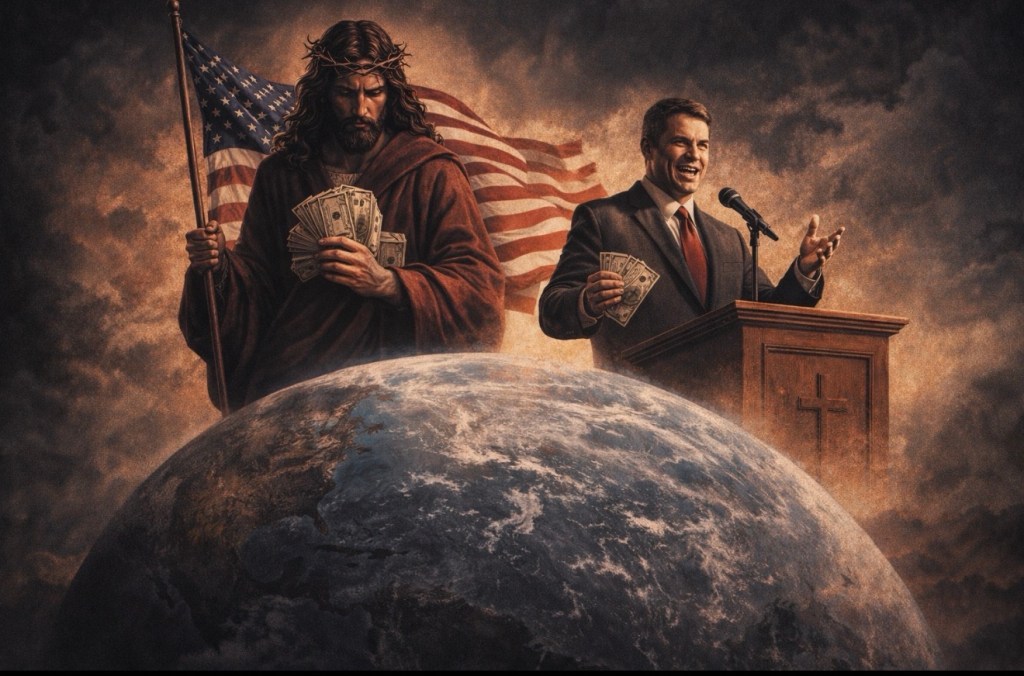
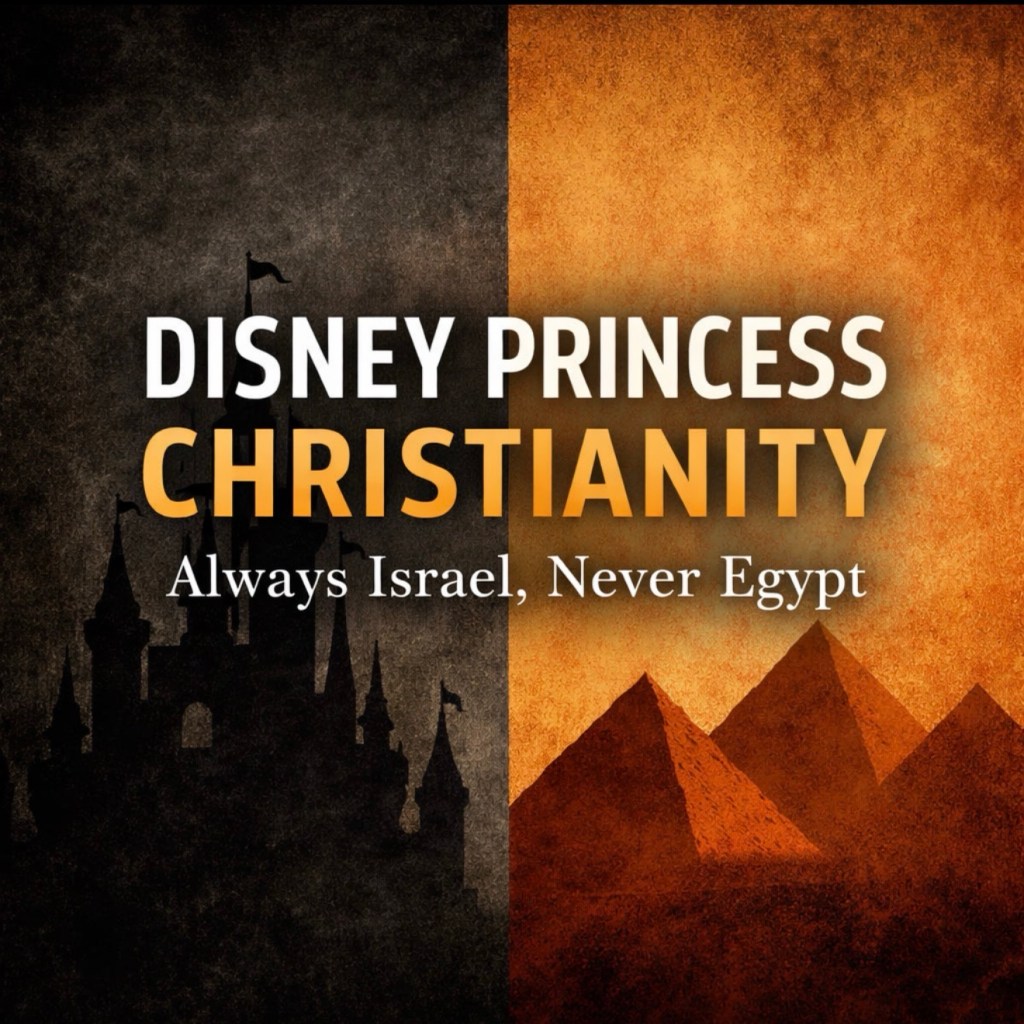
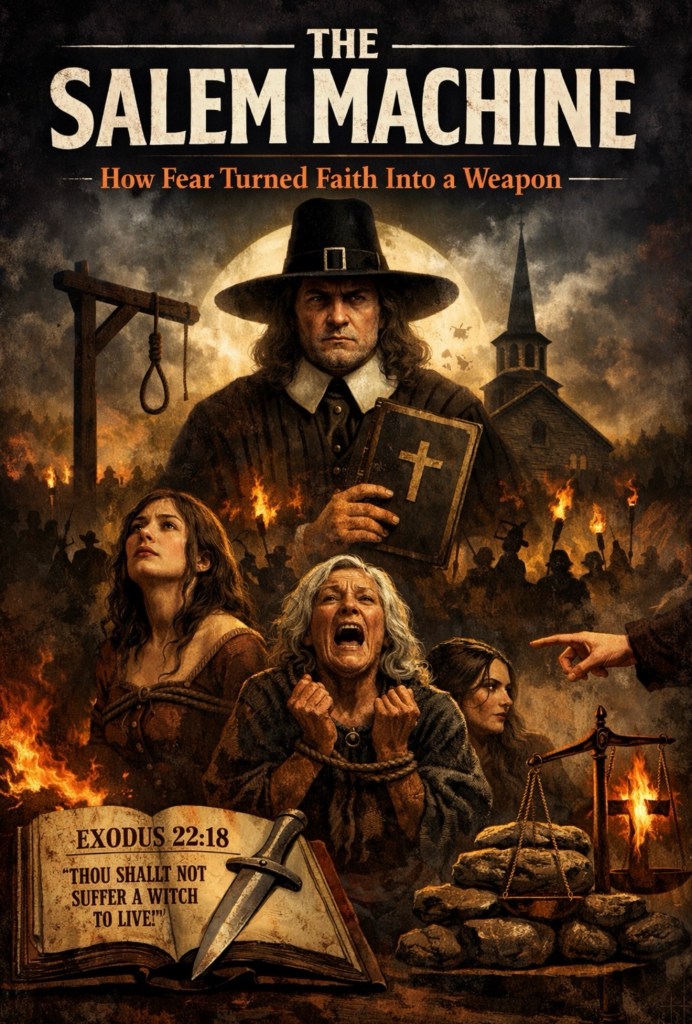
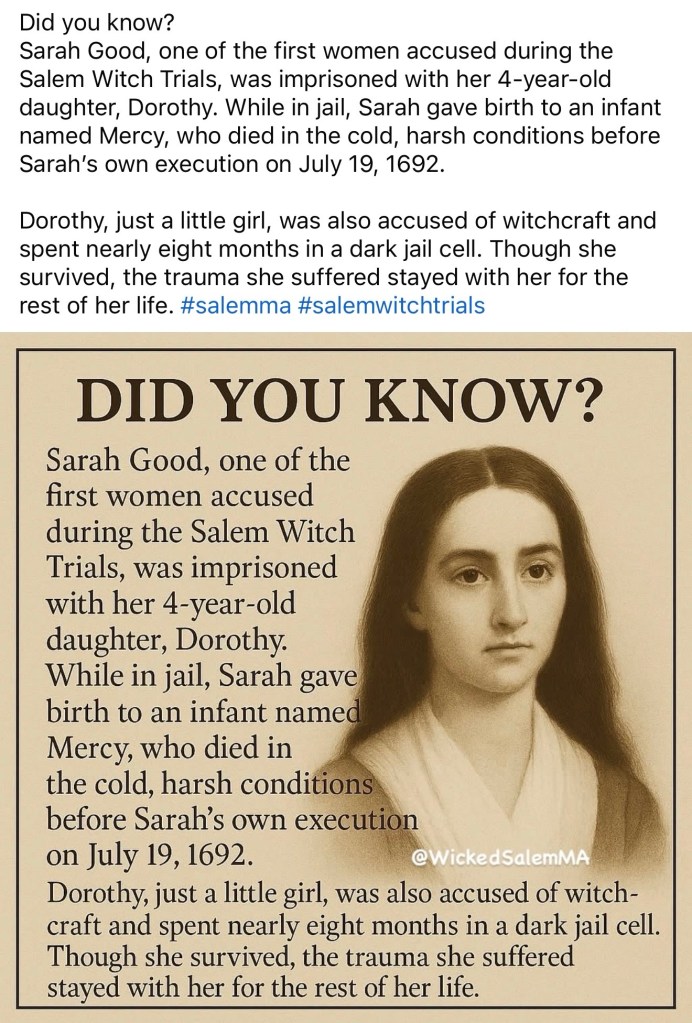
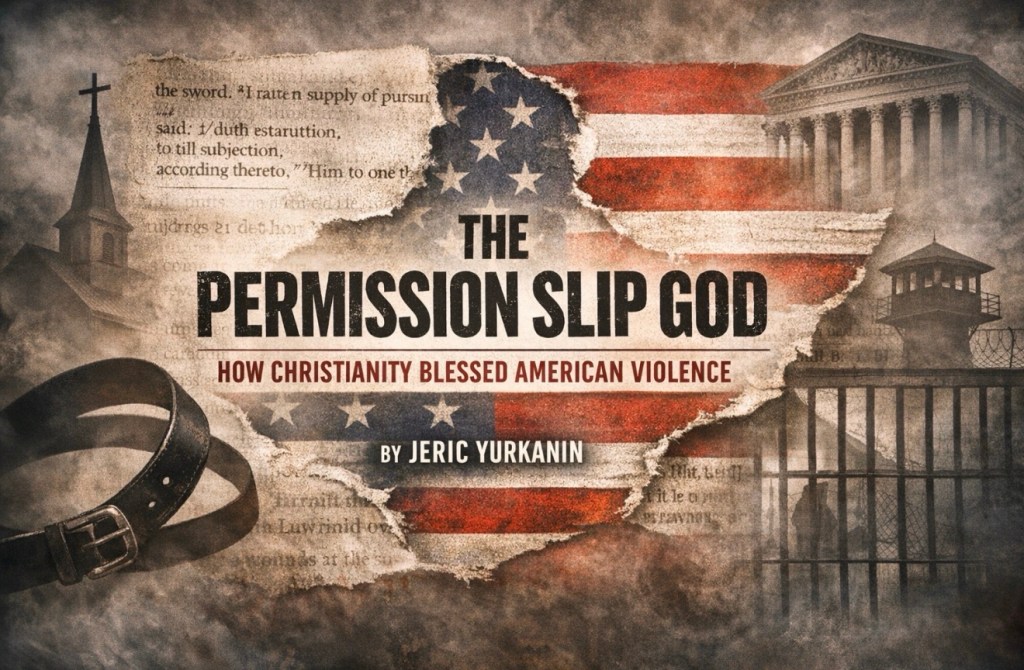

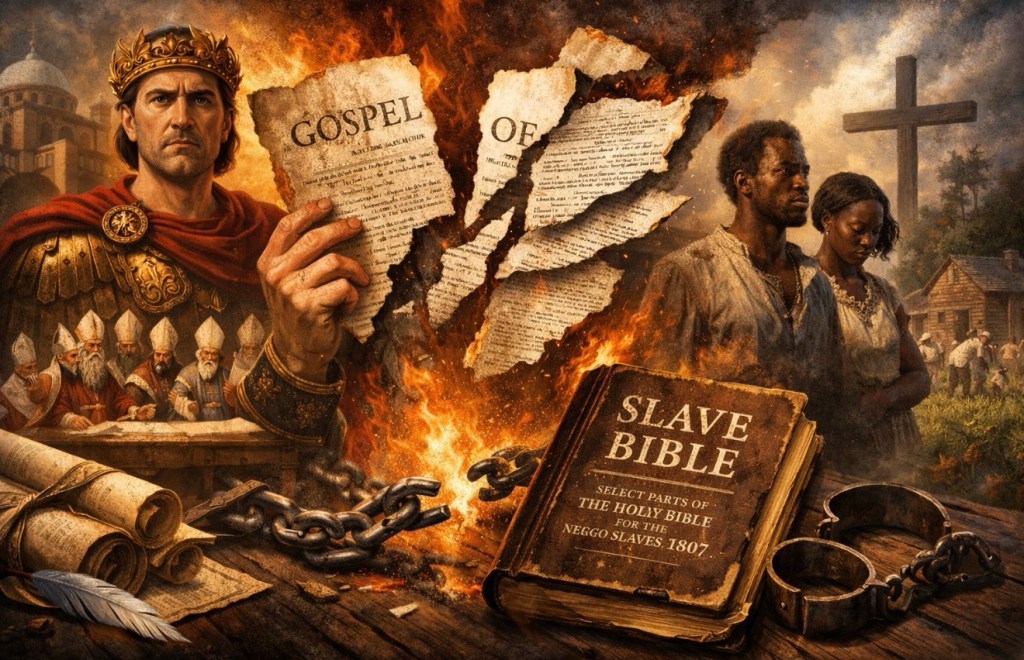
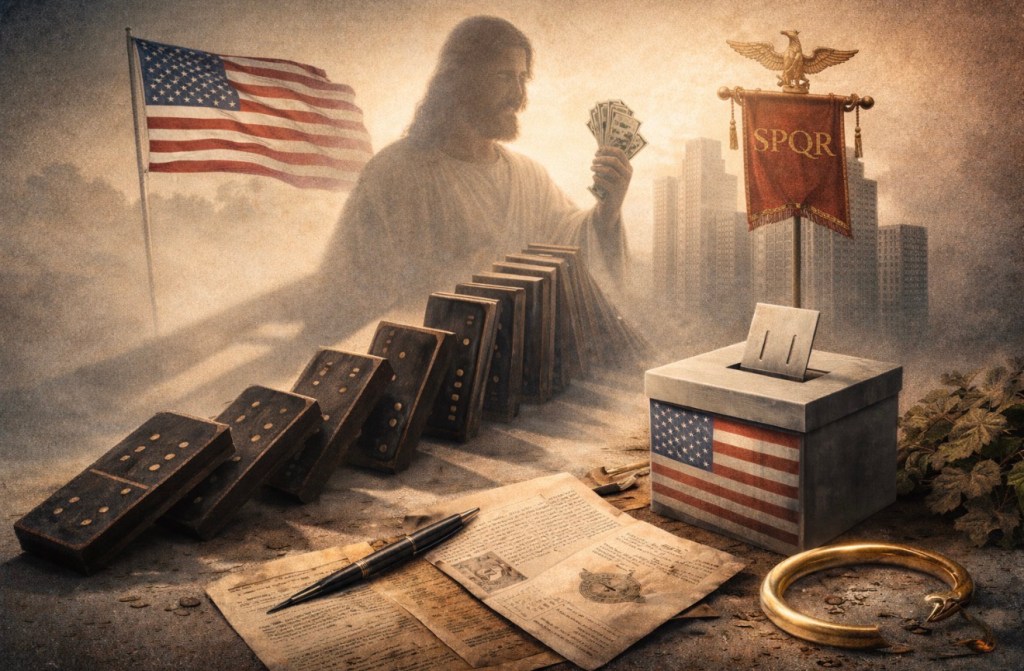
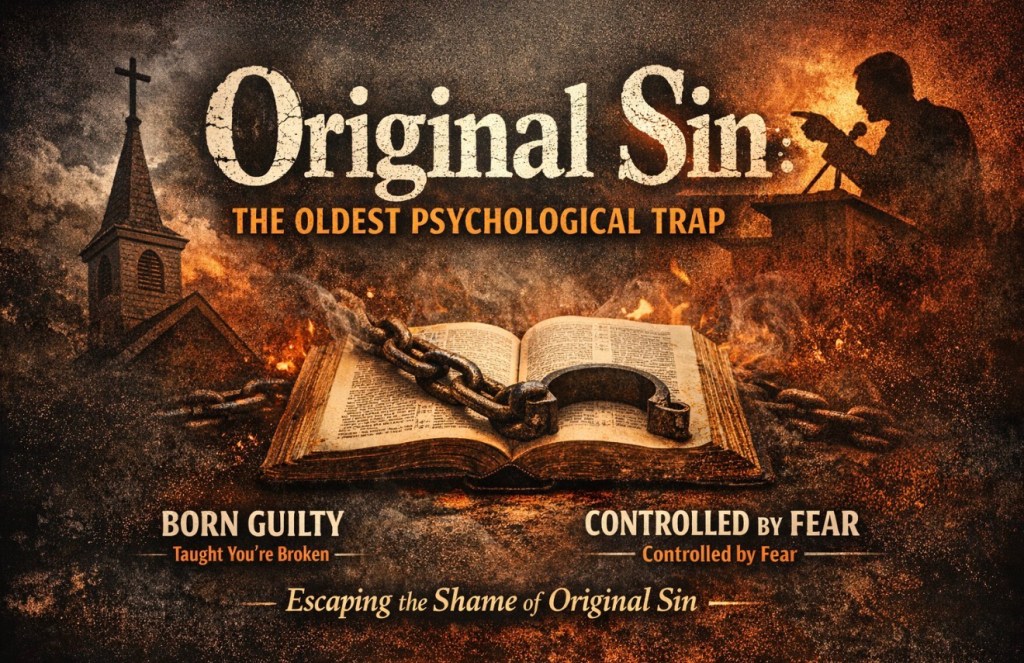
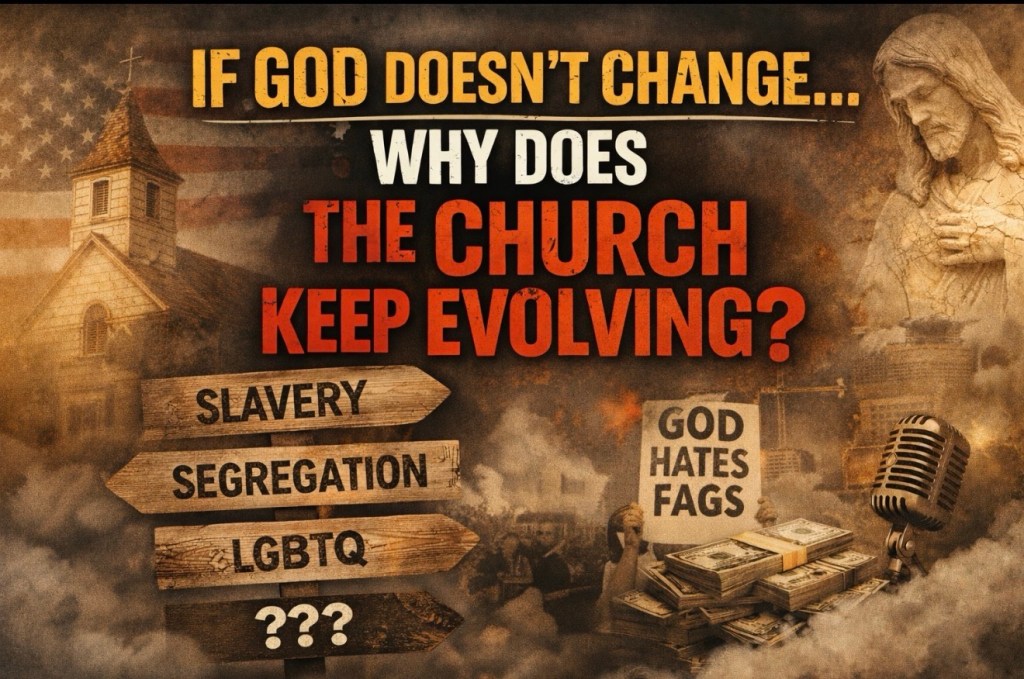
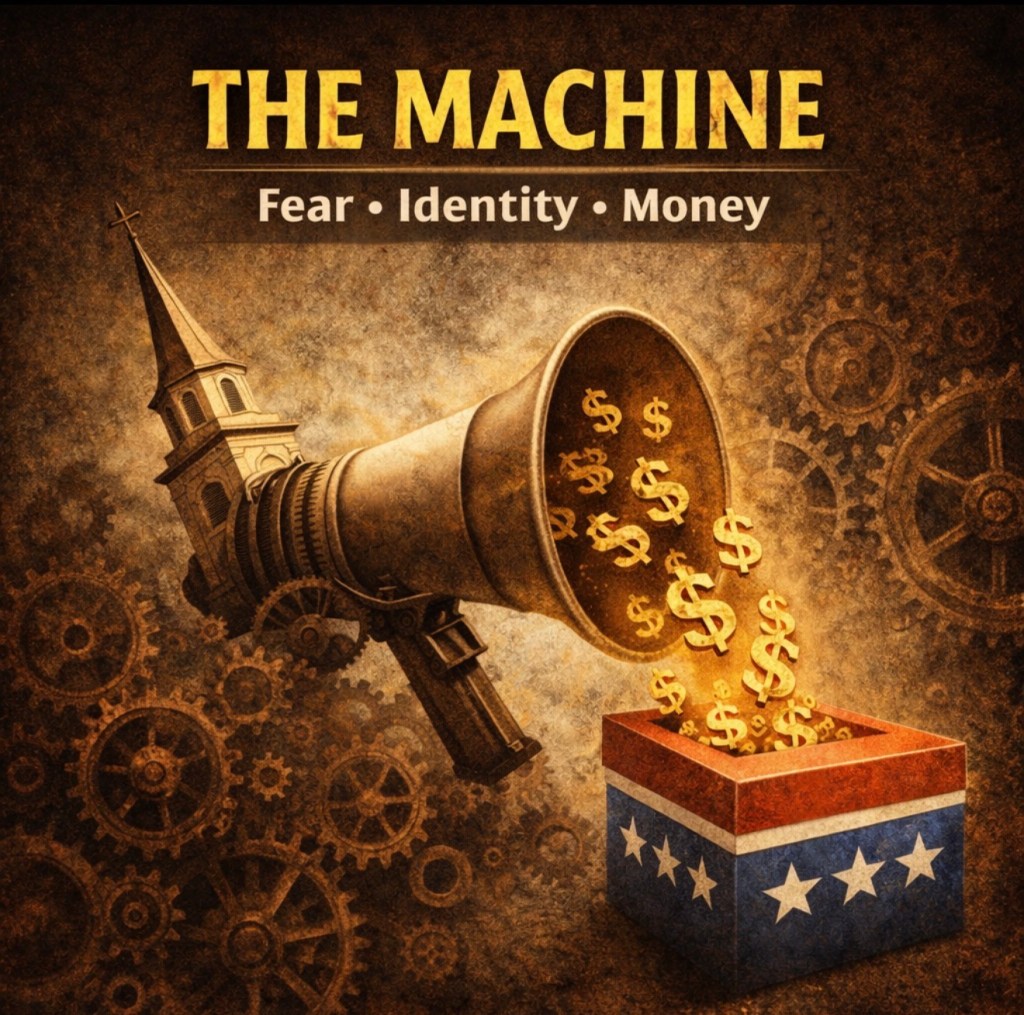



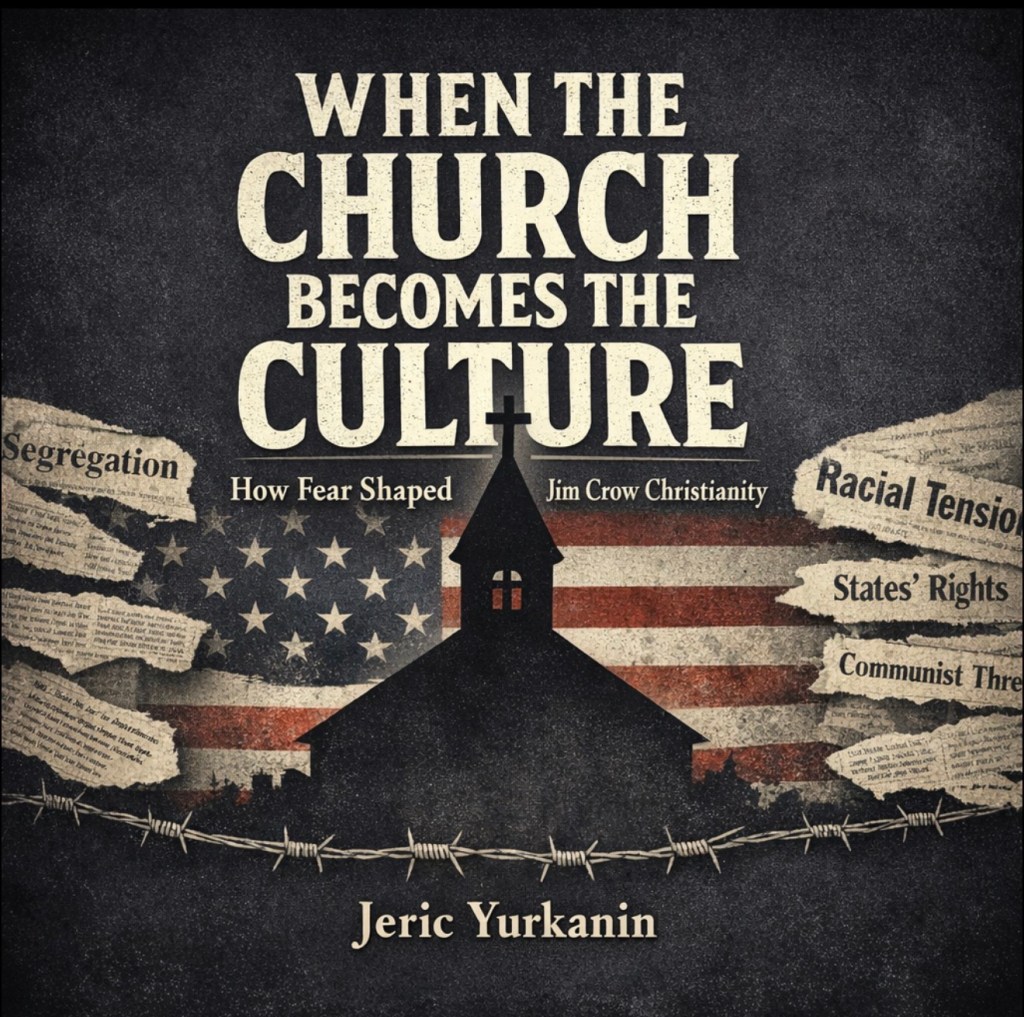
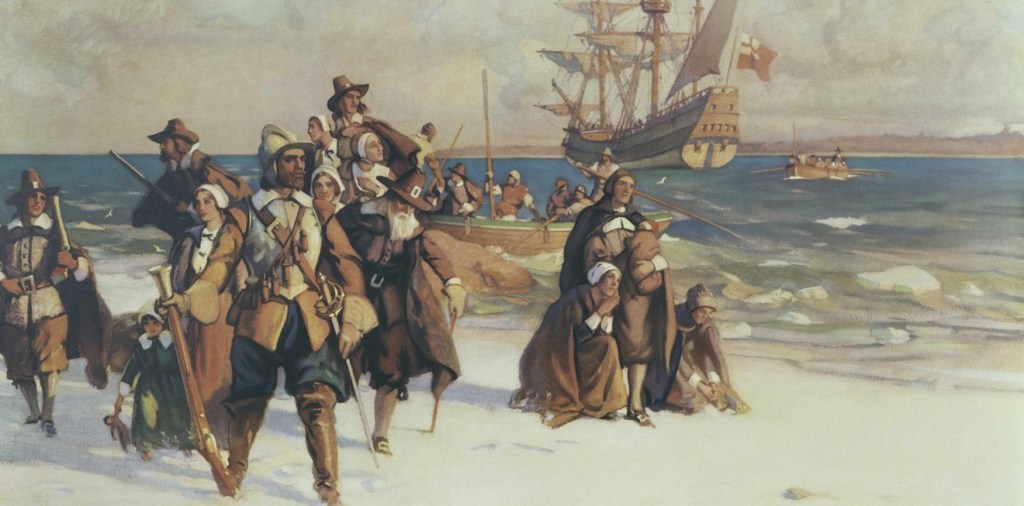
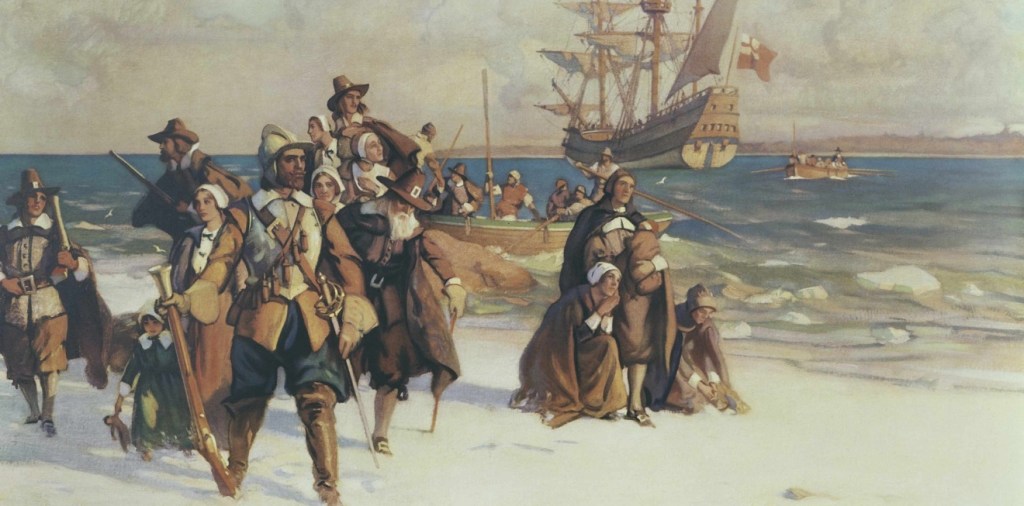
 Ancient Echoes Podcast